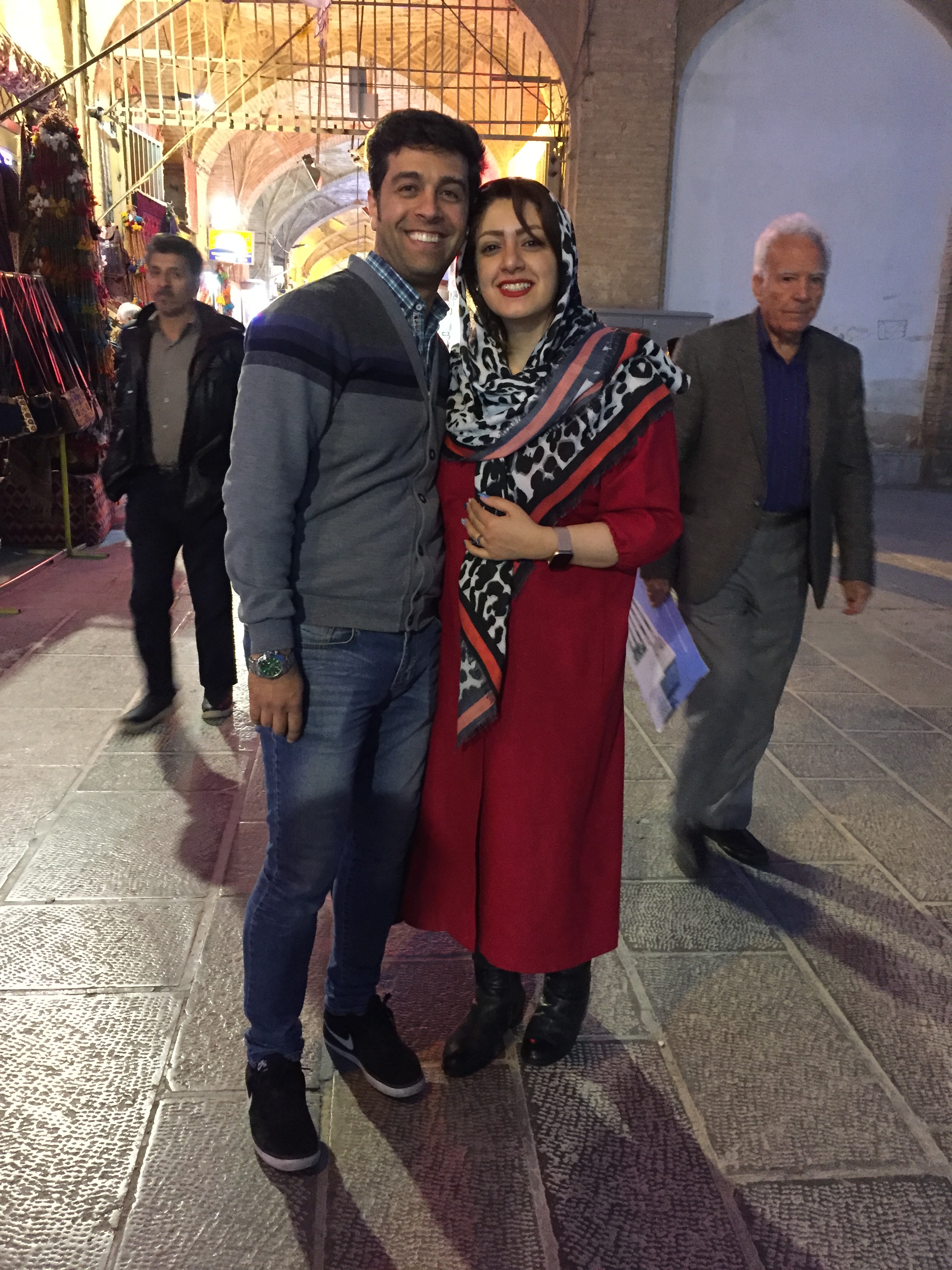
On one of the last evenings of our holiday, I was approached near the square in Isfahan by a man and a woman. He asked if I would mind taking a photo of him and his wife. When I asked he didn’t have a phone/ camera so I explained I would have no way of getting the photo to him. He said that I should take the photo with my phone. While I was happy to do this, I must have looked a bit puzzled so he declared “I want to be part of your memory.” His wish is granted.
Where to begin to describe the people of Iran? None of us are likely to forget our first encounter with a group of schoolgirls at the Sa’d Abbad Palace on our first morning. All wanted a piece of us on their phones and we were bombarded with the politest and most charming requests to allow selfies followed by profuse expressions of thanks, including sometimes a kiss. This was to happen again and again throughout the trip. It should be said that as we came before the tourist season commenced we had the country more or less to ourselves. We were also distinguished by hair and eye colour – – not to mention our unfailing elegance! The girls also wanted to practice their English and many showed remarkable confidence, poise and accomplishment in so doing.
People approached us all the time – shy-looking, black-clad peasant women in the bazaars smiled and whispered Salam; men came up to inquire ‘Where are you from?’ To the Ireland bit of our answer (Valerie is Welsh), we were often asked ‘North or South? The encounter invariably ended with a smiling ‘Welcome to Iran!’ – and this without any effort to sell us something or exploit in any way. It was as if they were delighted to see strangers. In Isfahan a man chatted in very good English while Banafsheh picked up our entry tickets to the Shah Mosque saying how lucky we were because pre-1979 (‘The revolution’) there would have been a two hour queue of Americans to enter this building which we now had to ourselves.
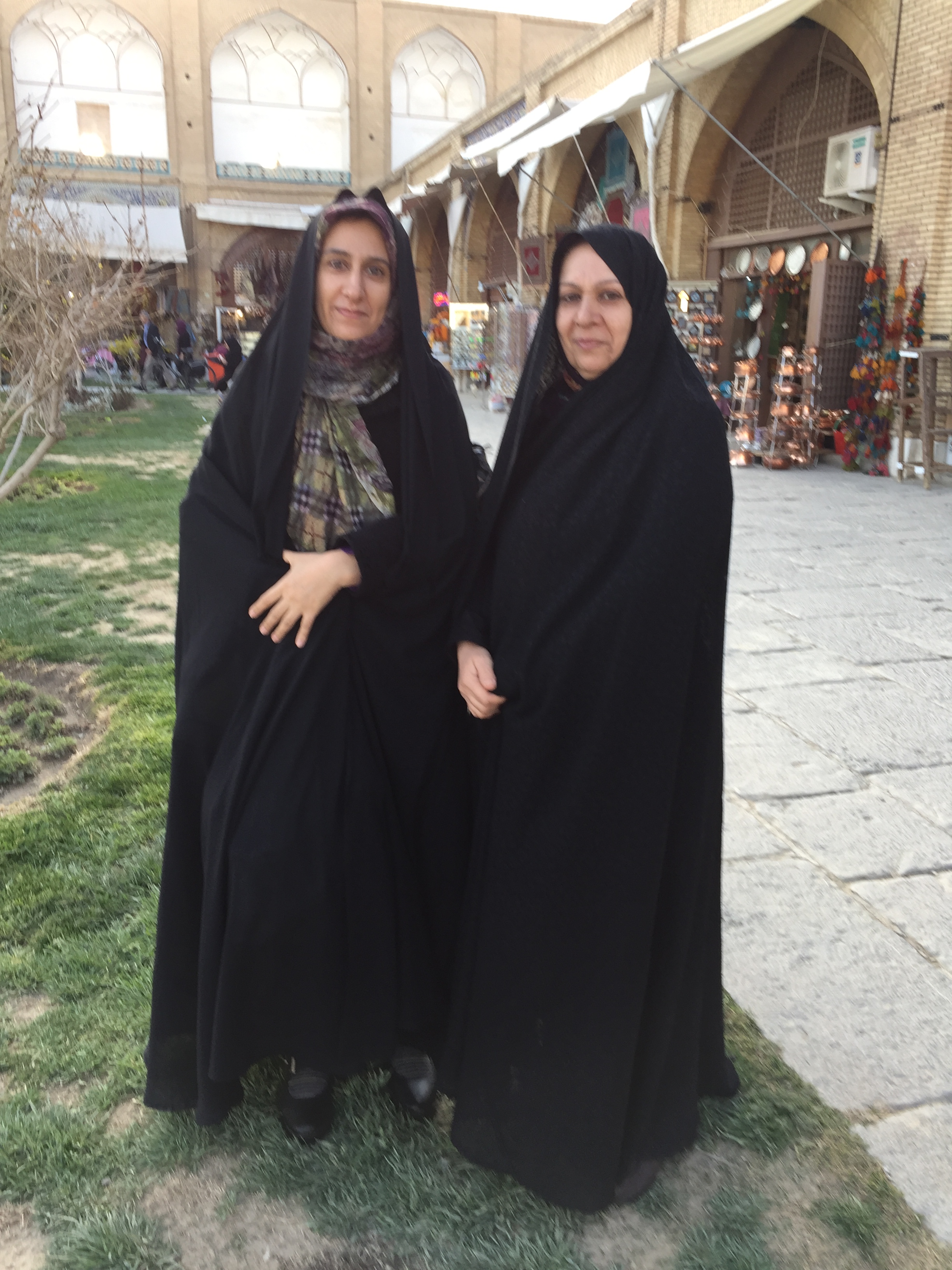
Two chador-clad sisters in Ishfahan approached to make the ususal inquiries. When I told them we had found Iran so enchanting, they said sadly that the Iranian people did not appreciate their own country. They graciously agreed to a photo.
There were some unusual encounters – a woman in a park who regaled us with a major speech, uncaring that we understood not a word. According to Banefsheh, it was a paean of praise for our non-dark looks as well as her own story – how she never got married because she wasn’t nice-looking (i.e. blonde) but that was OK because Jennifer Lopez was in the same boat! Another woman in a madrasa in Kashan wanted to sing us a song and did.
Plastic surgery is big – especially in Shiraz. At breakfast in our hotel, we wondered at so many men with major head wounds and bandages – they turned out to be hair transplants. Contrary to what would happen at home, lots of people sported bandages on their noses and faces – it seems it is regarded almost as a status symbol – if you have one it means you can afford to.
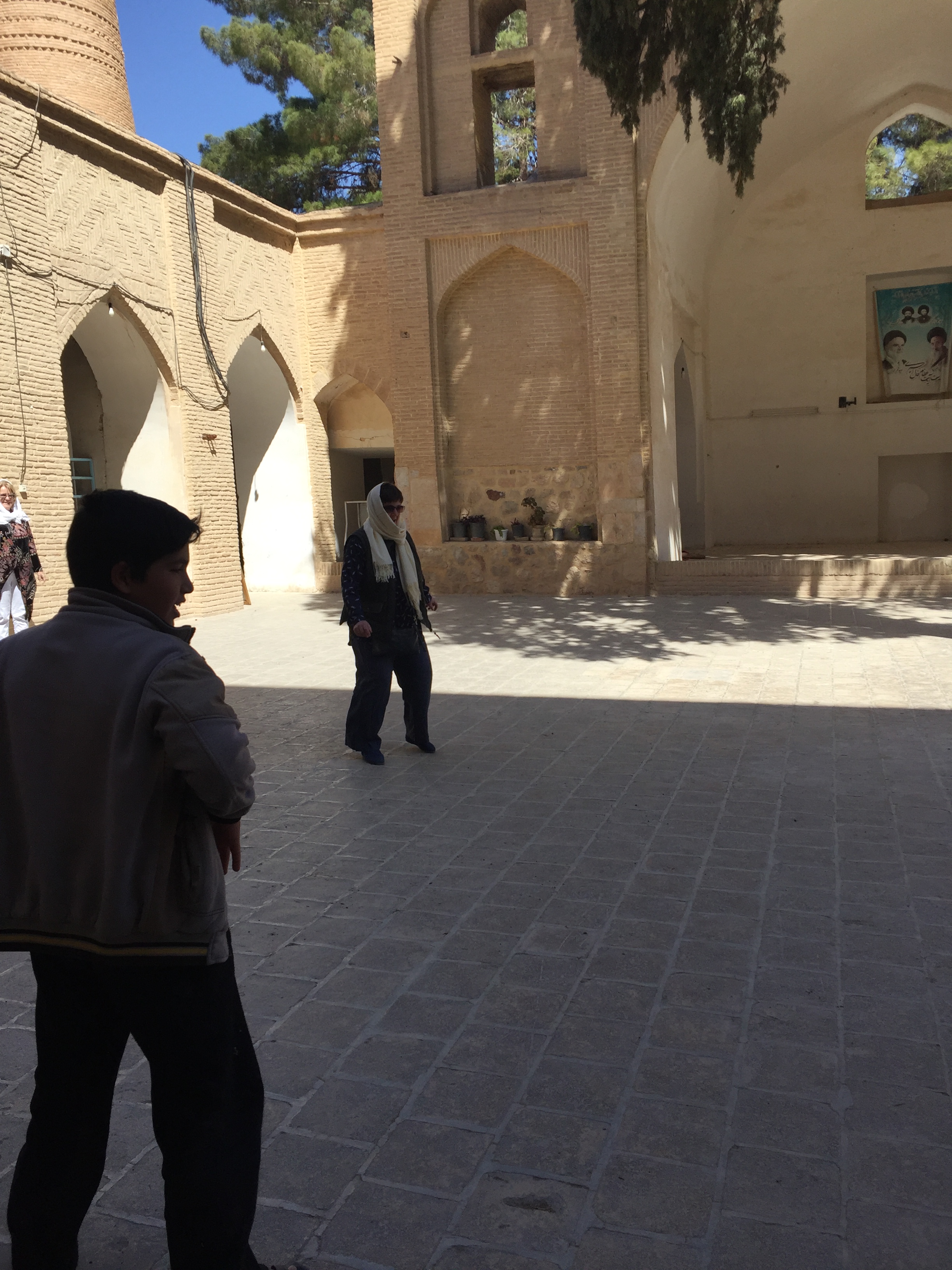
Some people wanted to engage more. Would we have time for a tea, asked a young man. Regrettably our schedule did not permit. One morning in Yazd (a place mentioned by Marco Polo in the 13th century), Valerie and I took a walk before breakfast in the mud-baked streets near our hotel. A youngish man was bringing home an armful of flat round breads . He gestured to us to share a bit so we did. He was from Afghanistan and as usual, asked about us. He then invited us to breakfast but we had to decline as we had a deadline at the hotel. He showed us the direction to his house and indicated that we could come any time. A band of young boys enjoined us to make up a team to play them at football in a mosque in Fars – Valerie was the only one who distinguished herself here. Nevertheless Iran won, hands down. The boys were delighted.
Most of our attention went to the women – and derived from the mystery of the chador and the strong sense of their sequestered lives. The facts when we knew them were shocking.
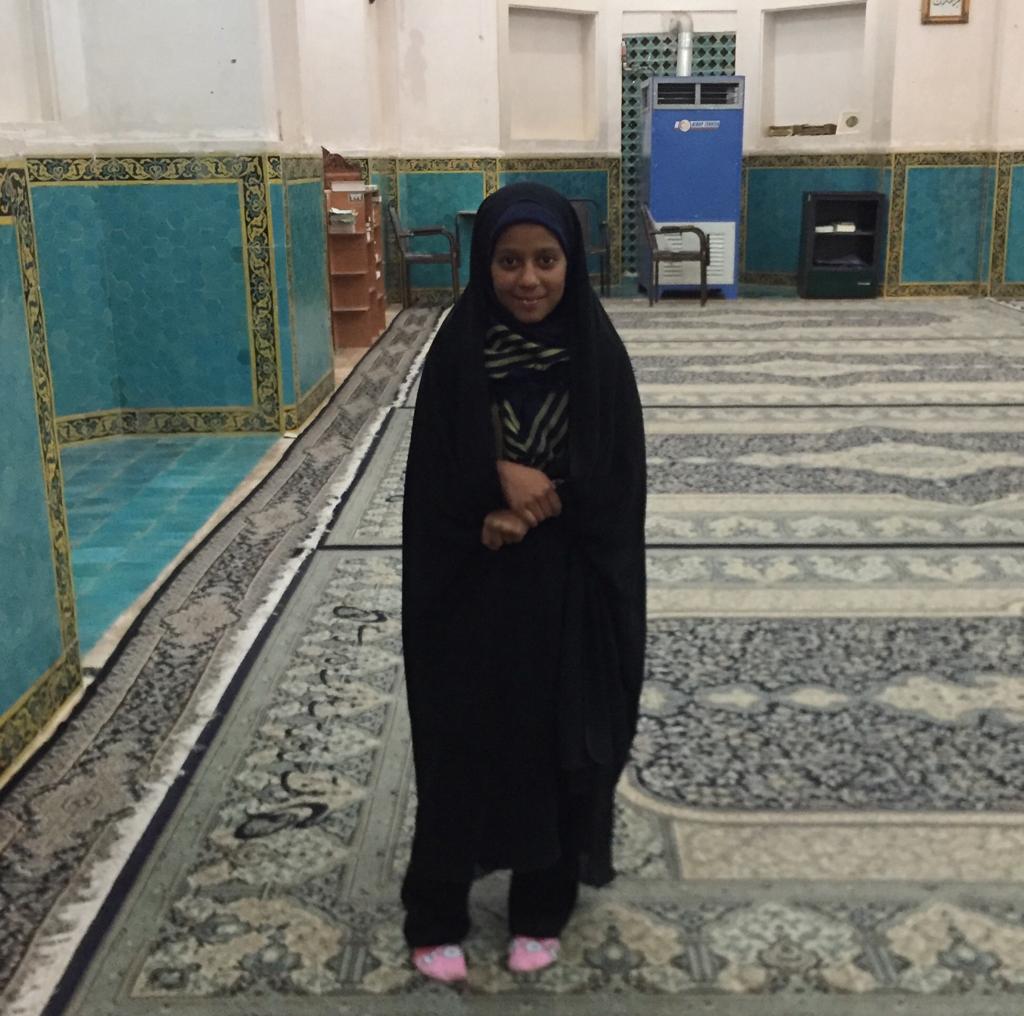
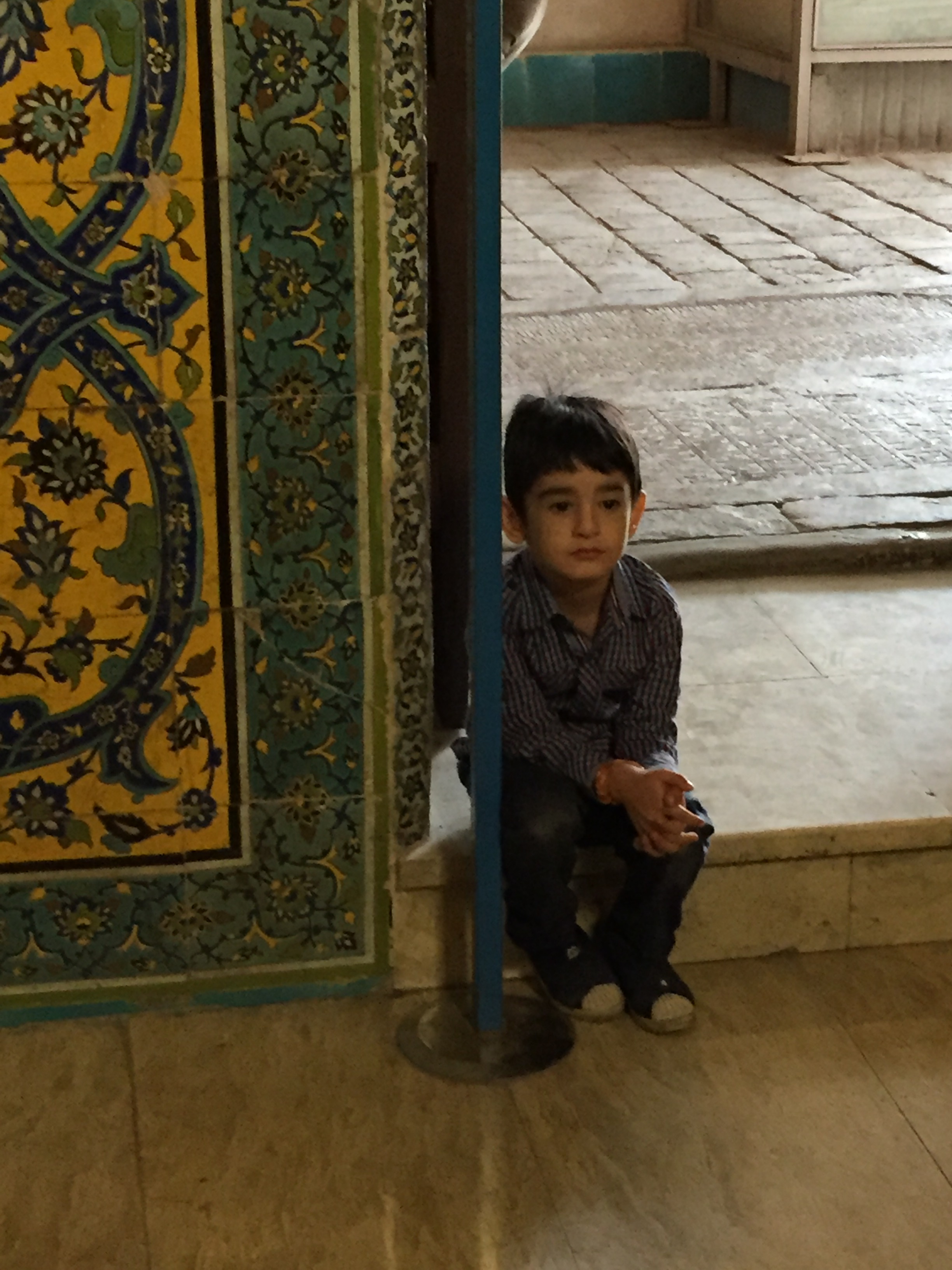
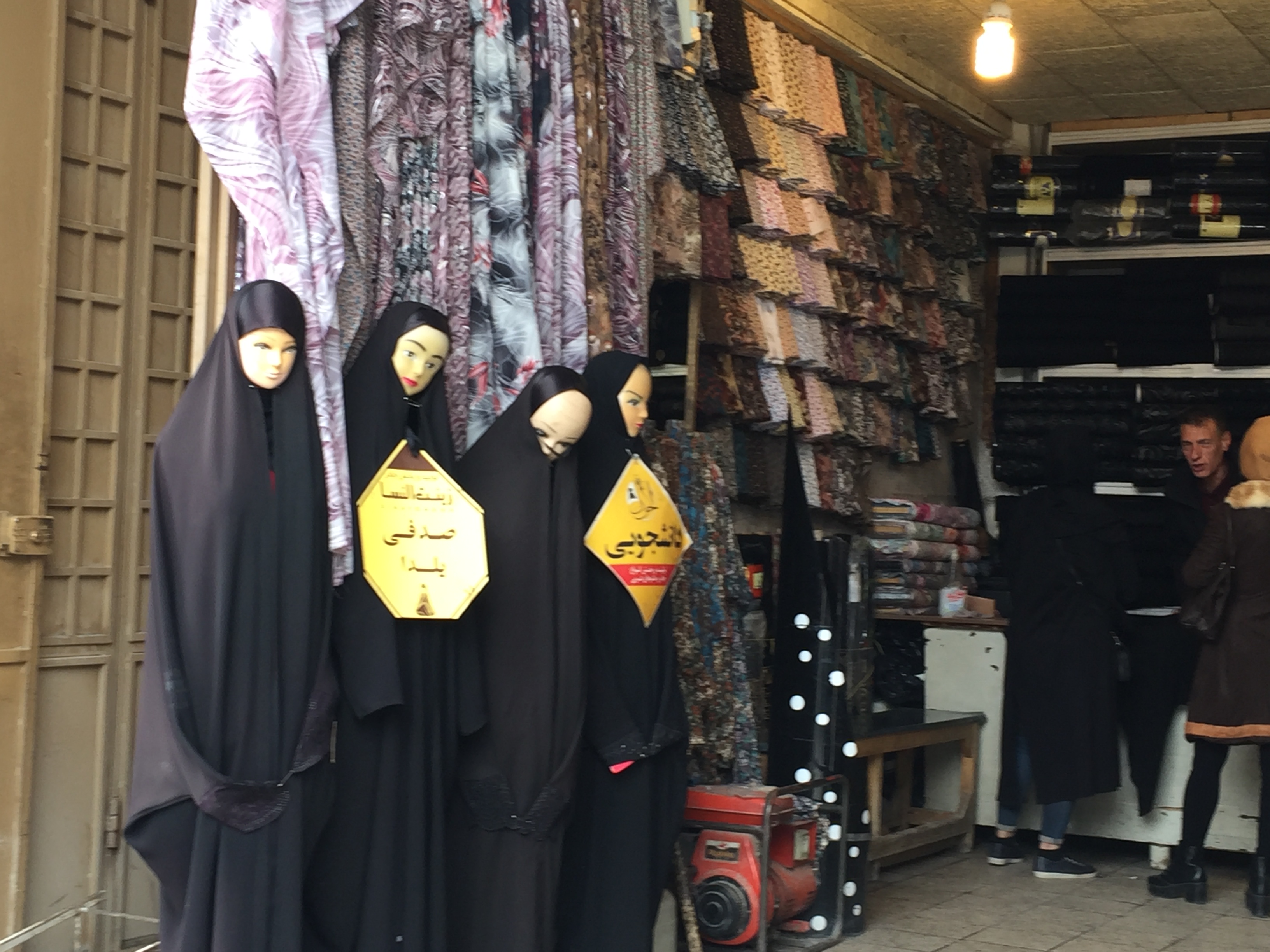
I have already described our feelings about the inequality most obvious in attire but in fact we learned little or nothing about the lives of women beyond what we already knew from films or literature. Like much else the real story was impenetrable given the nature of our trip and our ignorance of Farsi. Of course the images of women in chadors is what distinguishes the country for Europeans and we could not resist photo opportunities.
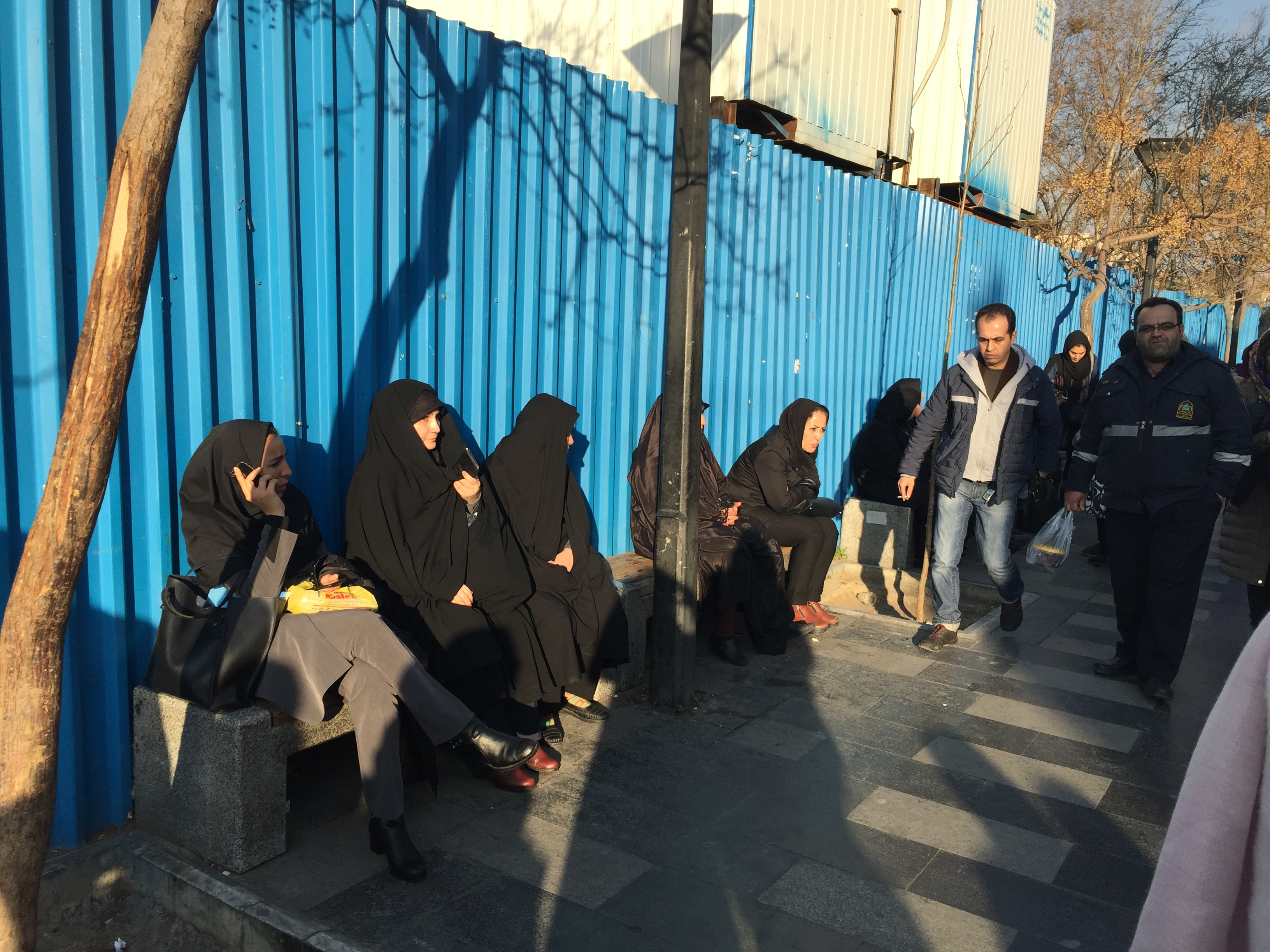
 Itinerant in Iran