Well, to any man who might feel now that we should ‘get over it’, I would counsel restraint.
First, to contextualise issues of attire: in 1926 with the advent of the Shah’s modernisation policies, the police tore chadors off terrified women in the streets. The revolution and the rule of the Mullahs overturned this.
From an initial resolve to be dutifully respectful to the mores of others, our attitudes to wearing the hijab developed throughout the journey to one of irritation with this obligation, imposed only on women. Iranian women often wear the hijab quite far back on their heads. This means that one hand is constantly dedicated to pulling it up or resettling it. So bag carrying, phone toting and all the other things one has to do become awkward: in effect the wearer is hobbled.
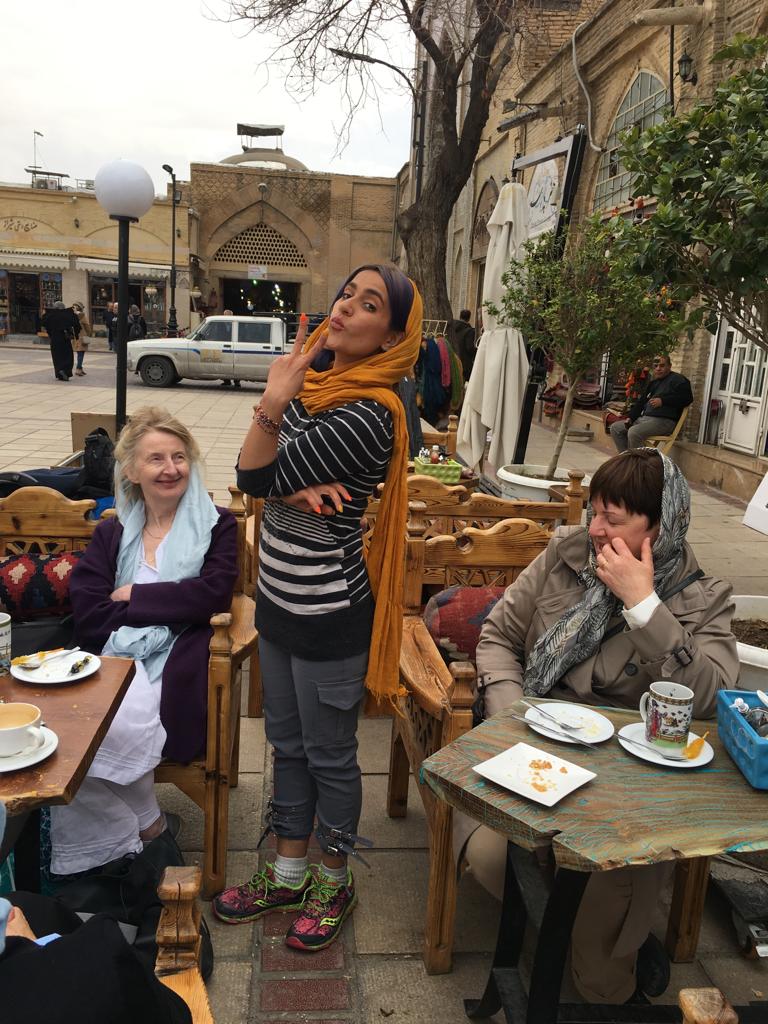
We each took an individual approach . Susie embraced the scarf like the actress that she is and when on her own managed to pass for a local woman.
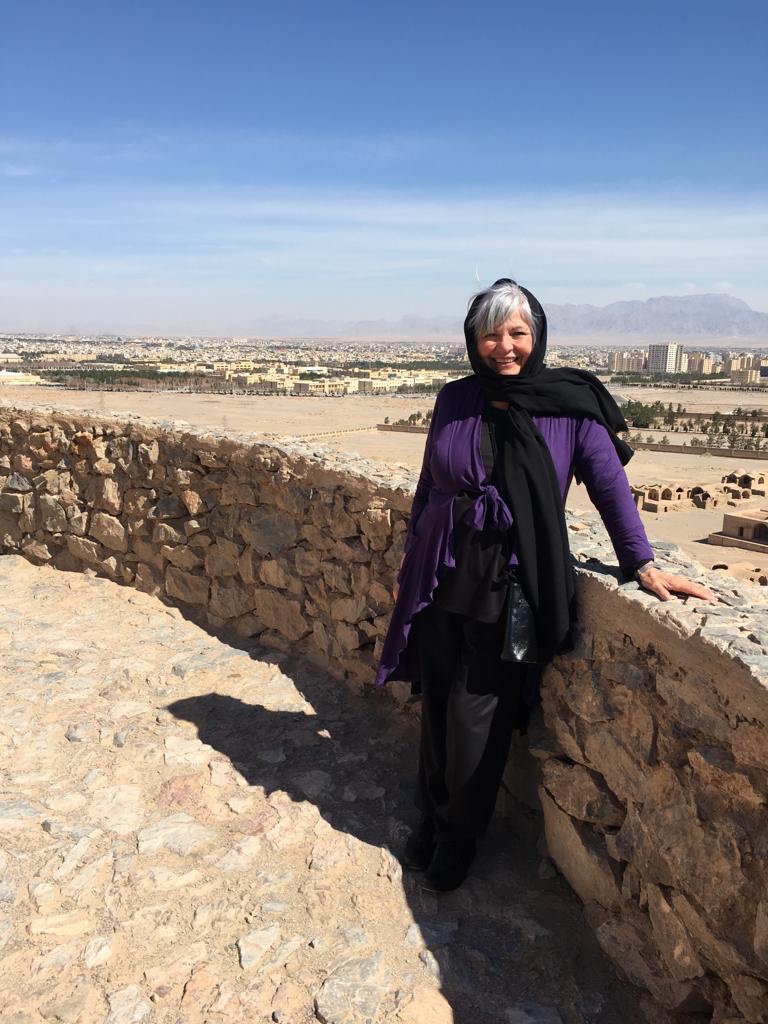
Valerie essayed turban styles (to which she was accustomed from her travels in Egypt) when she saw that we seemed to be absolved from the local requirement to cover one’s nape. Paula managed to channel sophistication by having carefully chosen silk scarves which matched her daily outfits. Shelia went full-on Palestinian-style
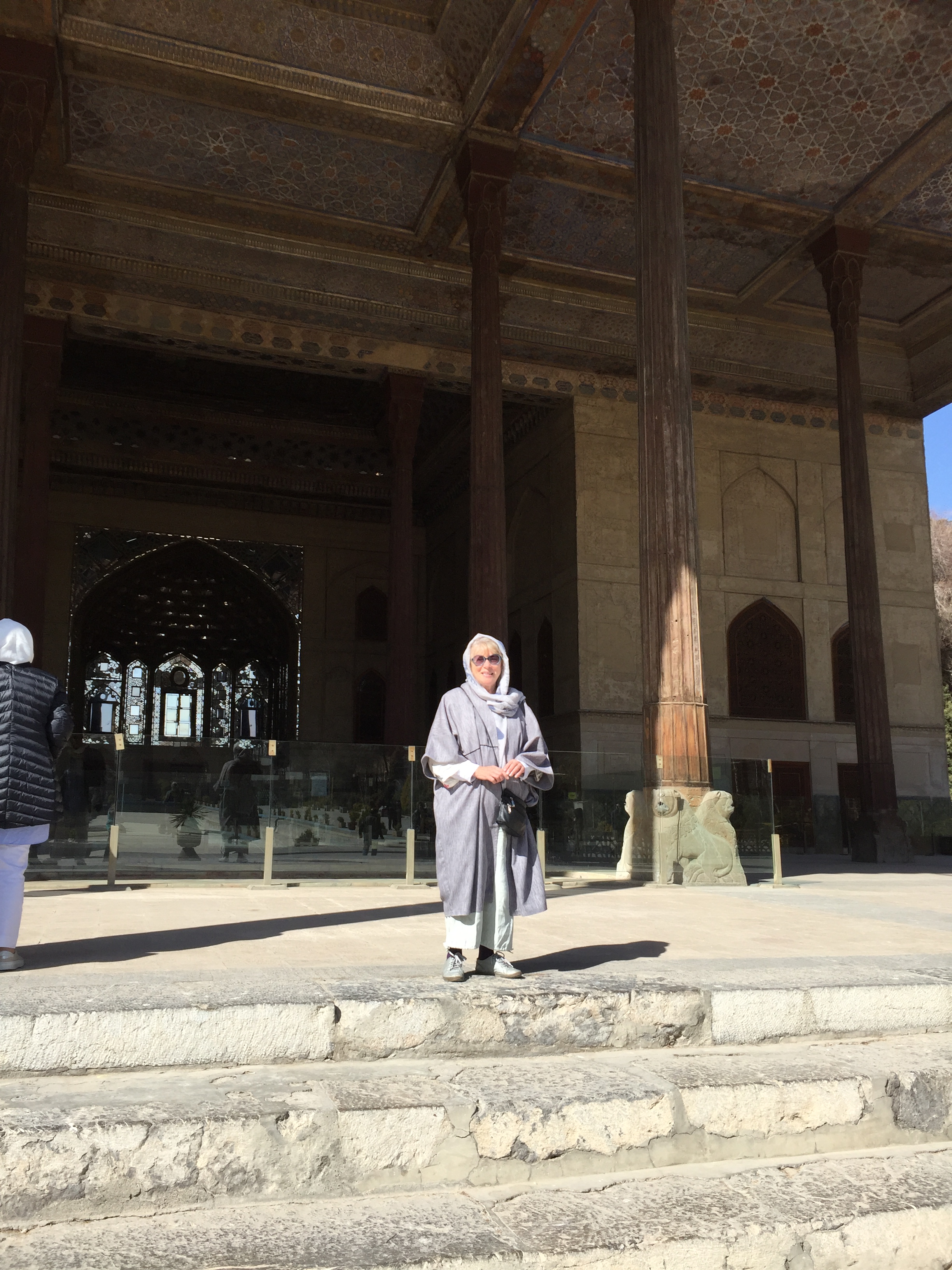
and I managed to look like a demented Temple Bar hen-party participant. Then there was the manteau required to cover our bums. A trendy manteau shop was found and some people made purchases . Notwithstanding these efforts by 6.00pm every day, we looked like five bedraggled bag ladies at large. Of course the locals are more elegant.
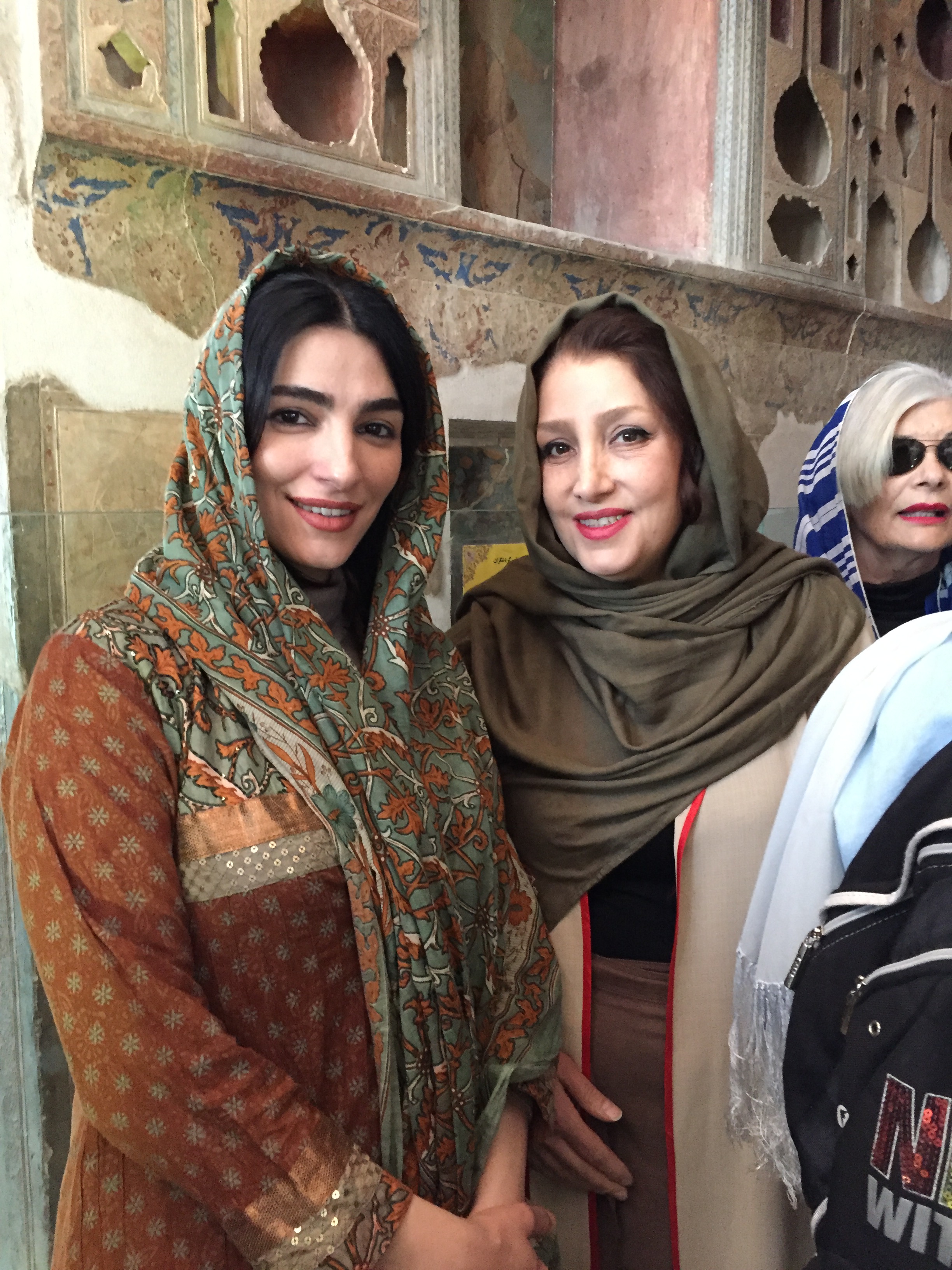
We marvelled at cool young women who managed to be chic while obeying the rules : dyed hair, painted nails, clever eye make-up, cute sweaters, cropped trousers with neat boots, and casually worn, quirky scarves that somehow stayed on.
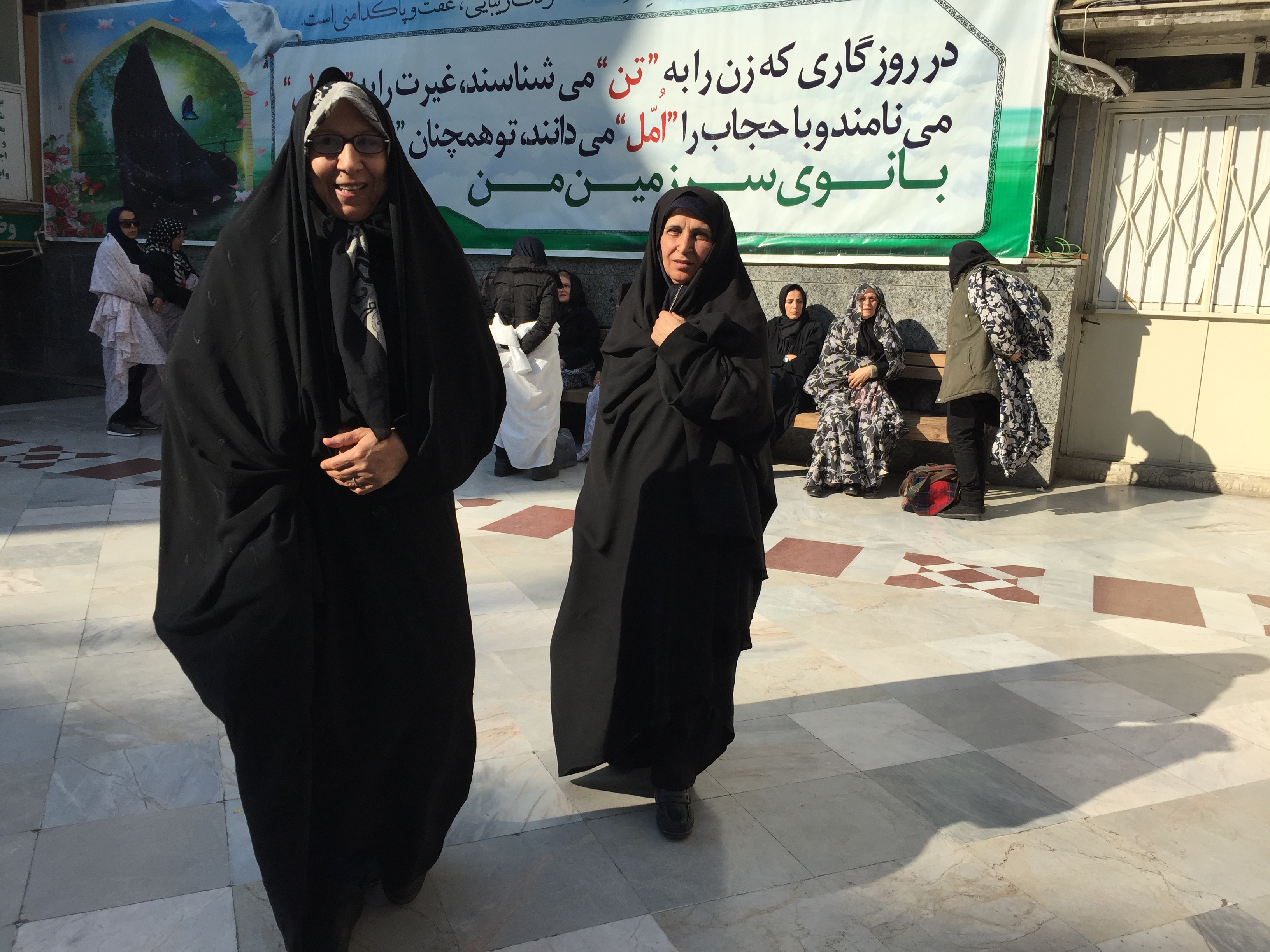
The many women in full-length black chadors were a different story. Of course they are what particularises Iran, their attire reflecting secret lives – and albeit carefully, we took many photos. They moved bat-like around the streets, mosques and bazaars, some gracefully, some flapping hurriedly. Because their identity is obliterated, the sight of them has an oppressive and sinister edge. I found myself wondering how a lost child would find her mother – or indeed how anybody would find any woman.
On occasion when visiting an important mosque or shrine, we were obliged to wrap ourselves in a heavy patterned curtain which had to be worn in a particular way. The heat, weight and sheer awkwardness of this was disabling.
The business of toilet deserves special mention. Imagine going to the hole-in-the-ground loos – everywhere in Iran – where one is obliged to squat and balance. Remember one is clad in long baggy garments and carrying all one’s accoutrements. Needless to mention there is no sign of a hook to hang one’s bag. Then one remembers that of course there is no toilet paper – again – and that the tissues one carries around are somewhere at the bottom of one’s bag. Meanwhile, to cap it all, the scarf or hijab is now sweeping the far from sanitary floor around the loo. I apologise for this picture.
In short, we all agreed that the hijab obliterates any sense of identity and, by virtue of being imposed, of dignity. It was the one thing that as tourists, we didn’t like about Iran.
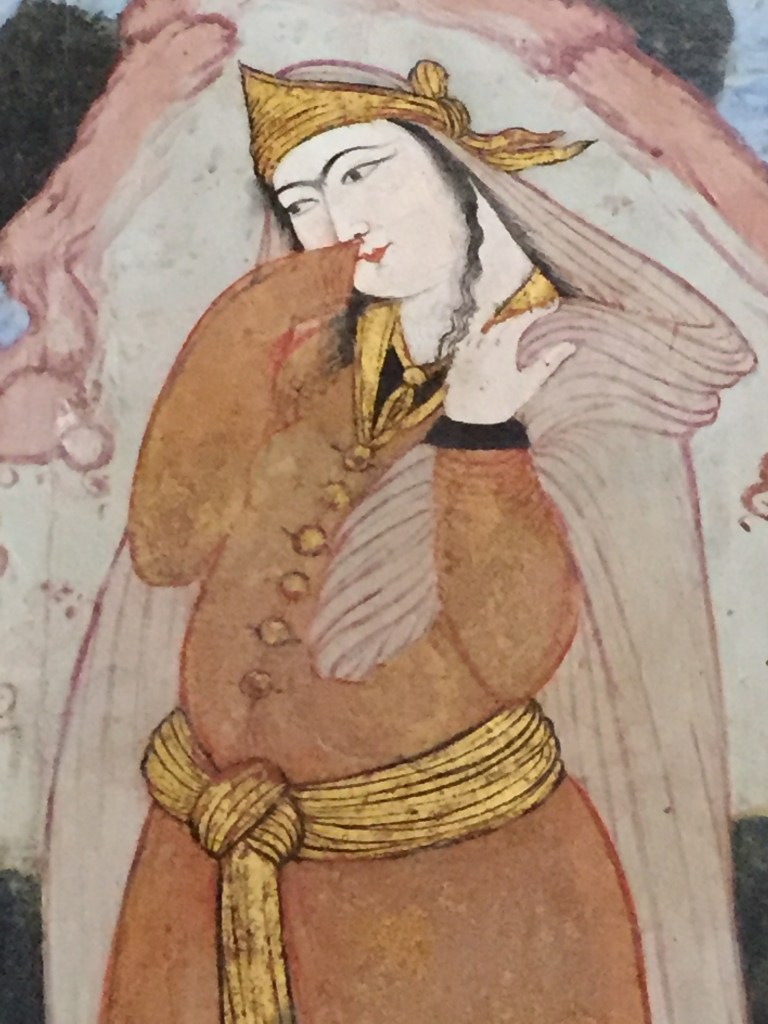
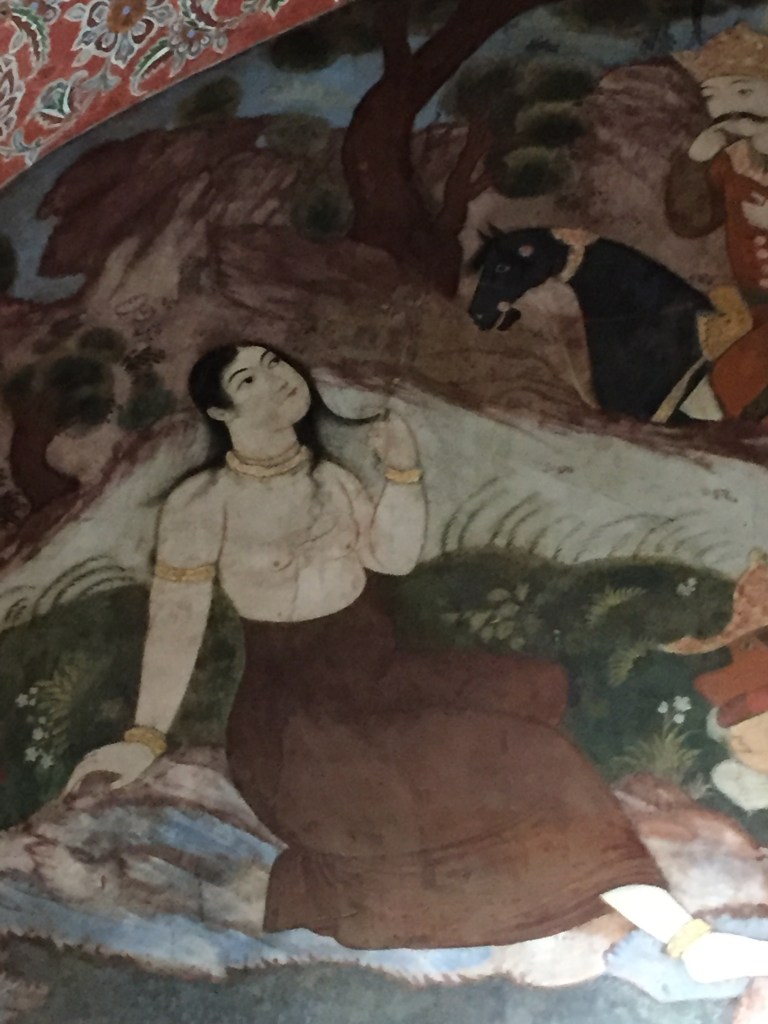
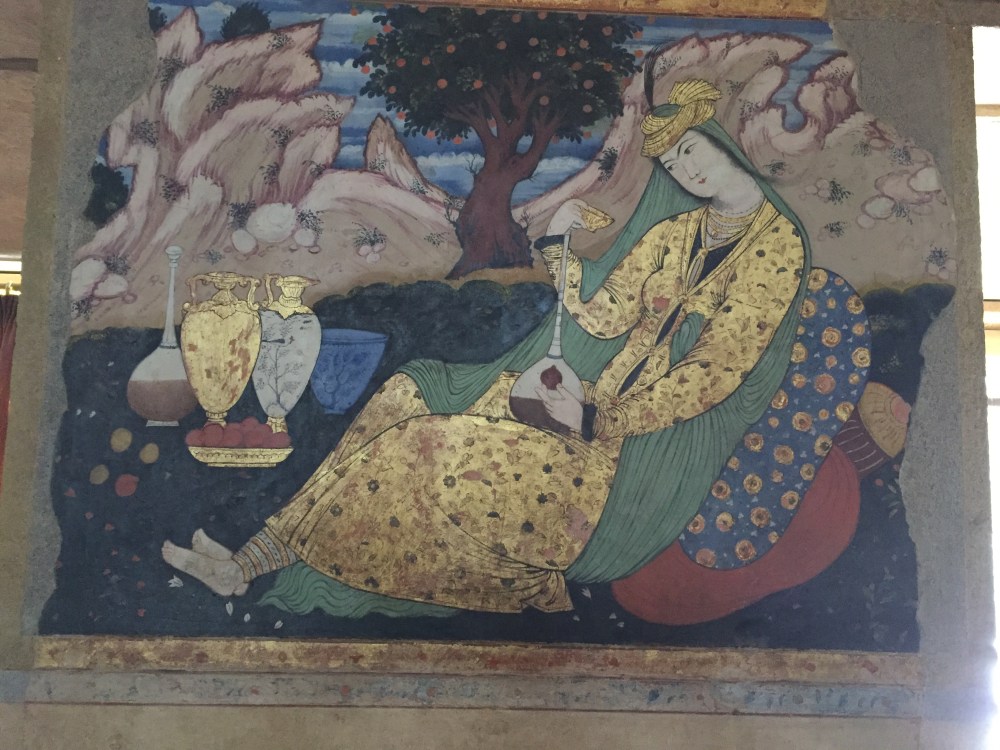
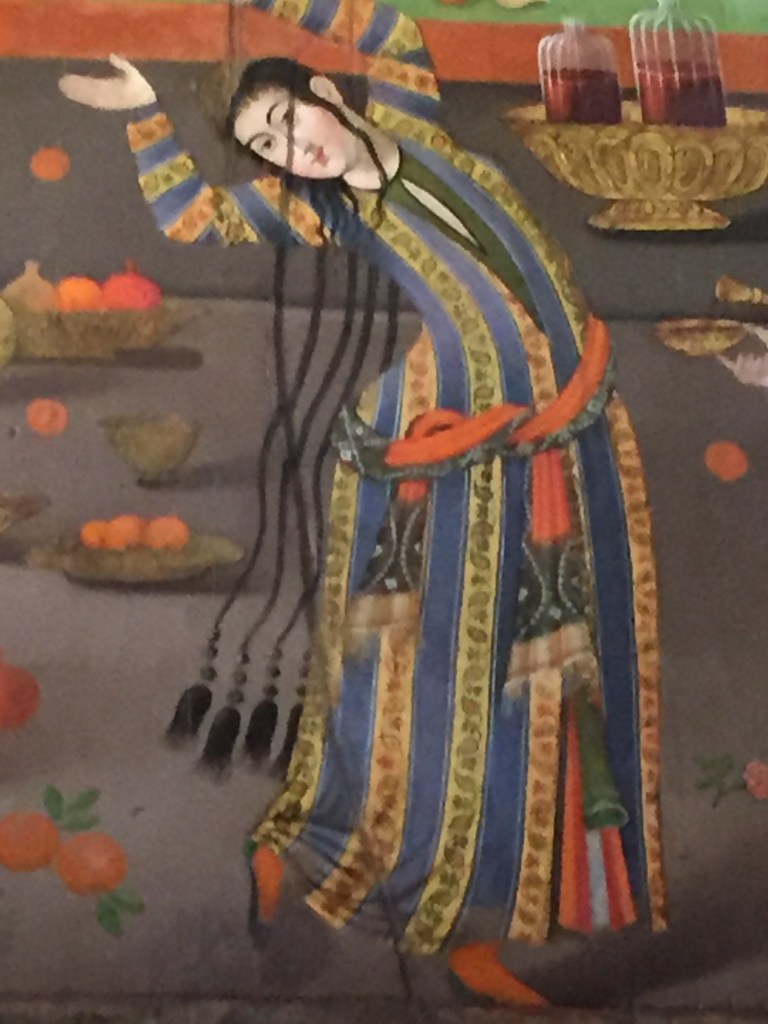
As a counterpoint let me illustrate that all female iconography in Iran is not sexless and sad. The images from the 17th century Safavid- era Chehel Sotoun palace in Isfahan below point to a very different history and show the seductive charm associated with Persia.
 Itinerant in Iran