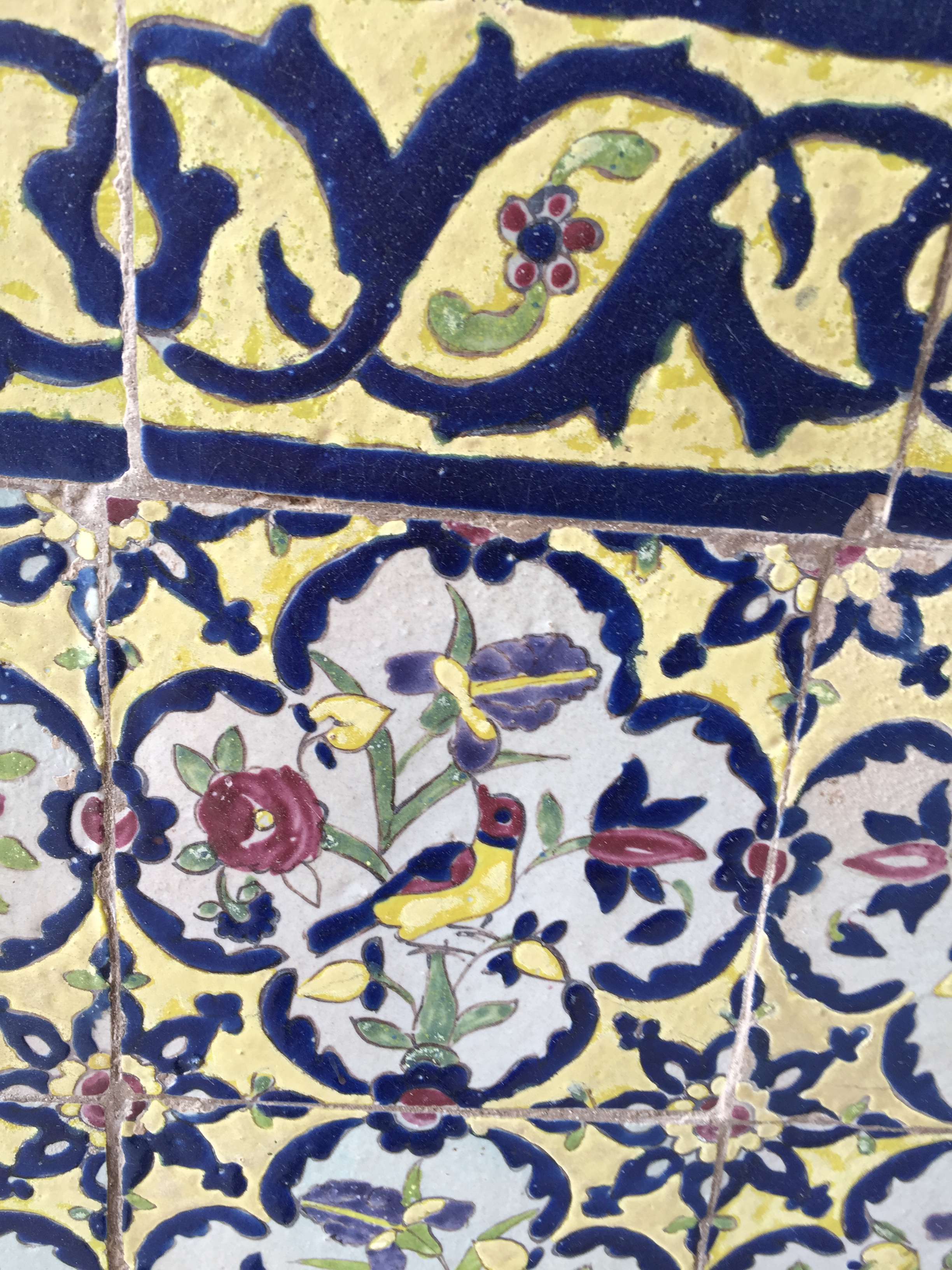
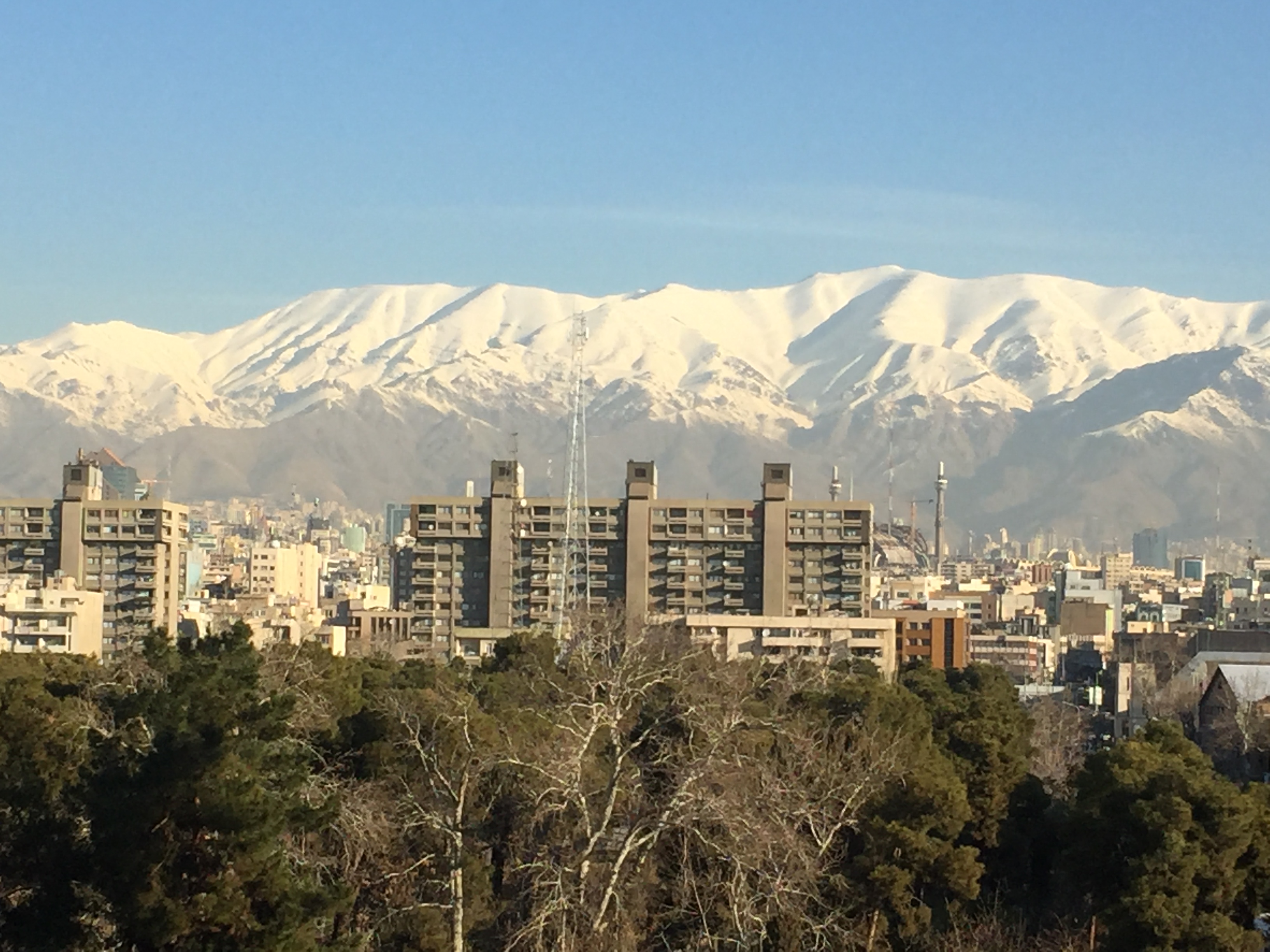
Our stay in Tehran (pop : 8 million) was brief and furnished only just a glimpse of the capital. However it was to be a mini -preview of our trip, comprising antiquity, religion and a bazaar experience.
Our spartan hotel room in Tehran contained a Koran and prayer mat and an arrow pointing west to Mecca – a reminder of our changed perspective. The same was to be found in all the hotels in which we stayed – some of which were much more luxurious. Facilities were a close approximation of western ones but with an edge of eccentricity. (In our Isfahan hotel the bathroom lights could be extinguished only by accessing the fuse box and tripping the switch there, a process at which we all became adept.) All the public -facing staff – front of house, reception, waiters – were male, while women did the bedrooms. (Paula, channeling her (very) inner chambermaid, ensured that these women were not forgotten when it came to tipping.)
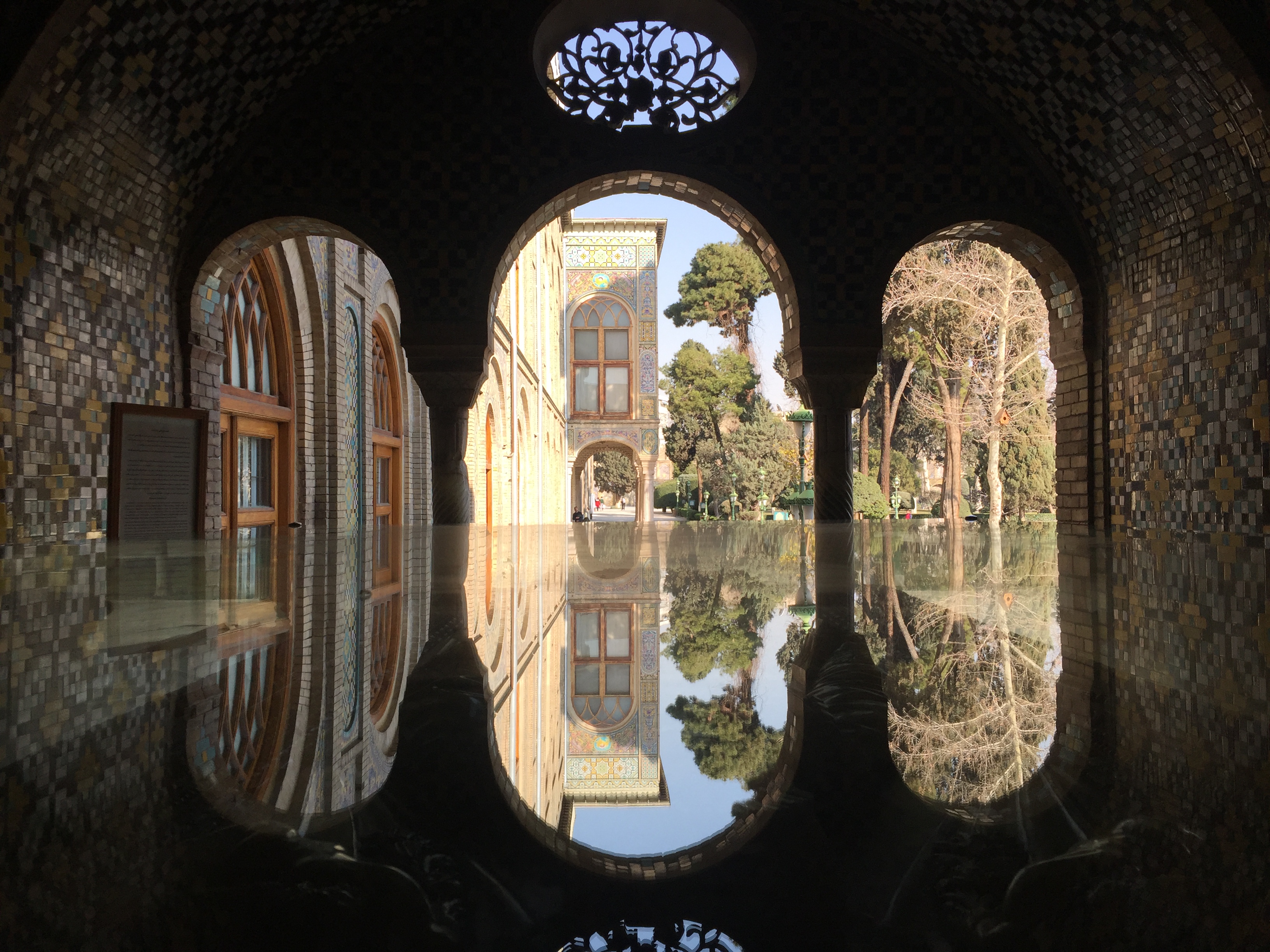
The impression of the Persian Empire from our first day in Tehran was of glitter. We were taken to two palaces from the Quajar period (1795-1921) (that is, the dynasty that preceded the Pahlavi which we all know from the last Shah) which was the high point of Tehran as a capital. Mirrors in mosaics and multi-faceted honeycomb plasterwork, glassware, a profusion of sparkling chandeliers dazzle everywhere. While the design ideas of that dynasty may have originated in the palaces of Europe, their realisation at home had its own finesse. The decor showed a penchant for reflections, optical illusions and sparkle, giving a play of light and height that was always beautiful, no matter how over-the-top. This is mirrored outside by the pools and water displays which are a feature of Persian gardens and public spaces. The motif is surely one of mystery, overturned perspectives and the illusory. In March, many of the pools were drained and being cleaned in preparation for the New Year or Nowruz festival, a major two-week celebration in Iran. (For this reason and also because the growing season had not really started, the gardens of Persia were not the central feature of the trip that they almost certainly would have been later on. Another reason to return. ) It should be mentioned that some among us were picking up home decor ideas and colour schemes from the more elaborate palaces. One even purchased a glittery mirror – for about tuppence.
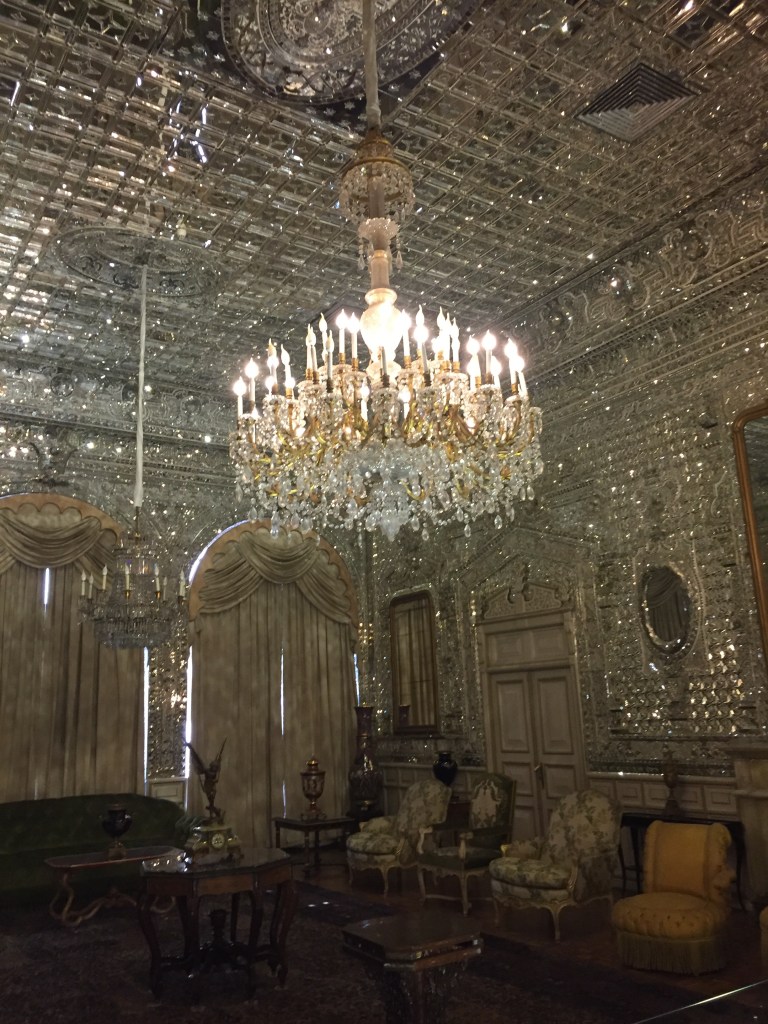
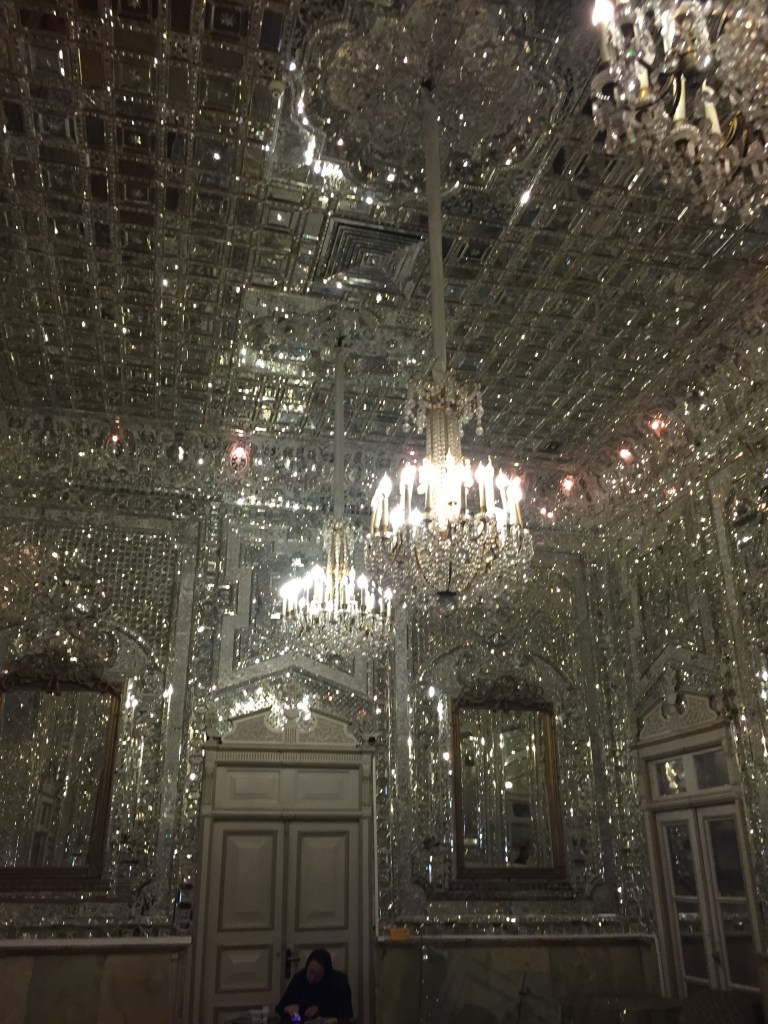
Shrines too were mirrored.
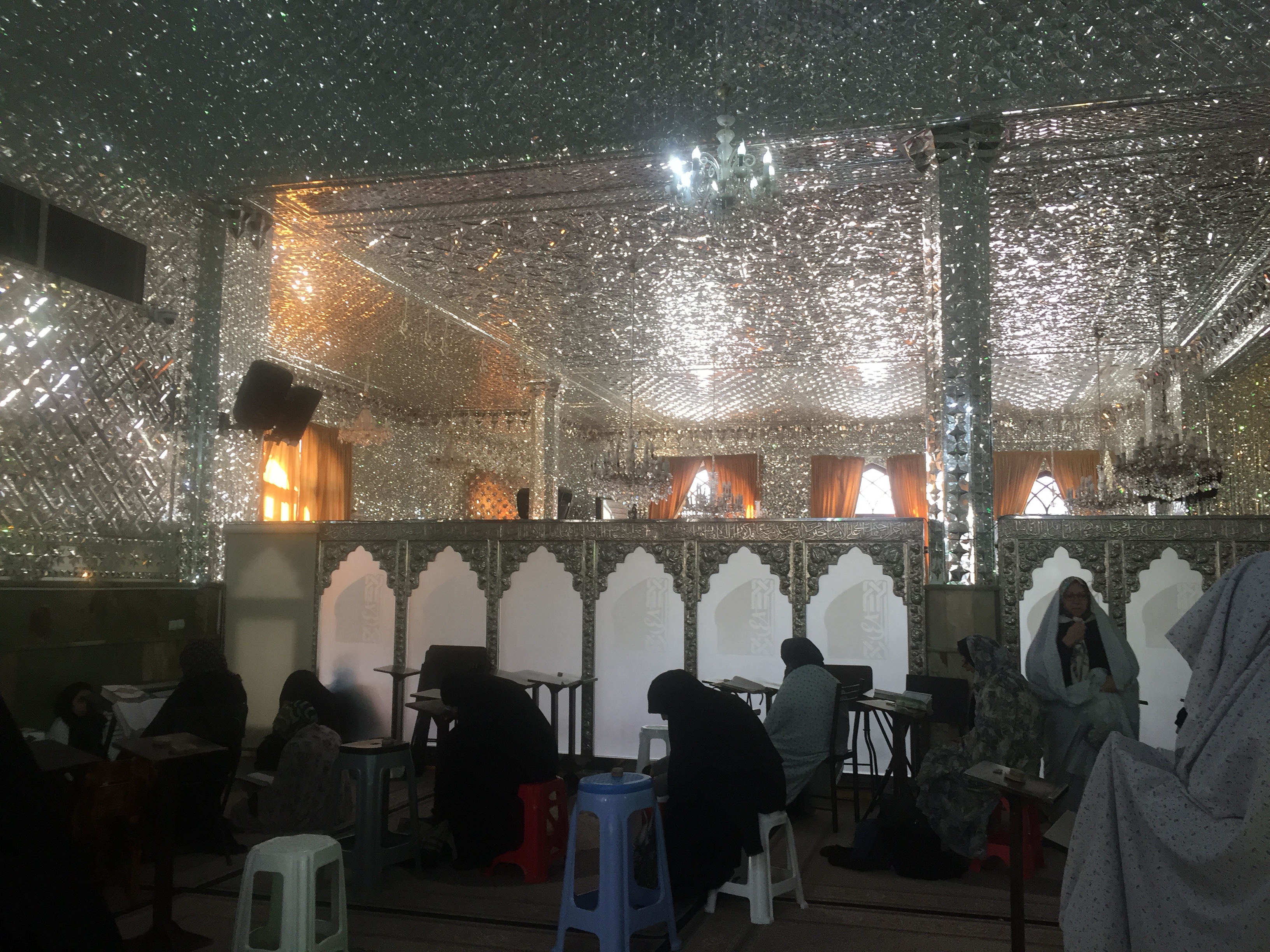
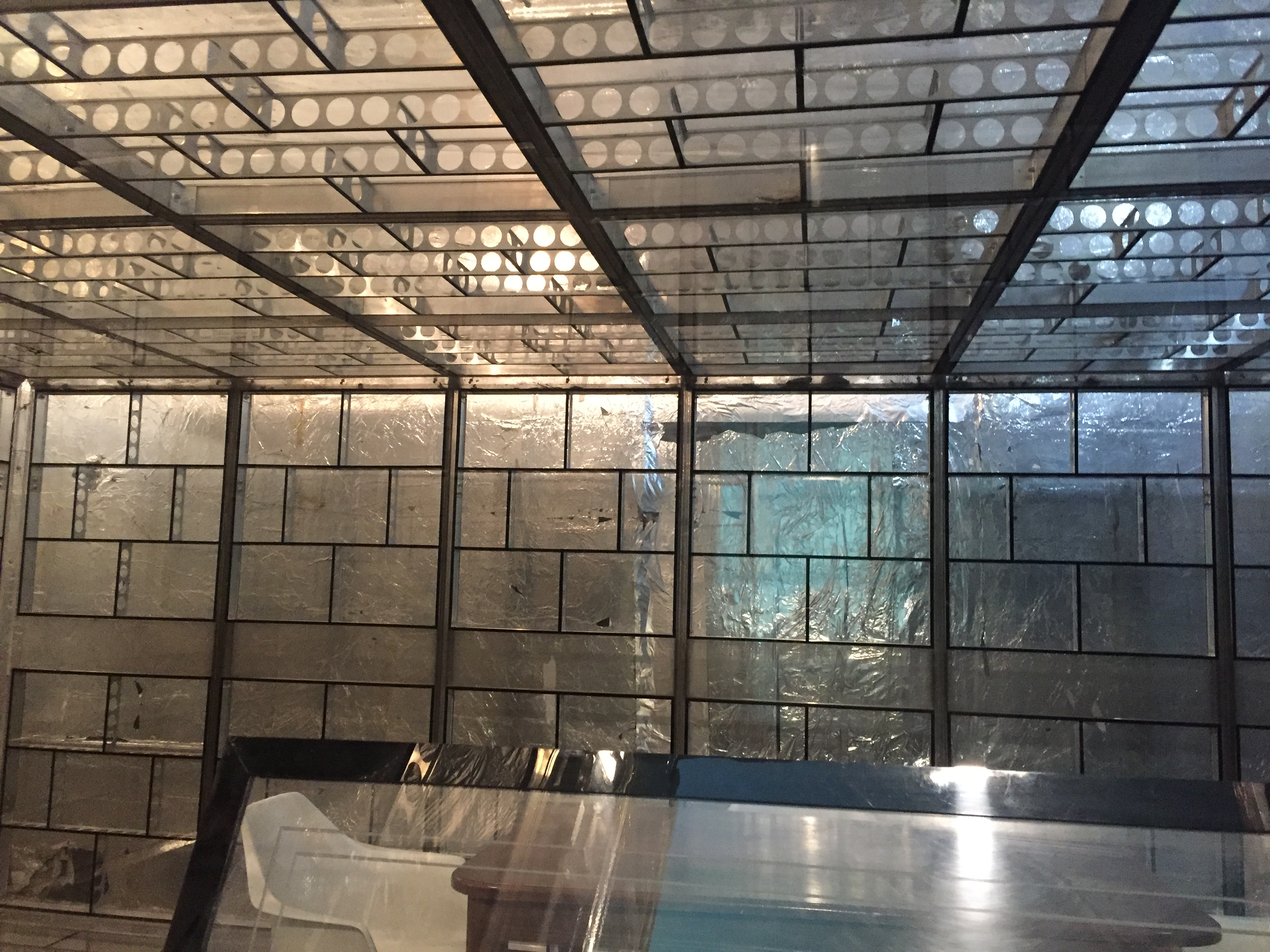
But in our very short visit to Tehran we saw another mirrored chamber, this one inside the US Den of Espionage, as the former American embassy is now called. Susie asked for this fascinating addition to our tour .
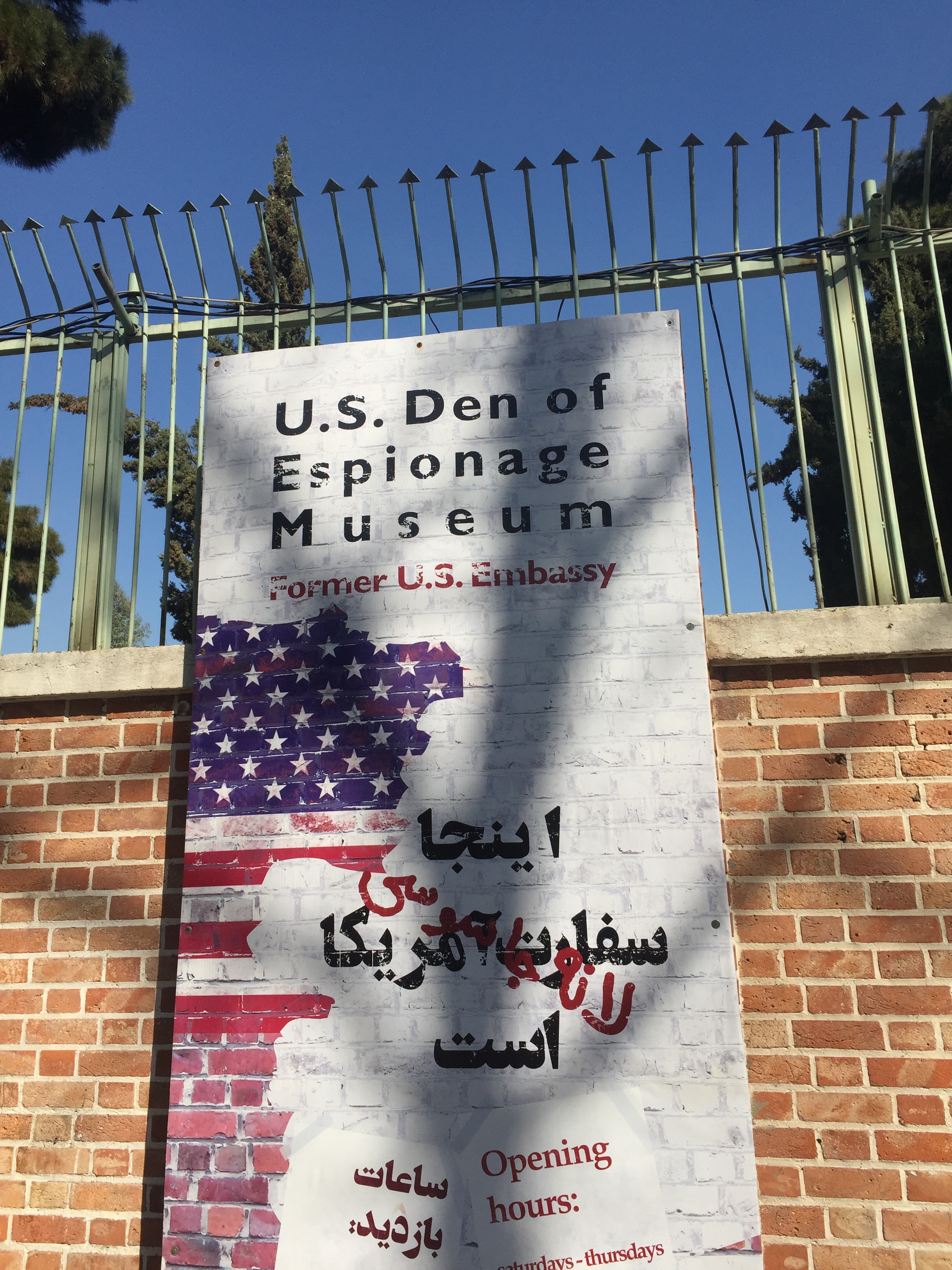
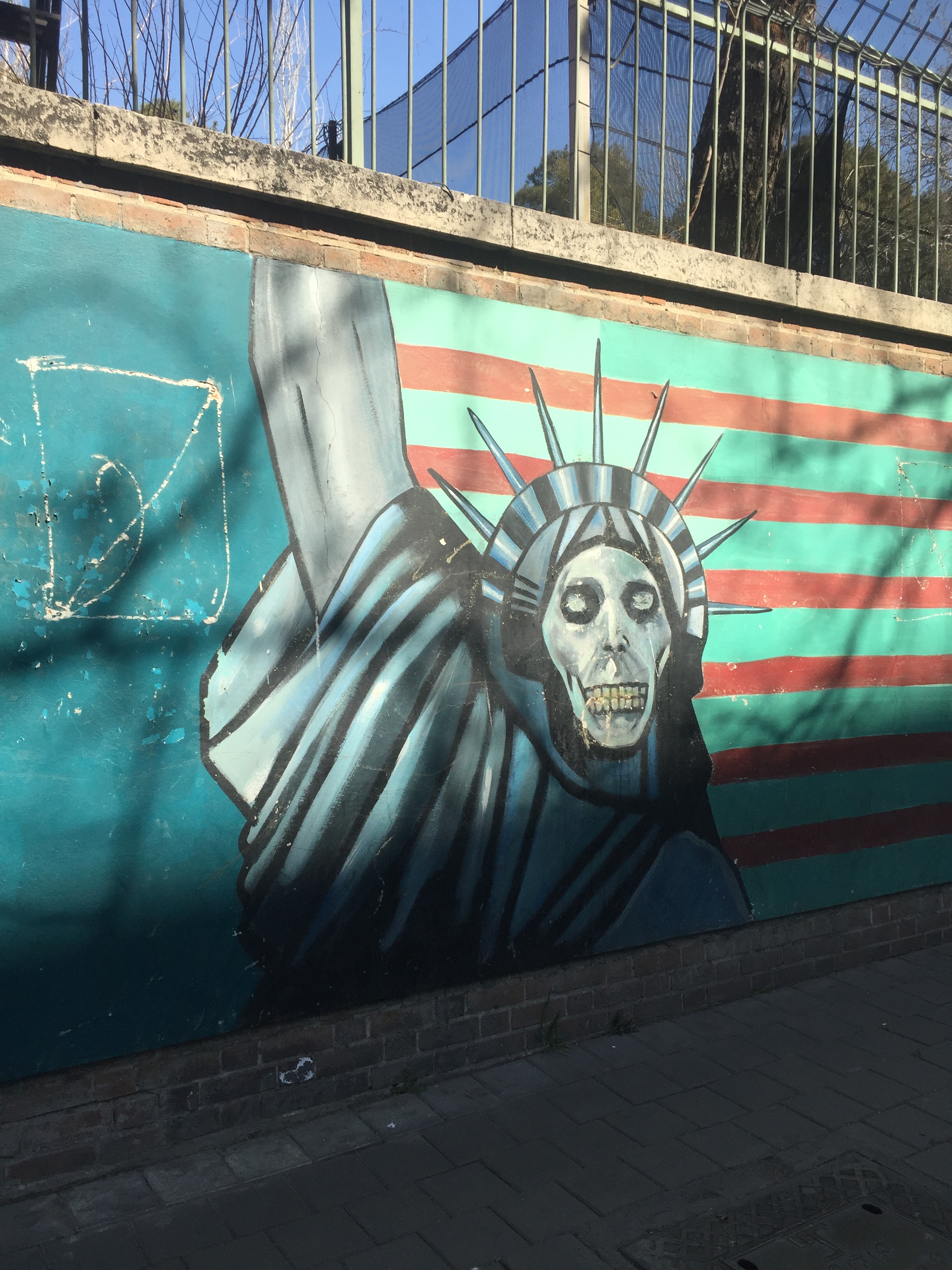
The former embassy was the site of the 1979 hostage crisis, and set in the Museum ‘Garden of Anti-Arrogance’. We were escorted by a guide who described Operation Eagleclaw, the disastrous American mission to free the hostages, described in “Mission to Iran” by Daniel Sullivan, the then (and last) American ambassador to the country. We were shown the secrets of the second floor: fortified rooms with bullet-proof doors to house secret documents, and the locus of the CIA which apparently monitored the whole of Central Asia (and Russia) from there. One such room, built like a safe, was lined entirely with silver foil. Here its role was protective but also perhaps redolent of mystery.
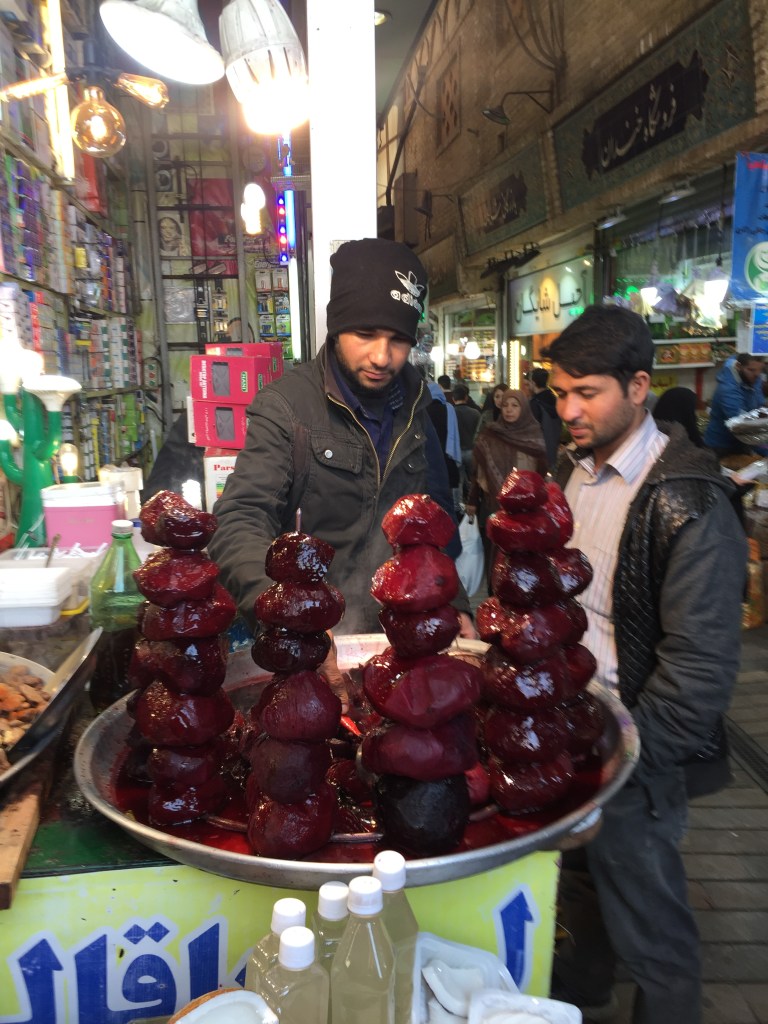
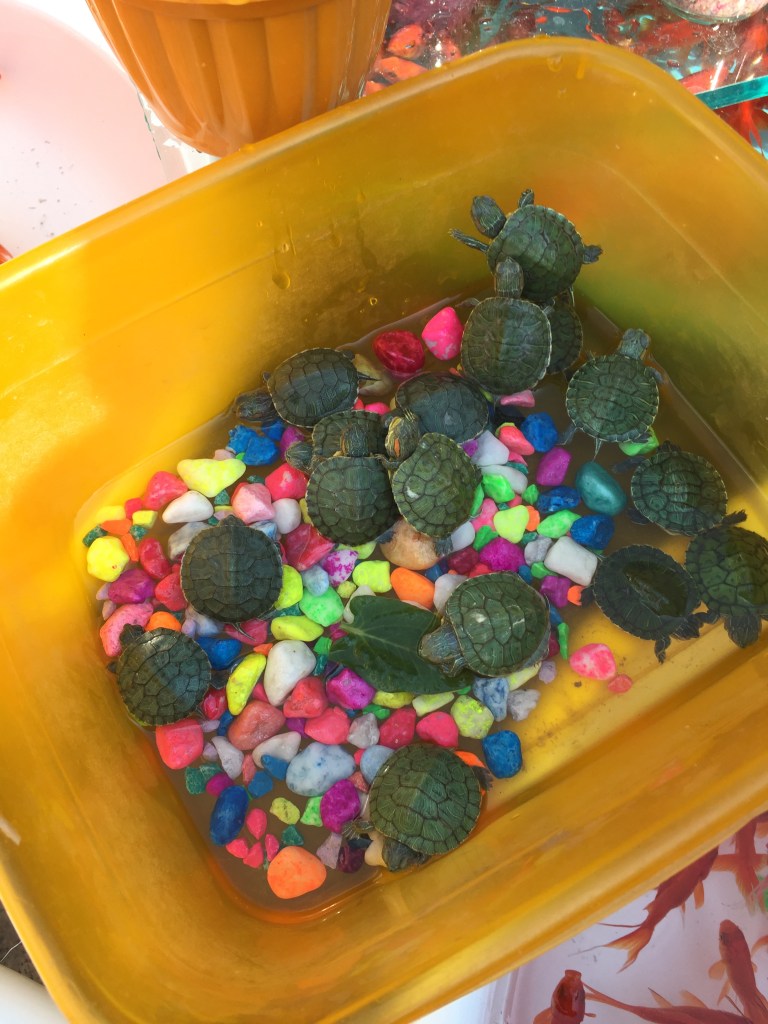
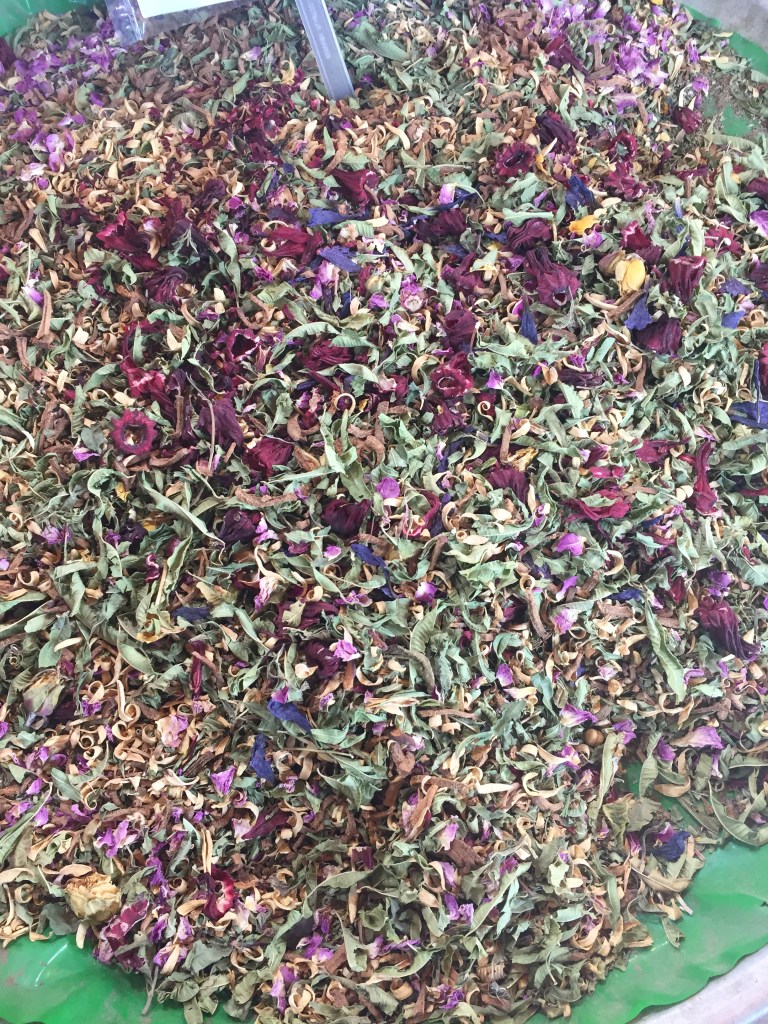
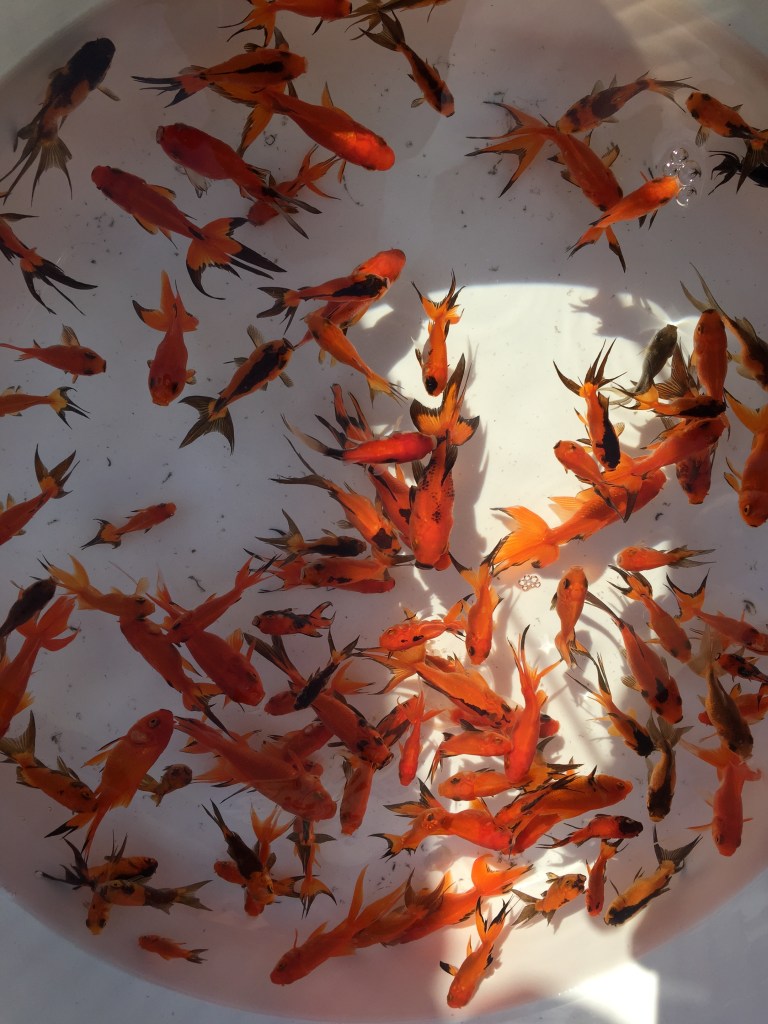
Our day in Tehran finished with the first of many bazaar trips, full of colour and exotic produce. Here too we had our first experience of wide smiles and friendly and easy-going curiosity – with little of the pressure to buy associated with markets in many Arab countries. One felt that people were showing us their produce just to engage; no problem if we did not buy. Goods were being sold for the Nowruz (New Year ) altars erected in every Iranian home which has to hold at least seven objects beginning with the letter ‘s’ in Farsi. Nowruz is a two-week-long Zoroastrian festival and is observed in Iran as a time of Spring and renewal.
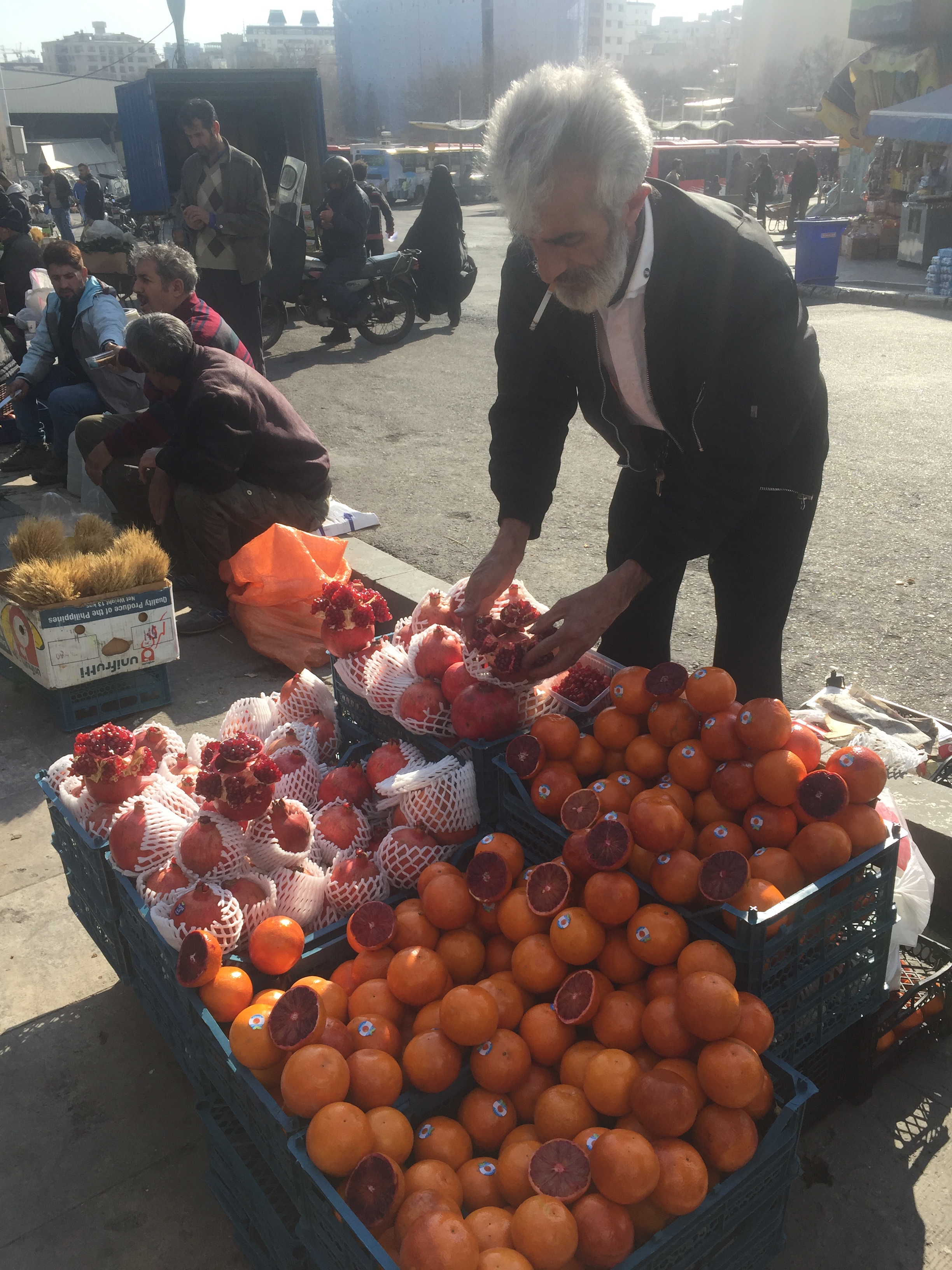
Just a brief word about the food on our trip. It was lovely – walnuts and salad and pomegranates and aubergines – and Banefsheh gave us a little discours on the philosophy of Persian food: either hot, cold or in-between in nature and the need to strike a balance between these qualities when they cook.
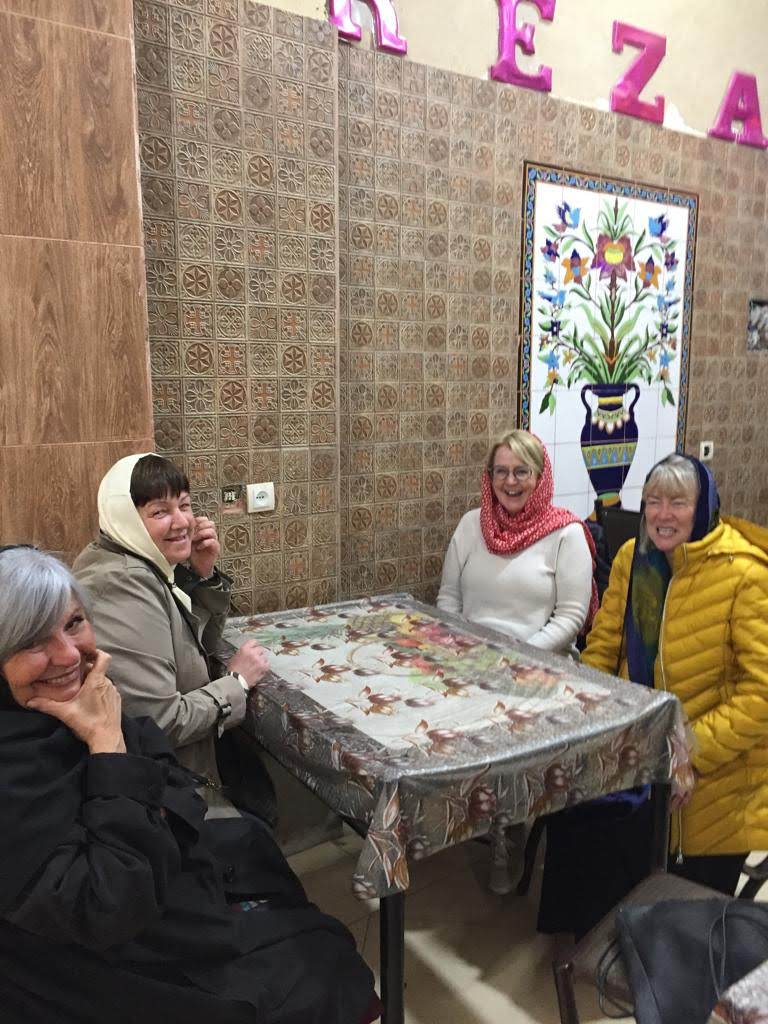
However in truth the only meal I really remember is the one on our first night in Isfahan in the Cafe Reza, a modest cafe in the bazaar. We were all hungry and couldn’t find a single place until somebody directed us here. A small cafe of about three plastic tables which had to be rearranged to accommodate us. There was no menu so we just pointed at the kebabs. A photo of a waterfall on the wall proved an invaluable visual aid to convey our desire for water. A couple of young boys came in for a takeaway and amused themselves by attempting to chat with us. We had a plate of chicken kebabs and laughed until we wept. Best meal in Iran!
 Itinerant in Iran