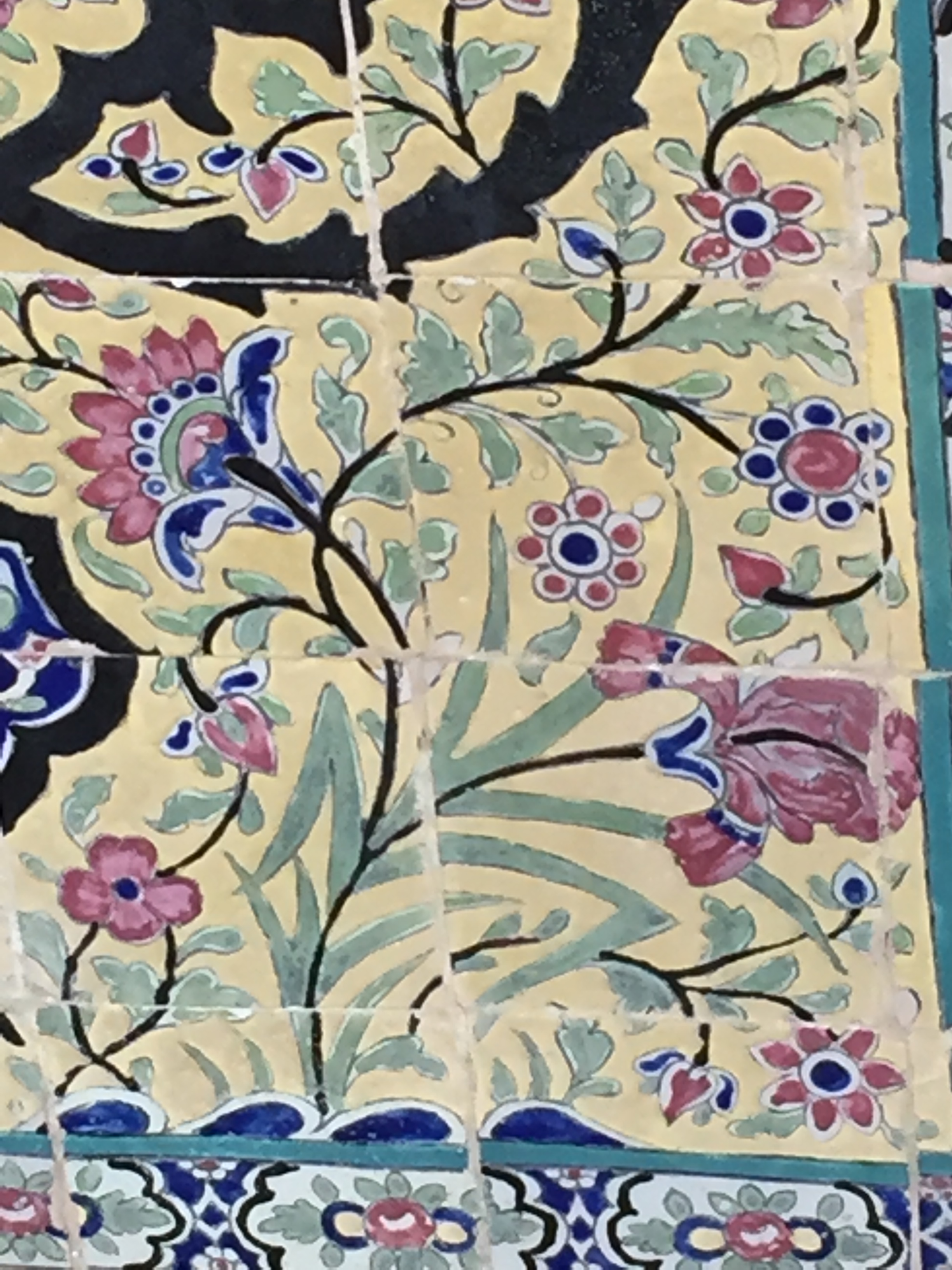
As well as cultural excellence, our trip demonstrated the high level of technological achievement in Iran across the ages, frequently fused with a poetic or artistic realisation. The importance of qanats – an old system of water supply from a deep well with vertical accesss shafts – in irrigating the great land mass of desert in the South of Iran is pointed out in all the guide books and the communal and strategic nature of this resource has profoundly marked the history of Iran, and the sense of time and space of the Iranian people. From this (distribution of water in a desert landscape) derives the significance of the garden as the high point of achievement – and perhaps too accounts for the prevalence of vegetal and floral imagery in the public art in the mosques, shrines, hammams and bazaars.
A few examples.
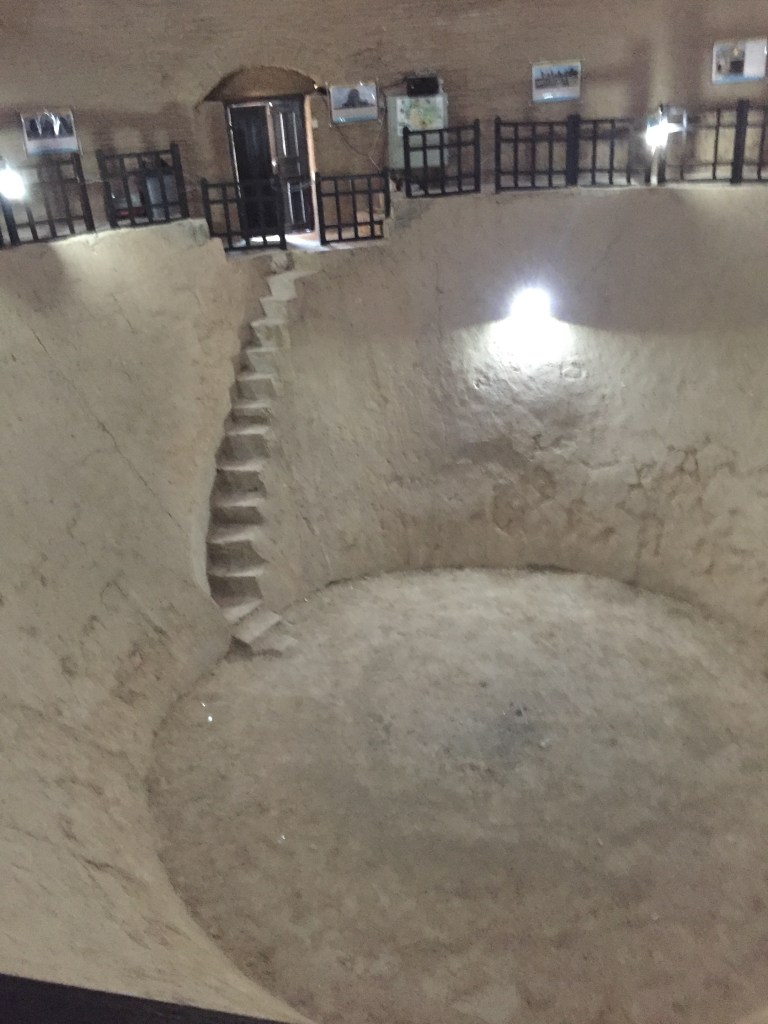
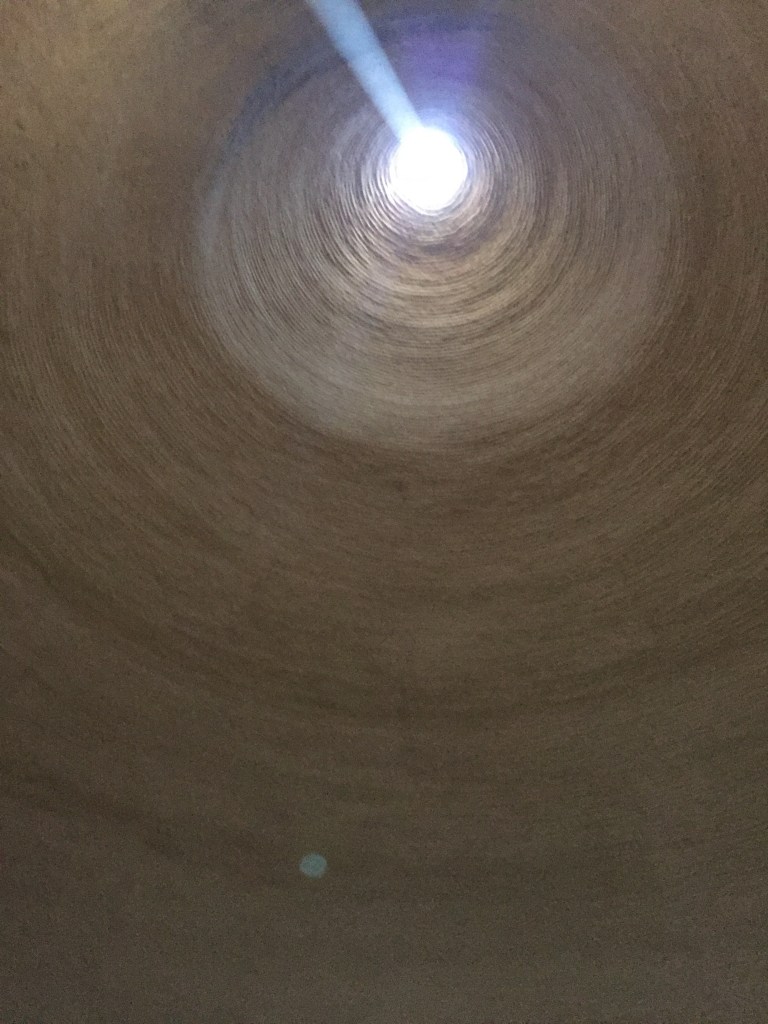
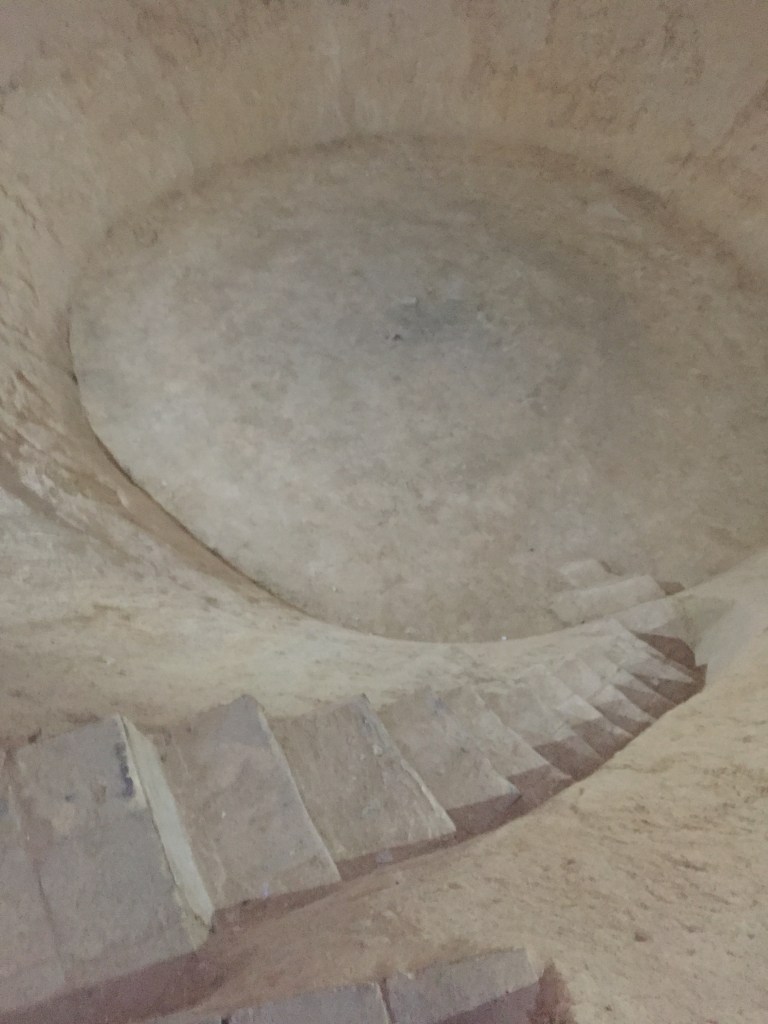
For me the most extraordinary construction was the 400 year old, egg-shaped ice house which we saw in Meibod, a small town between Yazd and Isfahan. This was constructed to preserve ice collected in two flat pools outside from the heat of summer. Not only was this egg-shaped edifice beautiful to look at, it had magical acoustic or echo effects that seemed to fill it with voices where there were no people.
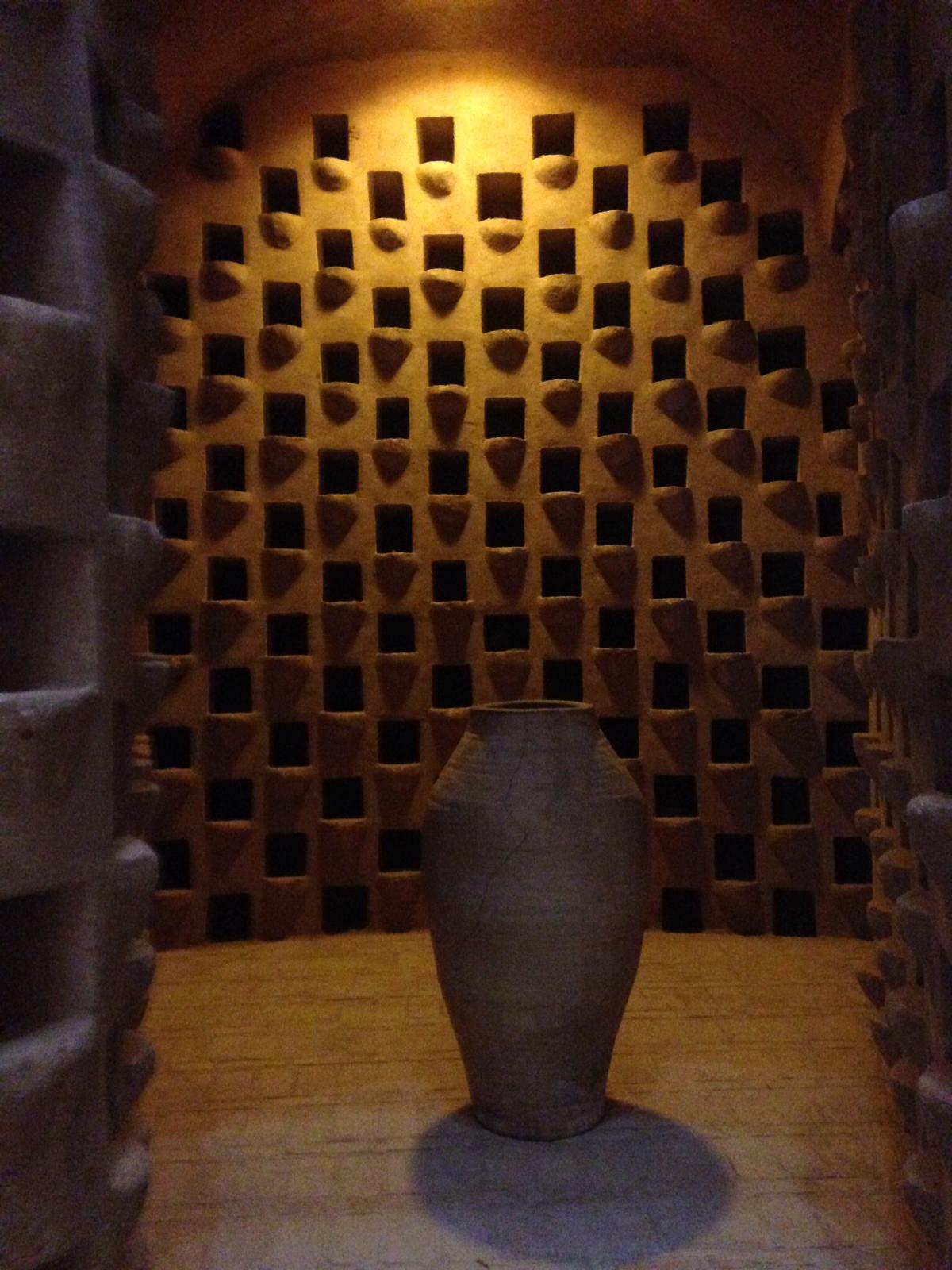
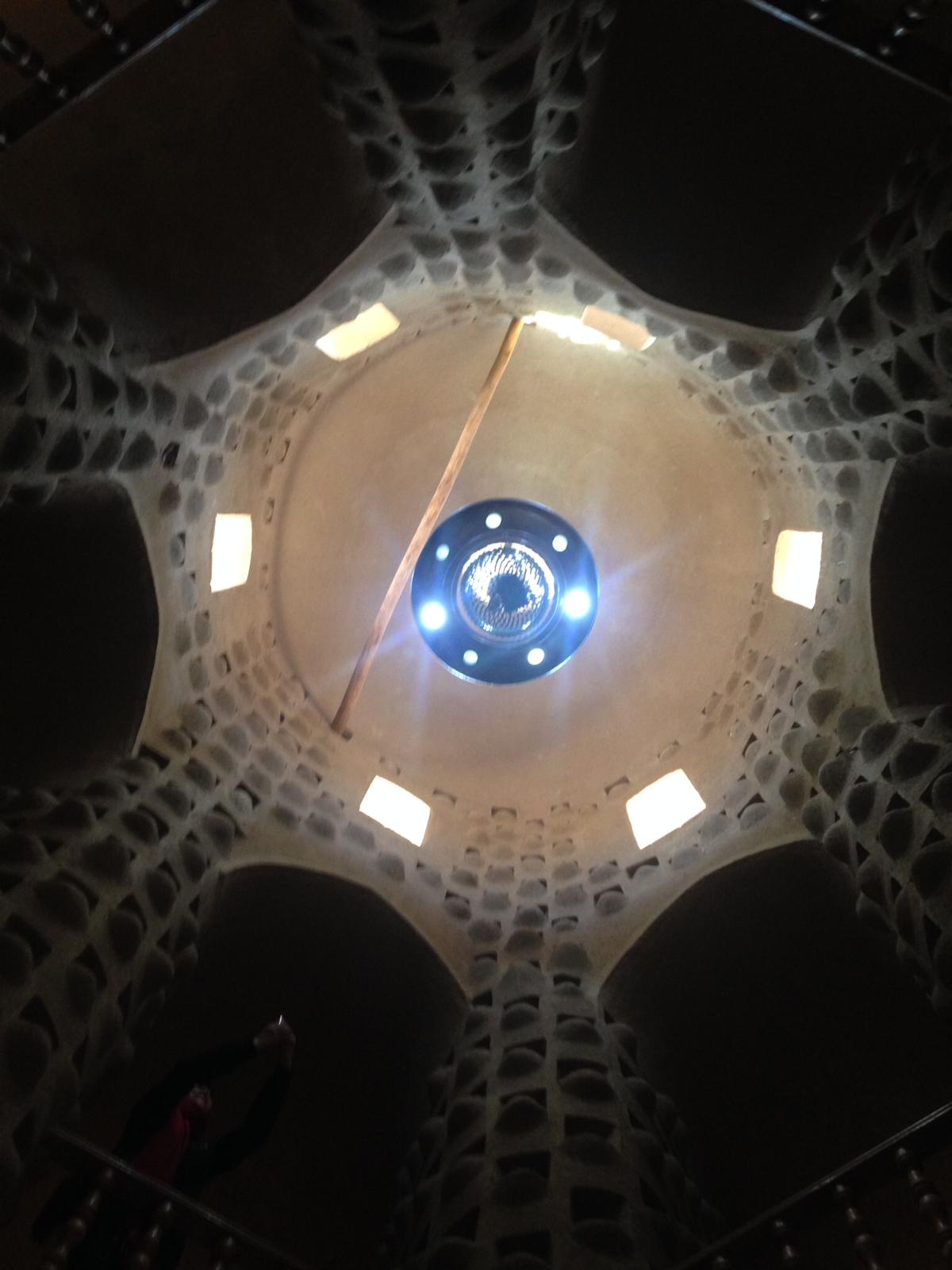
In the same town was a 200 year old pigeon tower, built to collect guano from 4000 birds and itself also a rather beautiful creation.
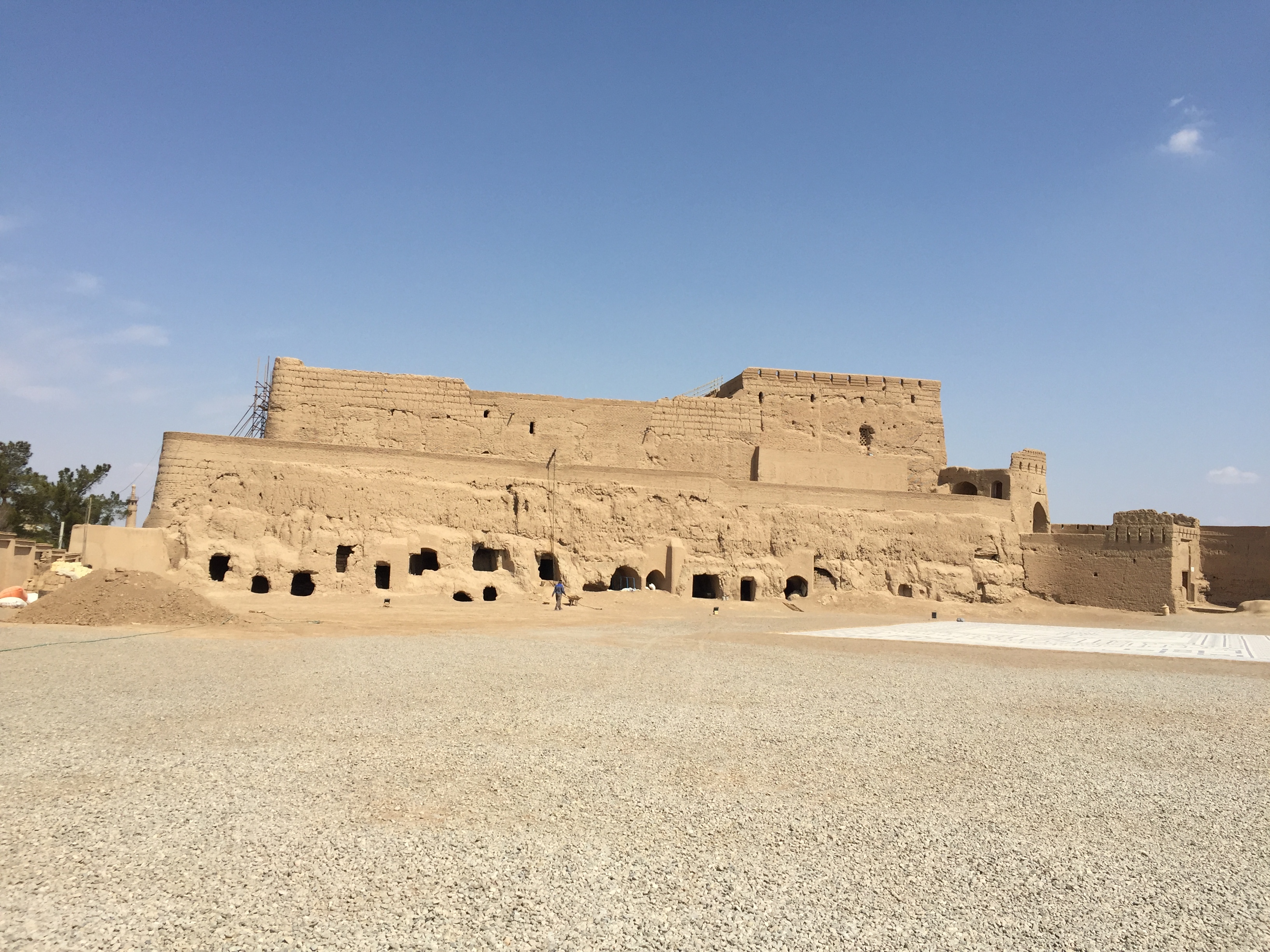
Still in Meibod, we visited the Narin Qal’eh or Castle on a splendid site overlooking this very interesting town. It was being repaired during our visit by workmen using their bare hands to paste on the red mud from buckets on rickety wooden ladders. Parts of the castle date from 4000 BCE and also from the Achaemenid (7th to 4th centuries BCE) and Sassanid (224-651 CE) eras.
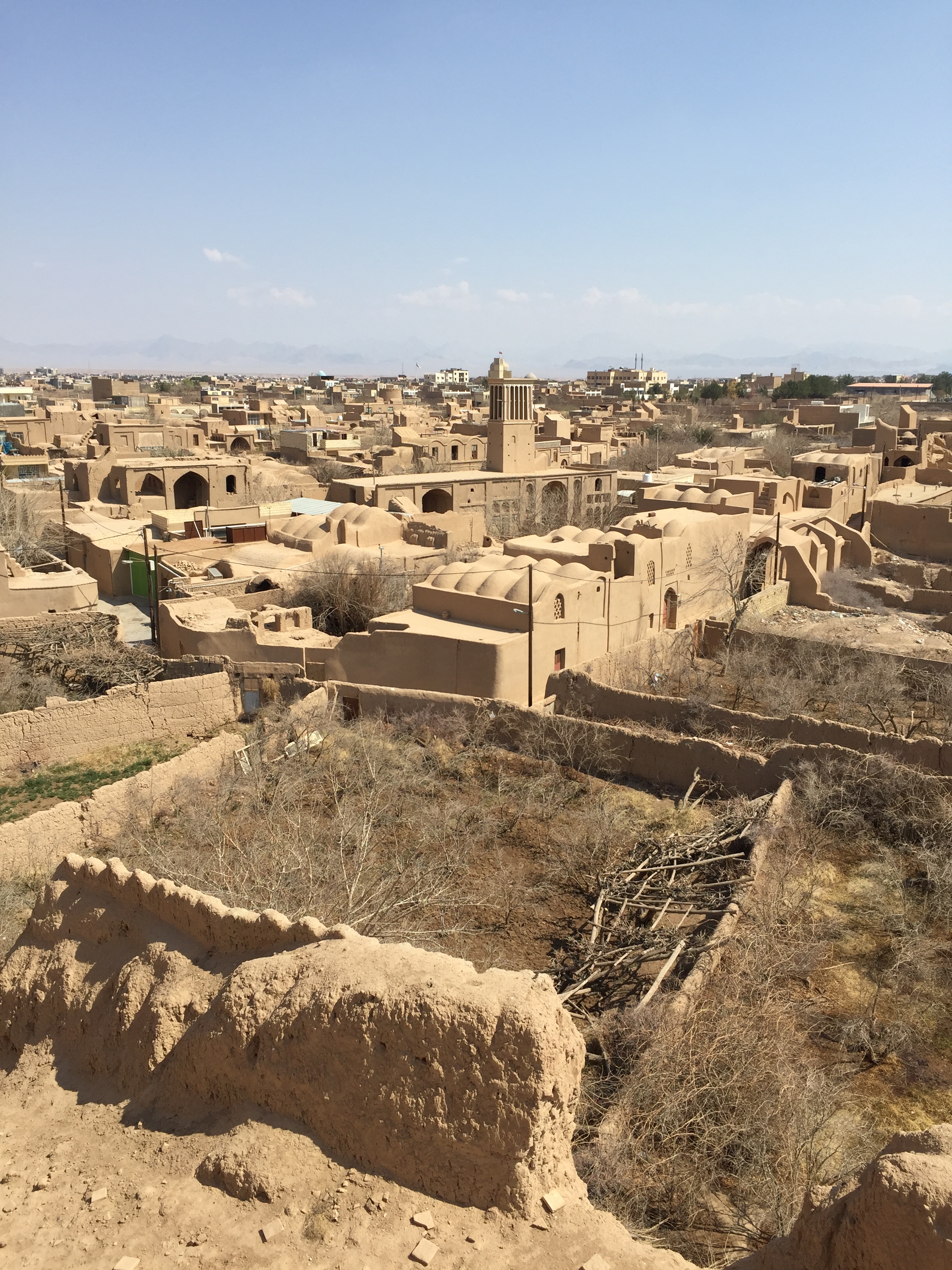
The badgir or wind-catcher is another technological marvel – early air-conditioning – which poetically harnesses the wind to provide evenness of temperature inside buildings. Banefsheh gave a balletic demonstration of how these worked by tossing pieces of tissue paper upwards, eventually to be captured and brought up by a shaft of warm air. These dominate the roof-scape of Yazd.
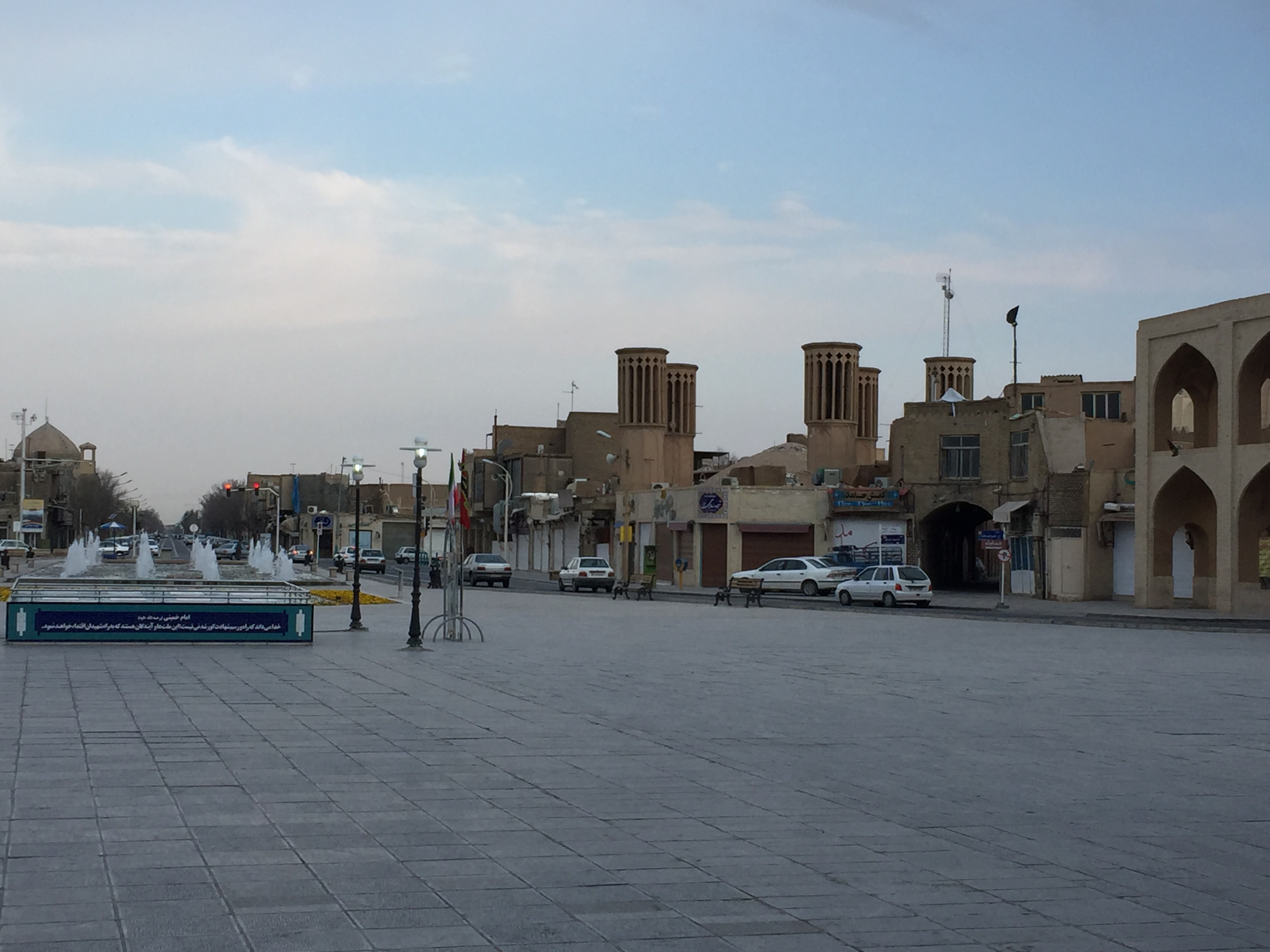
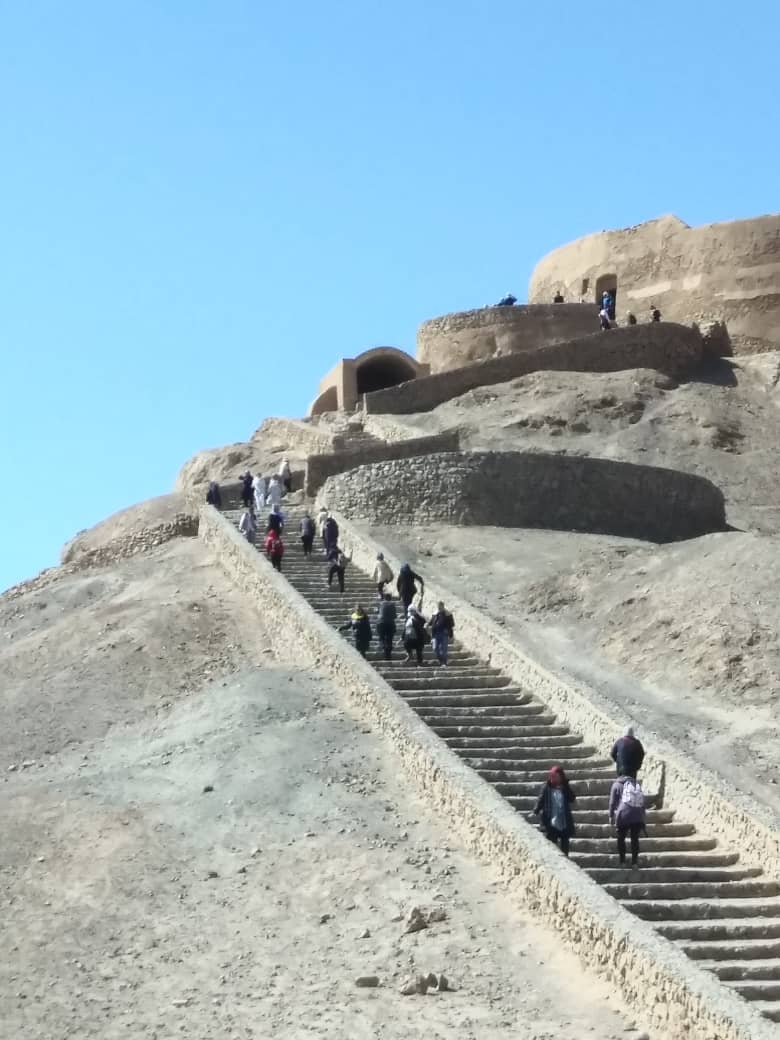
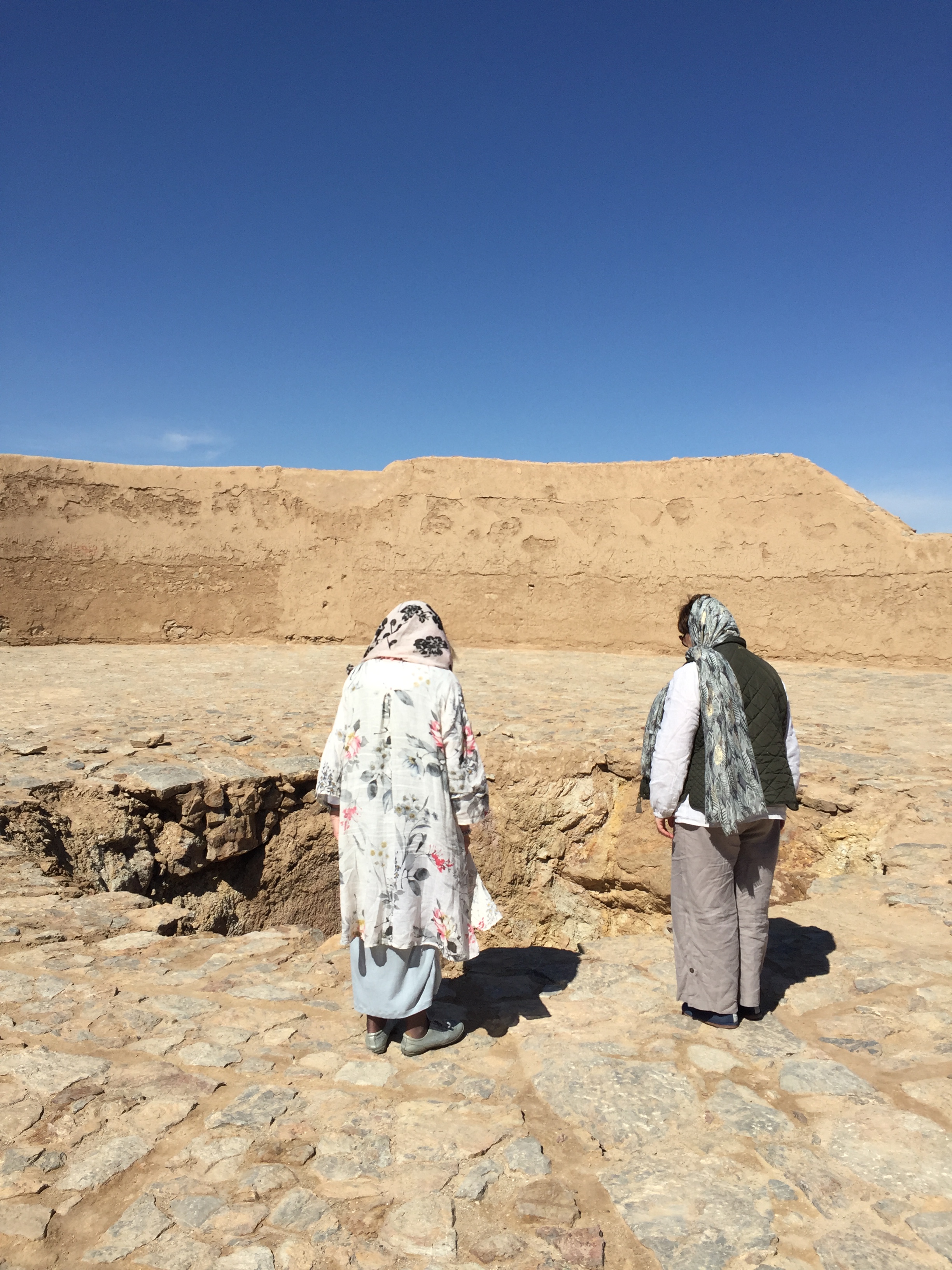
Yazd also had a Zoroastrian Tower of Silence where the dead were left to be cleaned by carrion birds before interral.
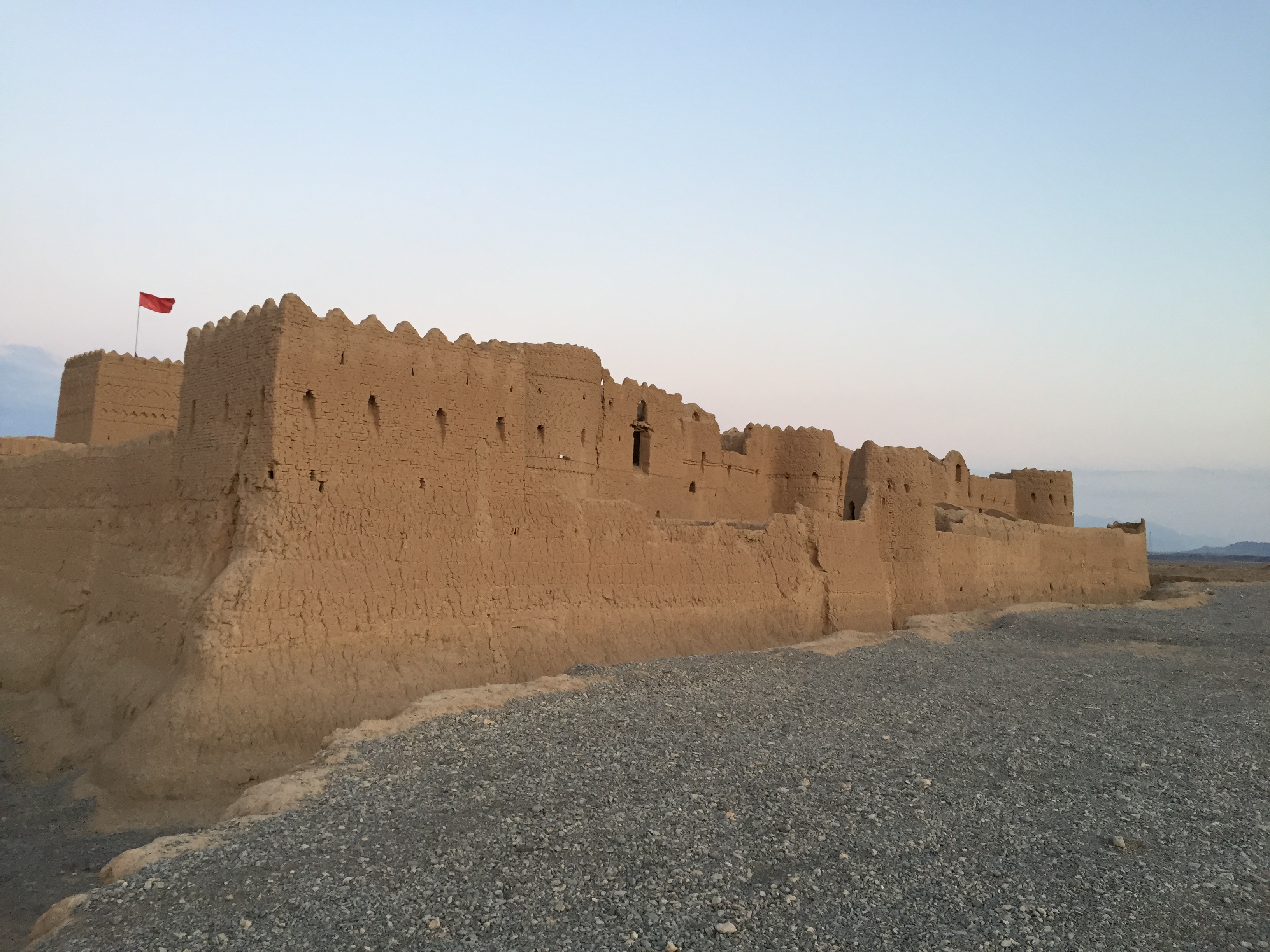
Yazd too, because of its proximity to the Silk Road, had a formidable fortress to store valuables in the 7th century Saryazd Castle with its concentric walls and moat. Wealthy people stored their treasures here and grains and food were also kept here.
 Itinerant in Iran