In any one day of our trip we became accustomed to seeing buildings or monuments that could date from 3000BCE to anytime CE. In fact, dazzled by dynasties, we often sashayed between as many as four periods . We were all too aware that our tour was whistlestop and that even in the most ordinary of towns there was a lot more to be seen: another reason to return.
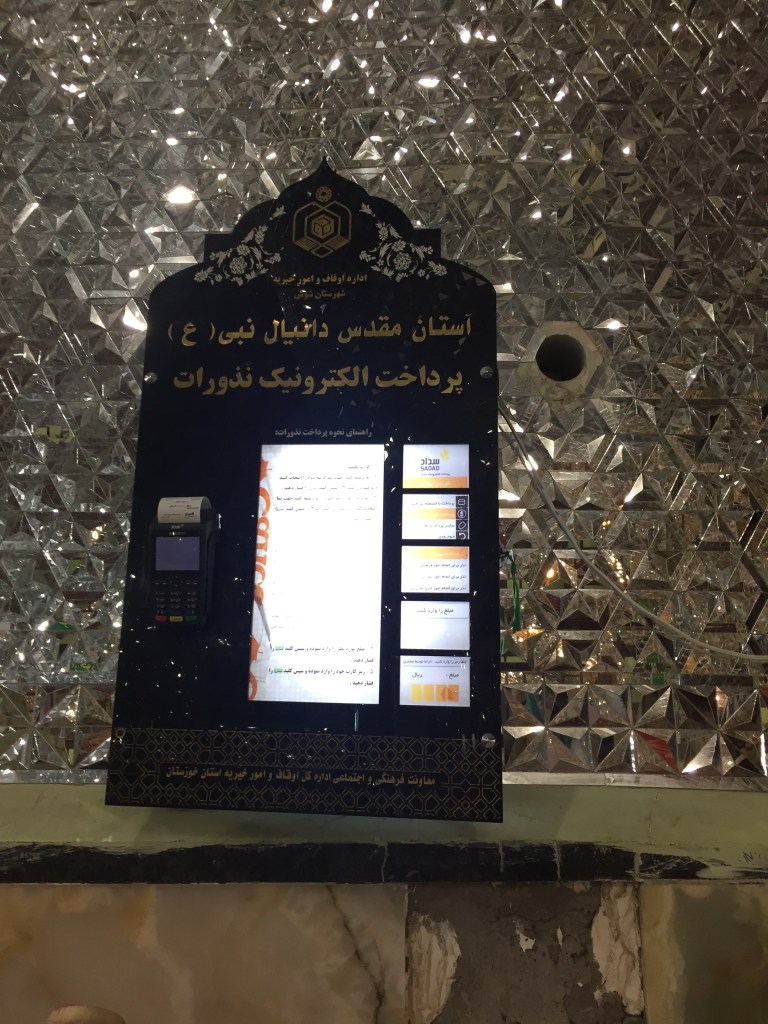
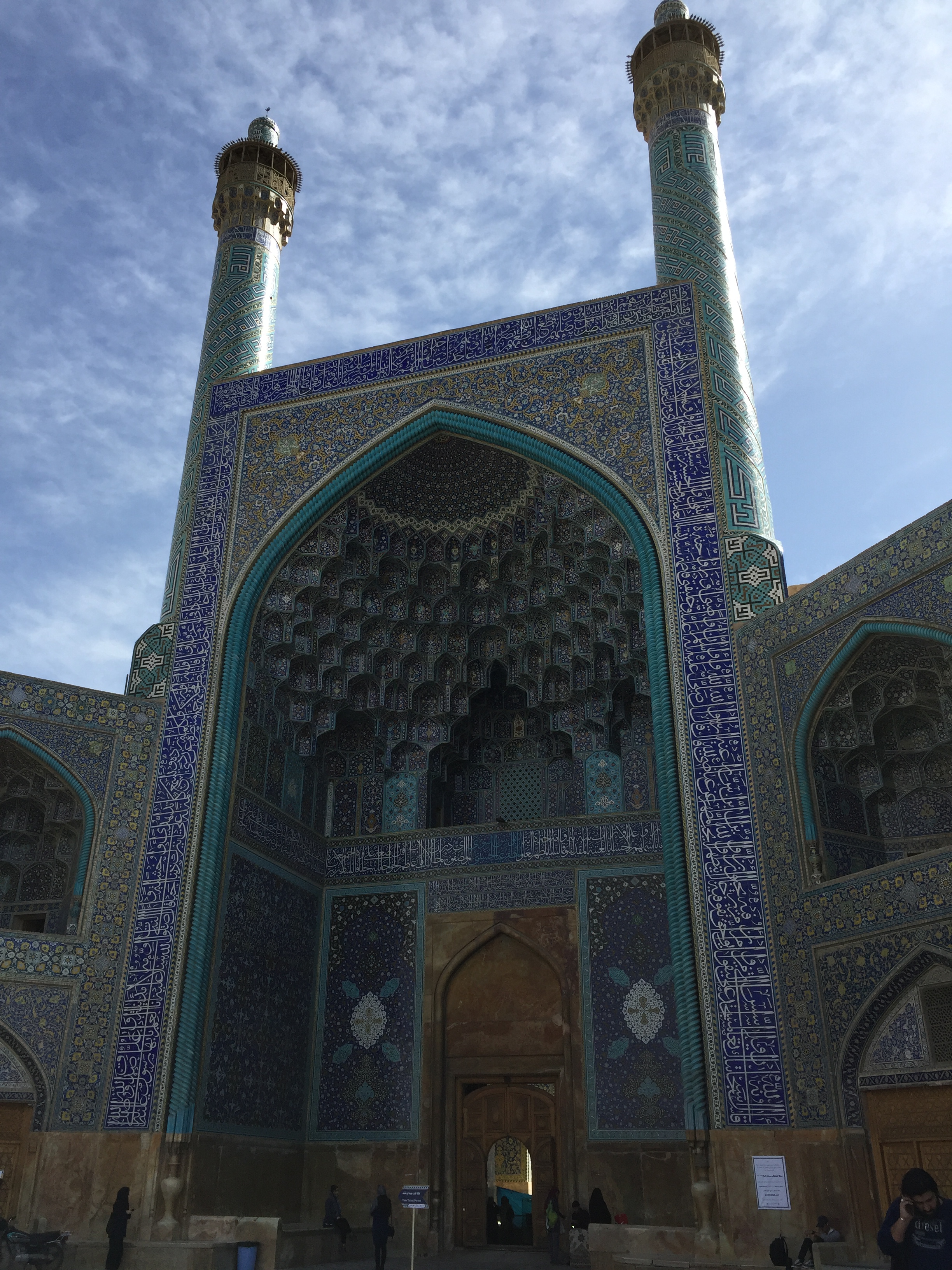
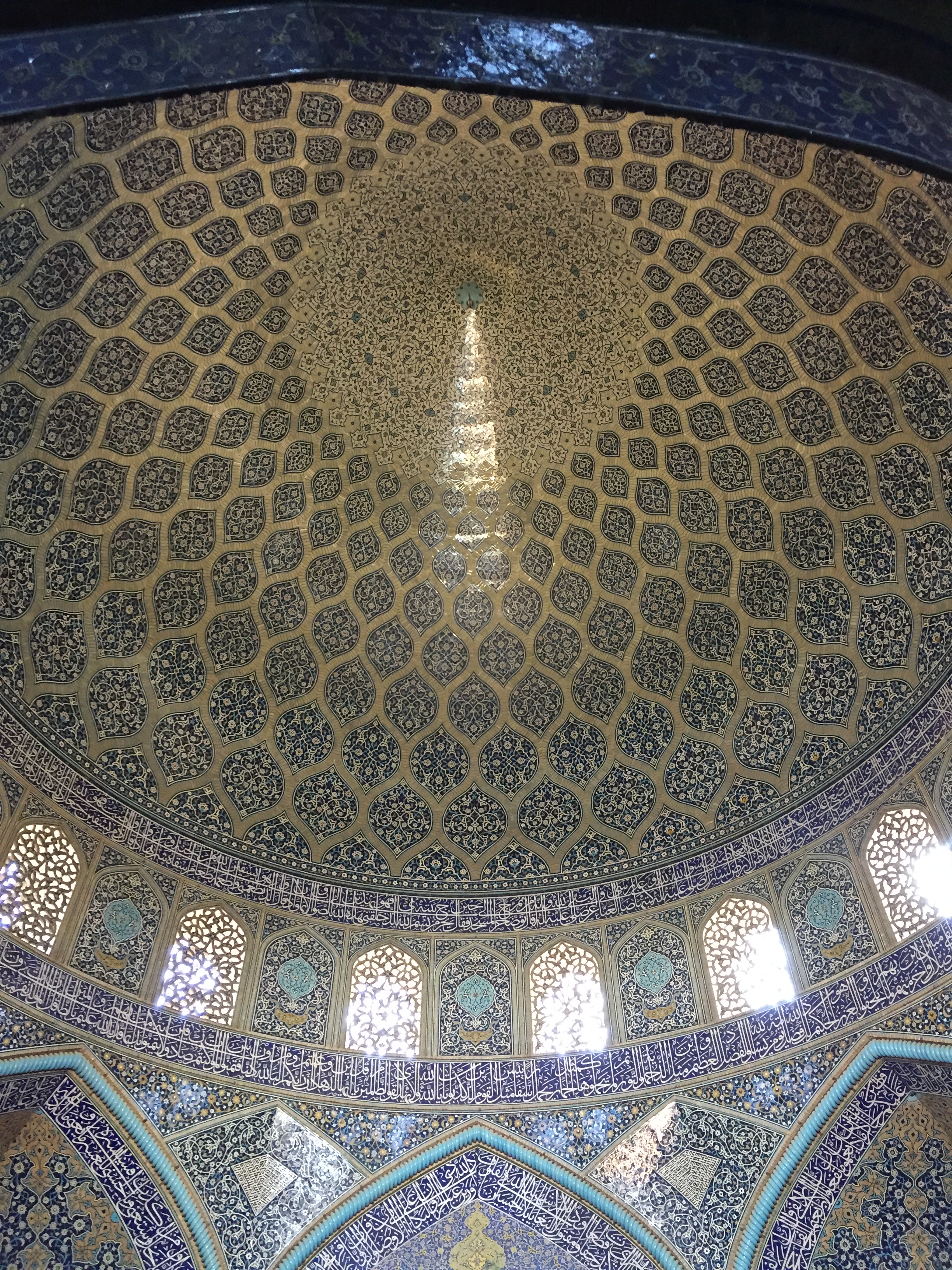
The mosques, shrines, hammams and bazaars are at the core of Iranian life as is apparent from their nearness to one another at the centre of all the cities we visited. The decoration of the mosques was our main exposure to Islamic art. Many of the major ones are covered in beautiful tilework. In Susa, we visited the shrine of the Prophet, Daniel, where he (of the lion’s den) is said to be buried. This is widely visited by Muslim pilgrims.
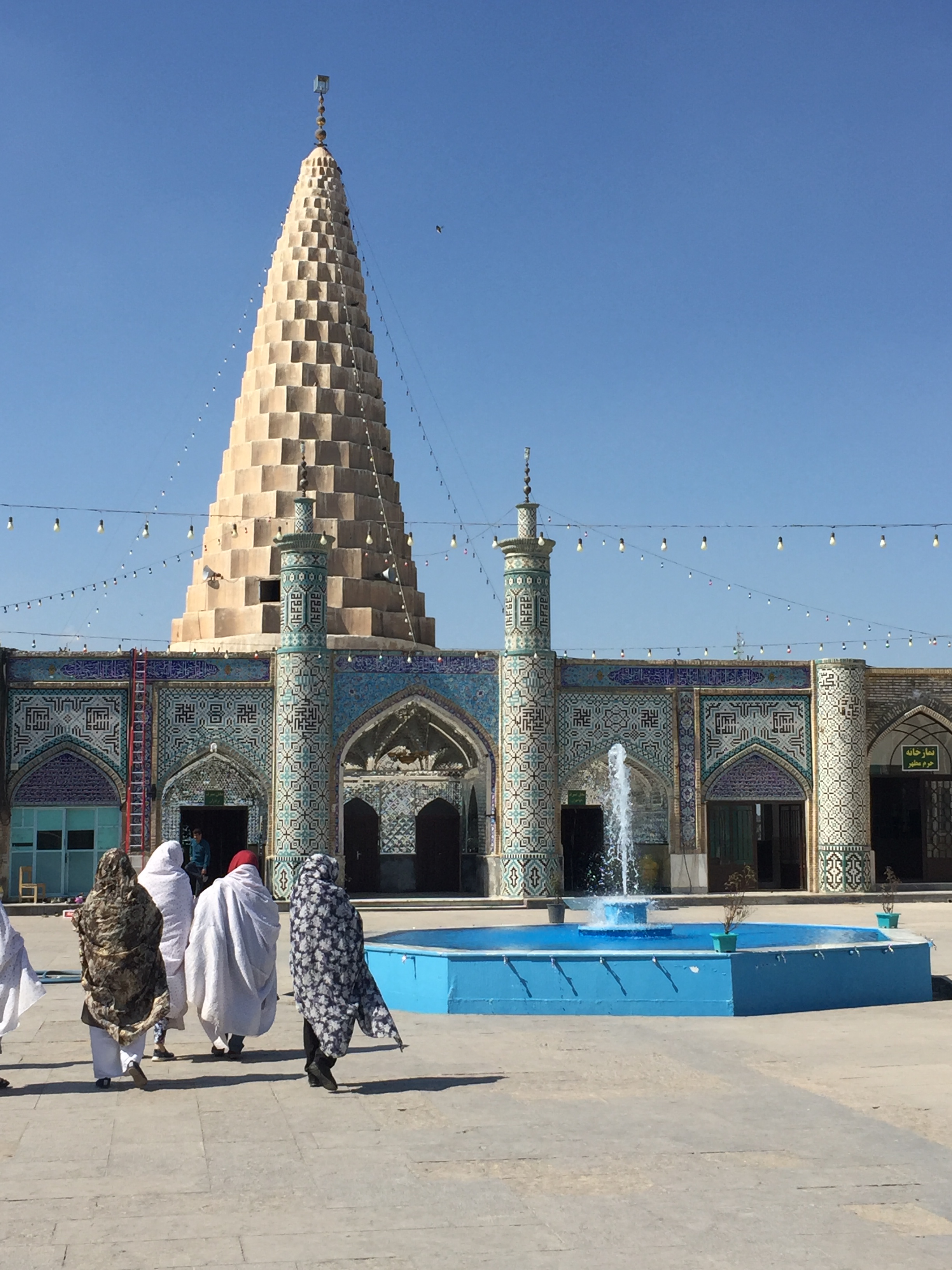
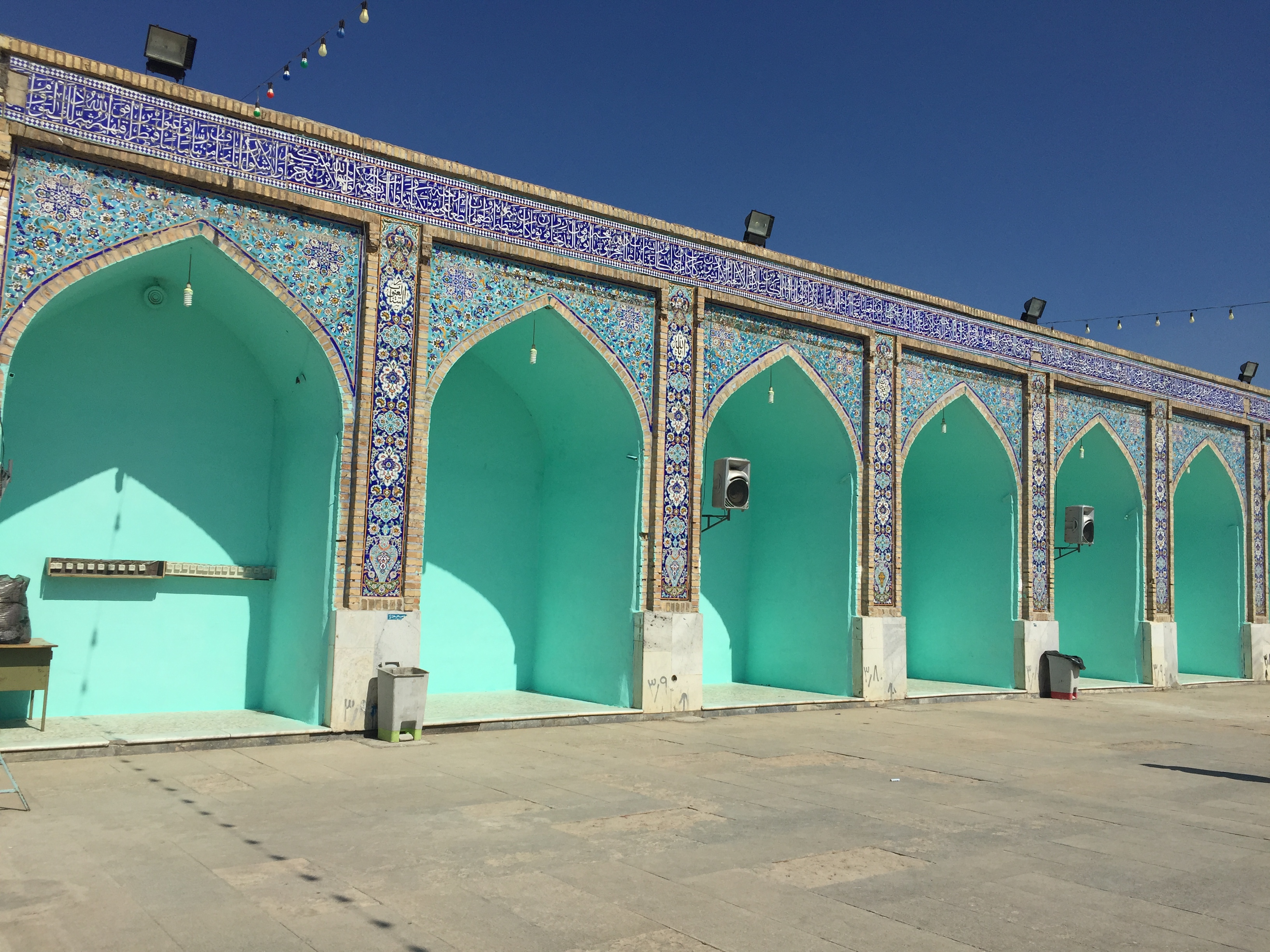
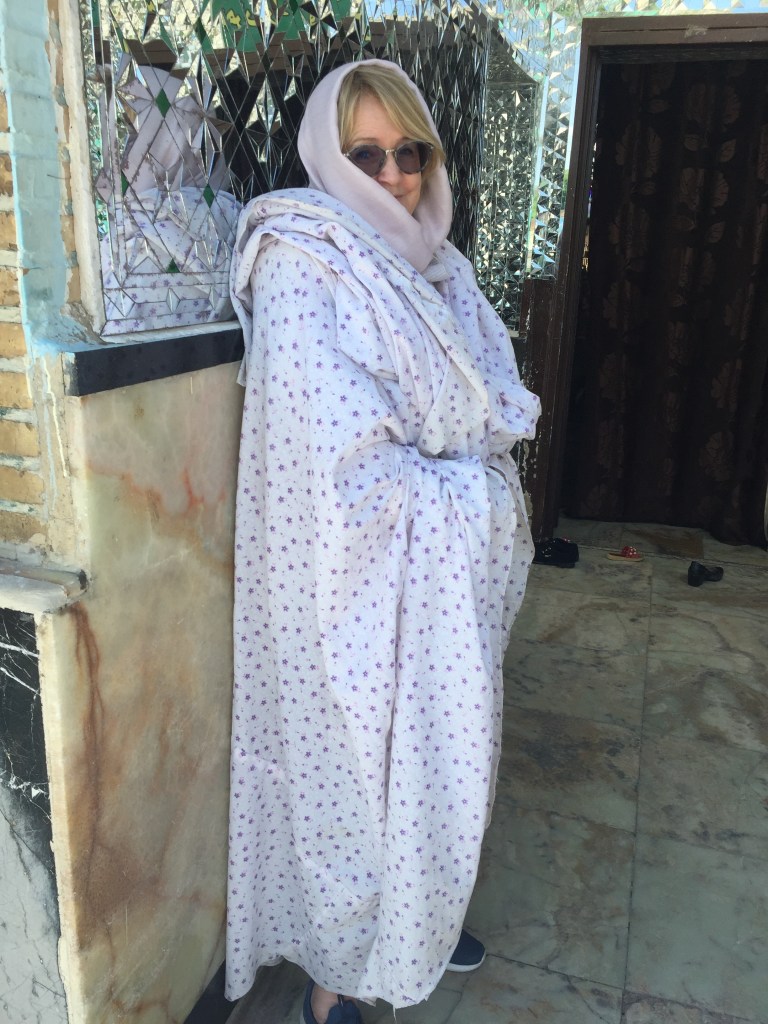
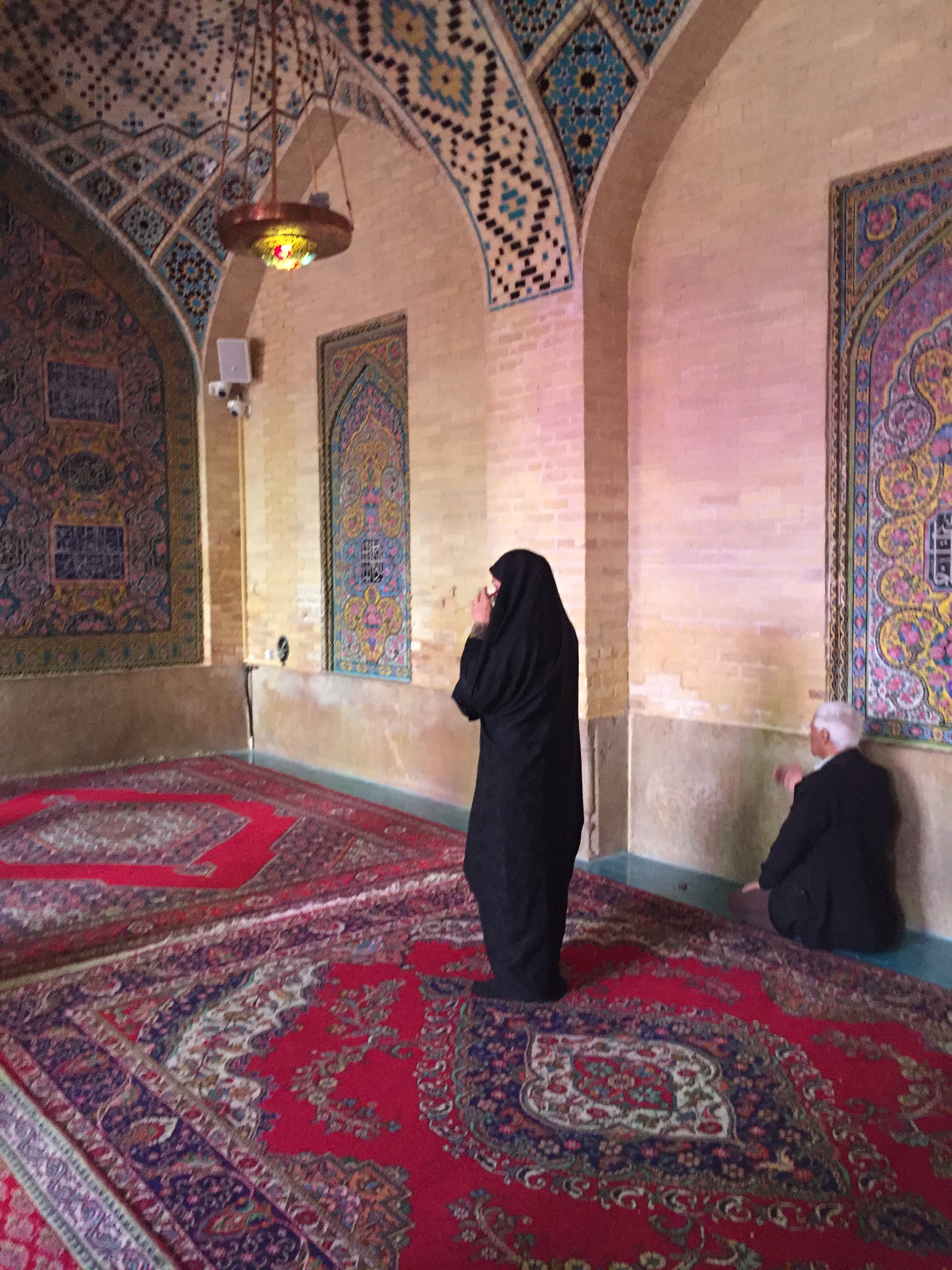
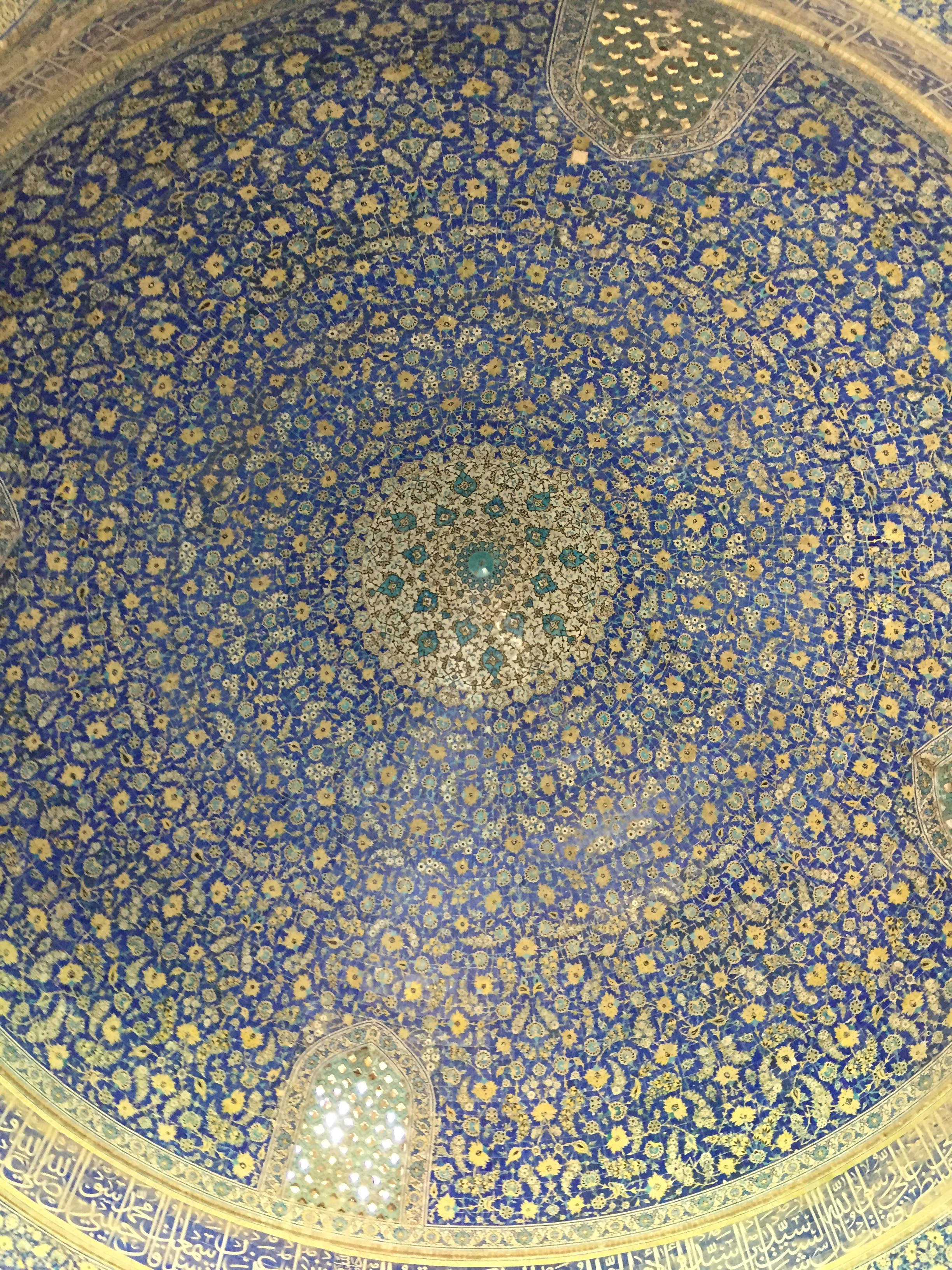
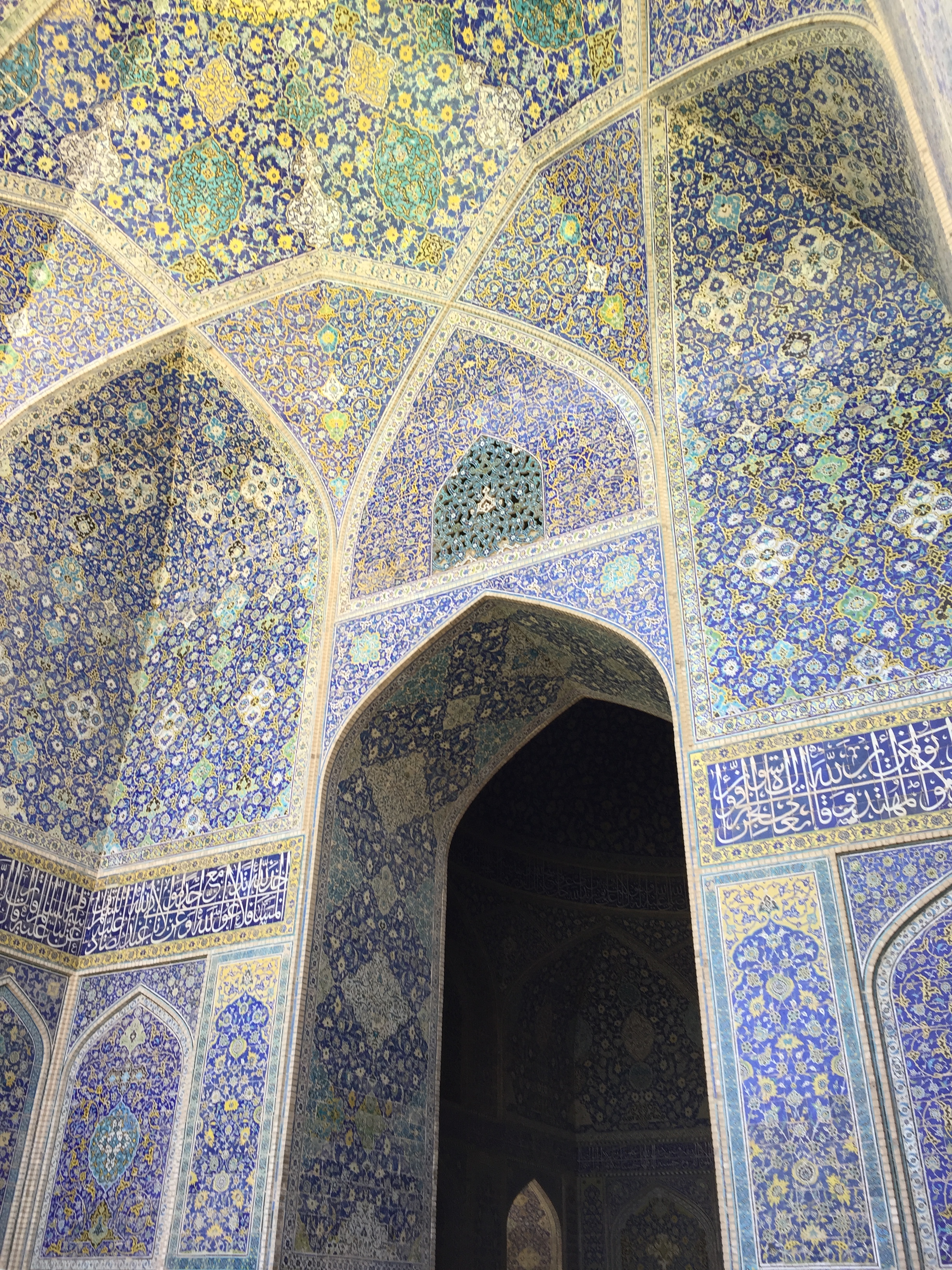
The Pink Mosque in Shiraz (19th century) built under Quajar rule is as breathtaking as it is famous with exquisite tilework and a system nearby for extracting water from the quanat (more later). Tiles in the mosques were either displaying script from the Koran, vegetation or geometric patters.
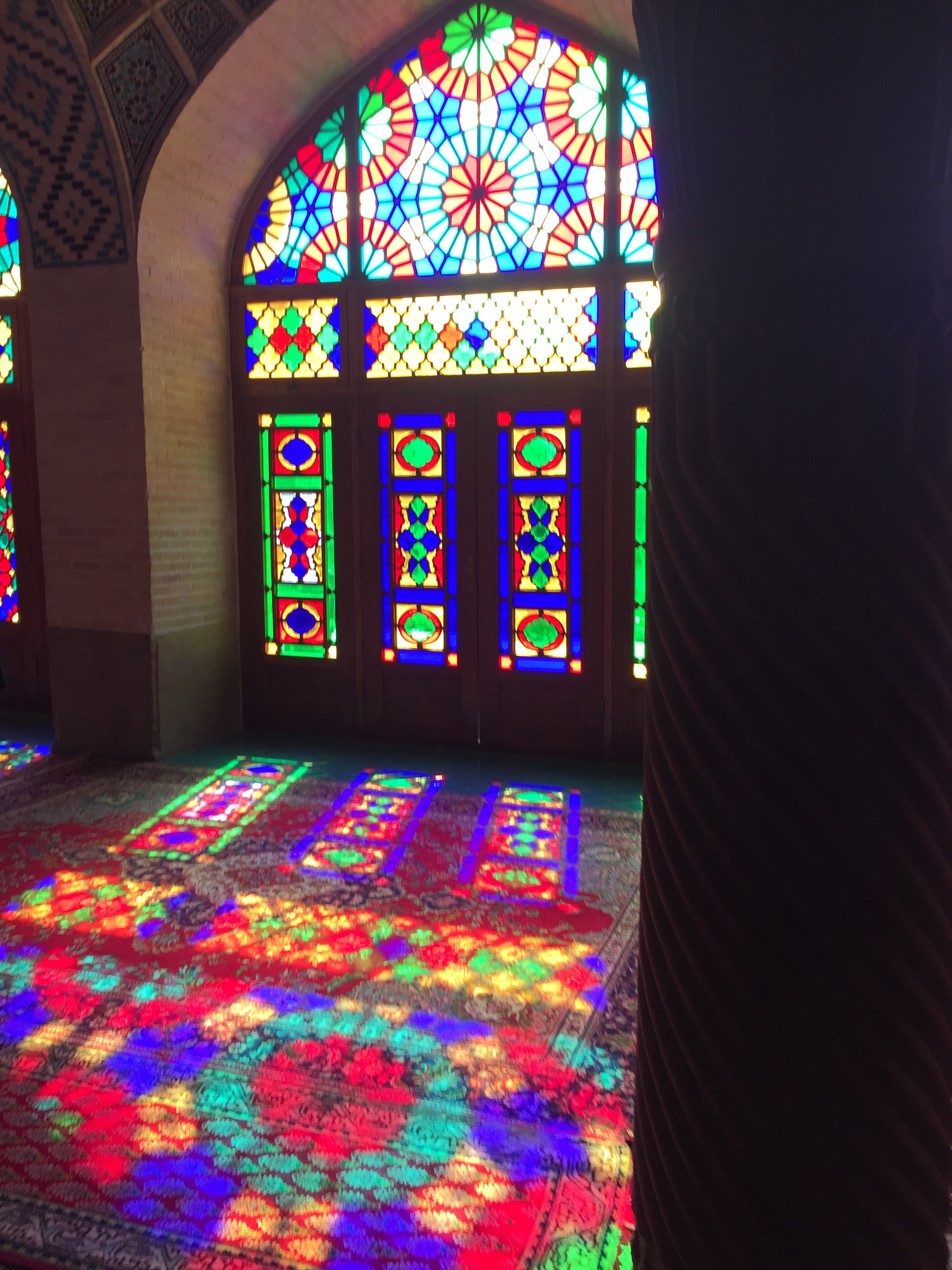
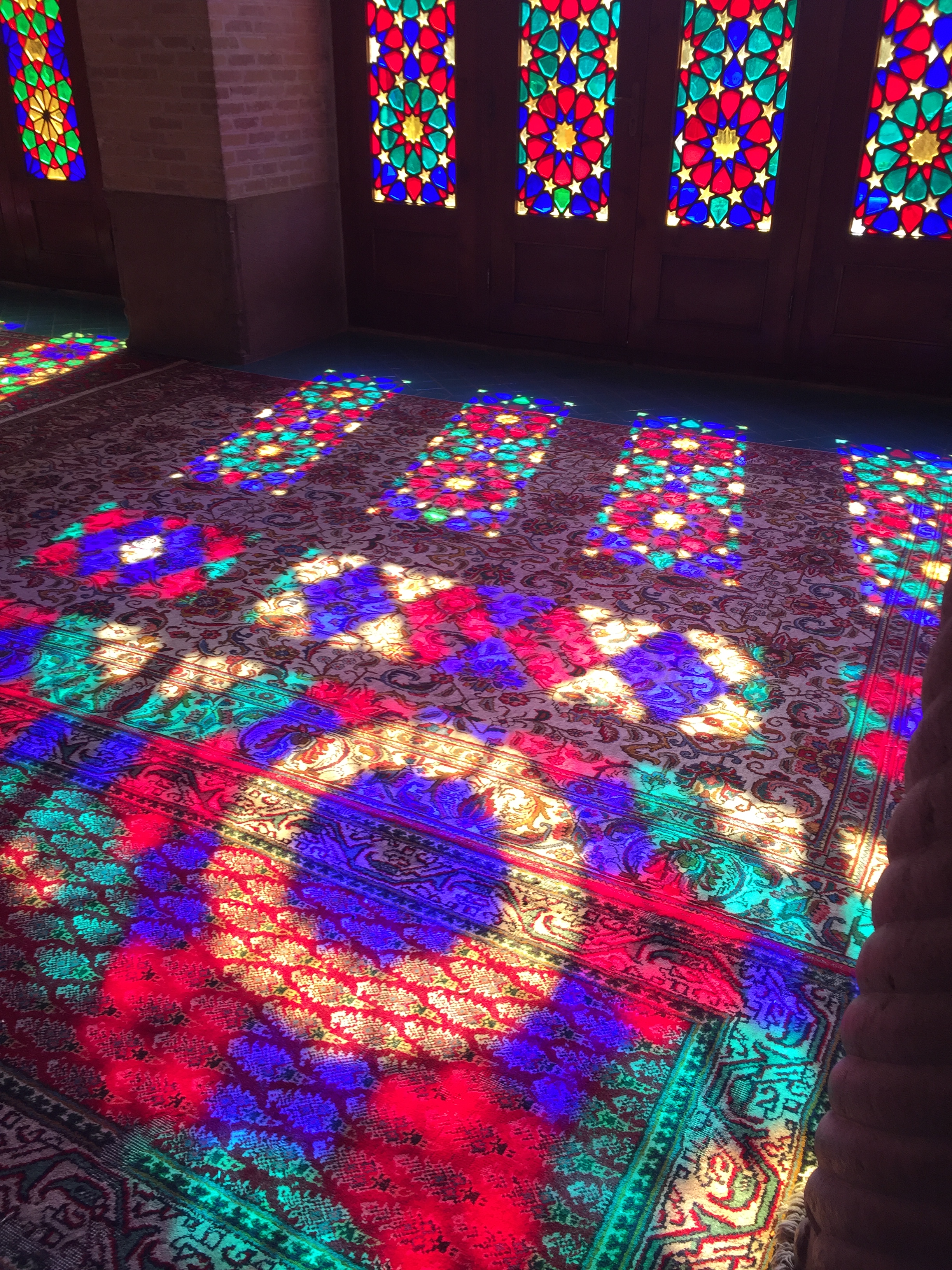
Palimpsest of pattern and colour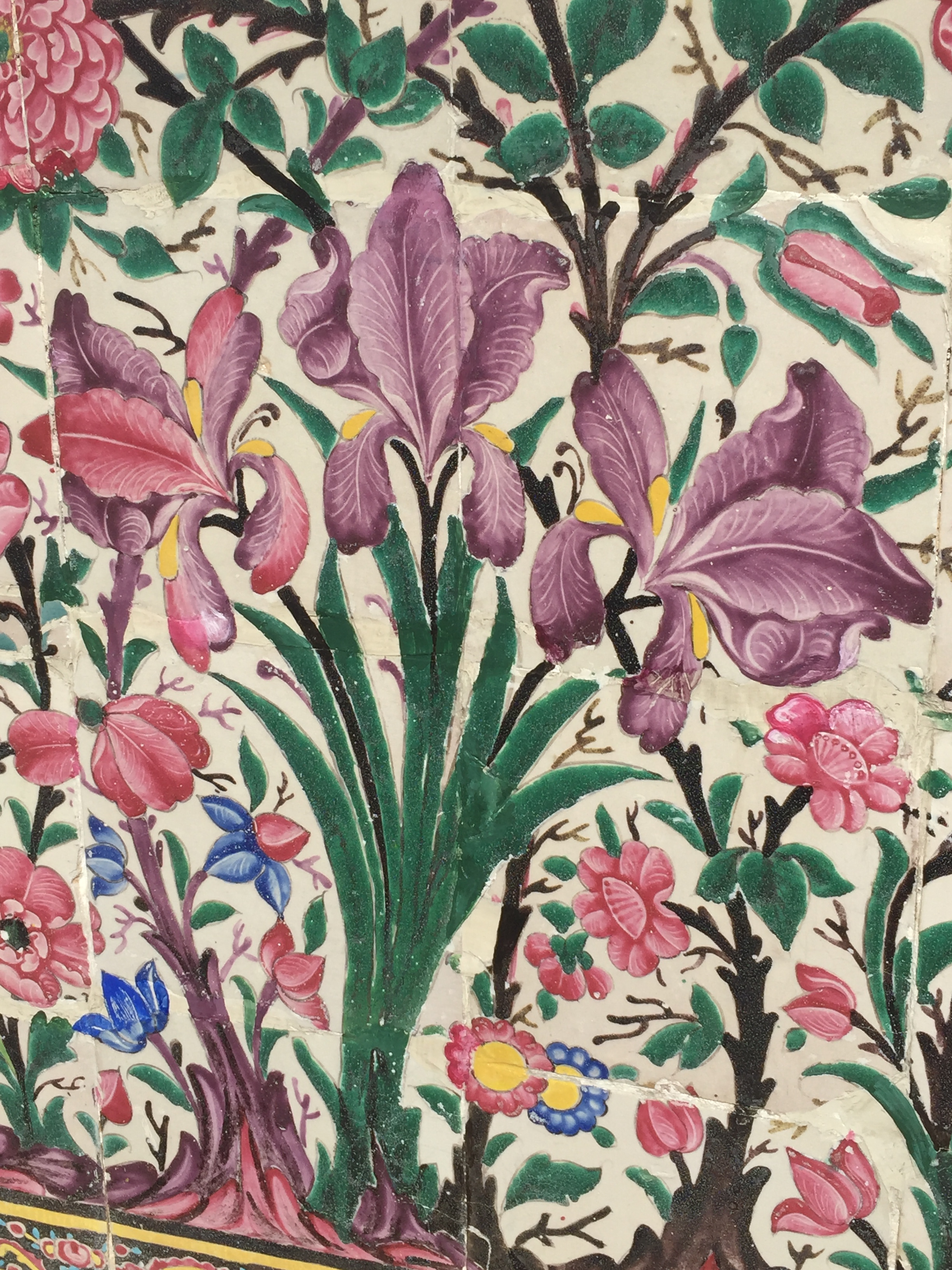
Tilework
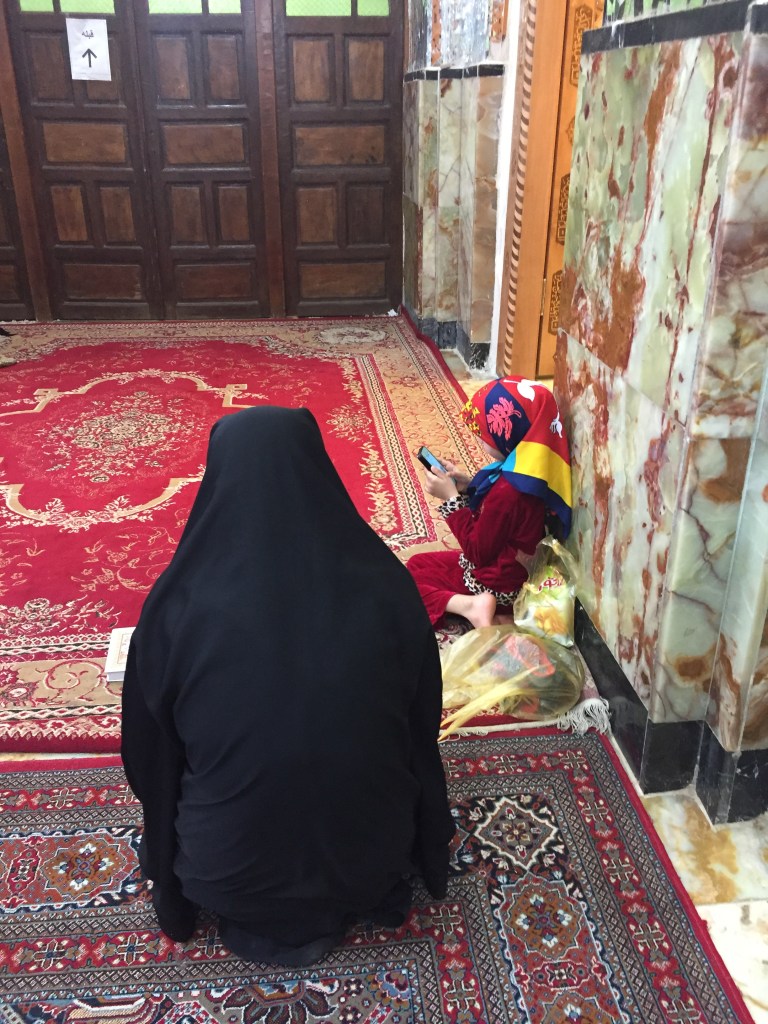
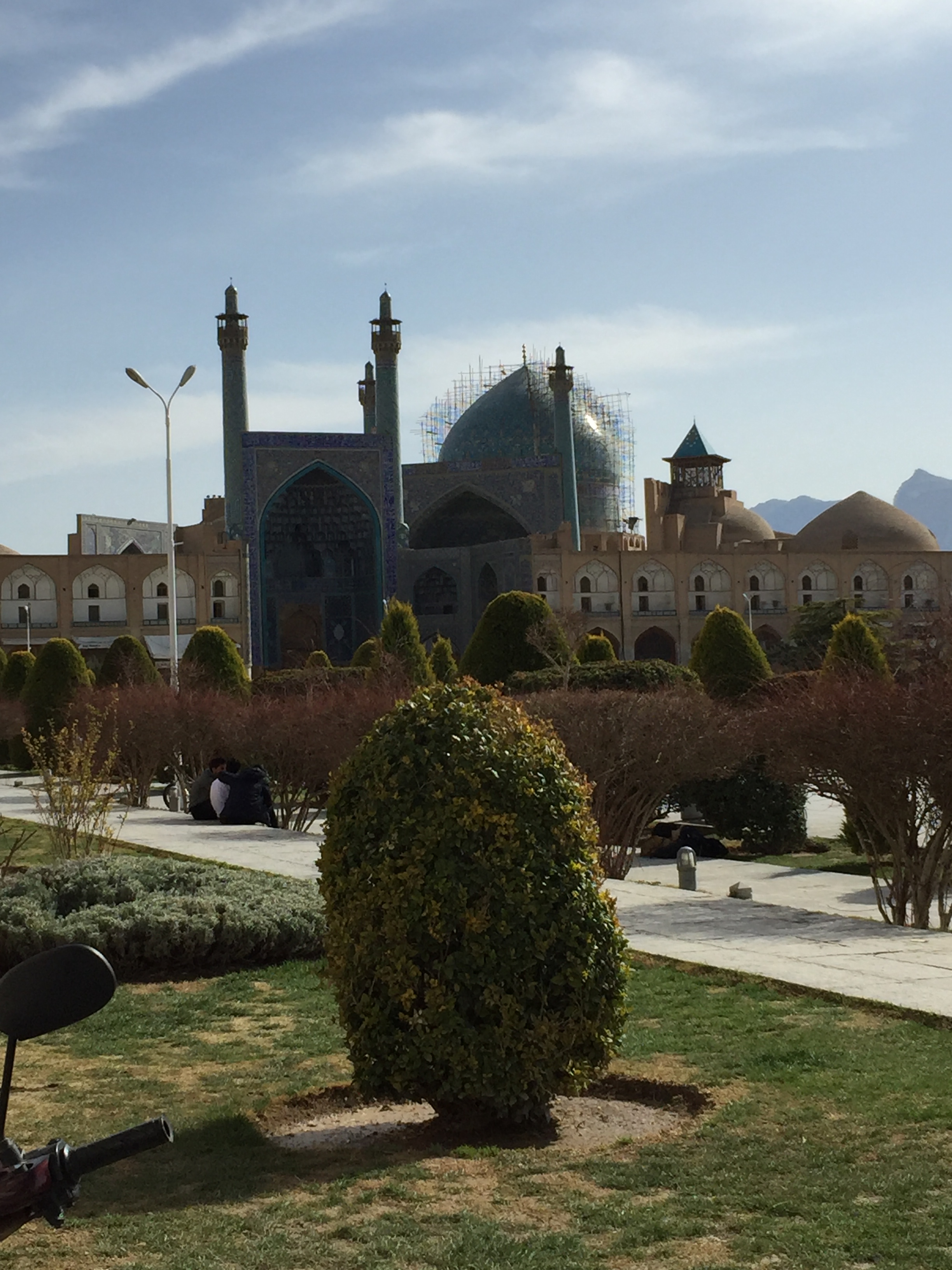
As churches and cathedrals do in Europe the mosques represent the high points of architecture and decorative design in their layout, tilework, sculpted mimbars. They seem generally quite relaxed places where people sit, chat, recline, pray, – though the women’s sections are cordoned off by some kind of screen. While some can be simple, the great mosques are spacious and harmonious, in their layout, volume, aspects and decoration and therefore more conducive to contemplation and prayer.
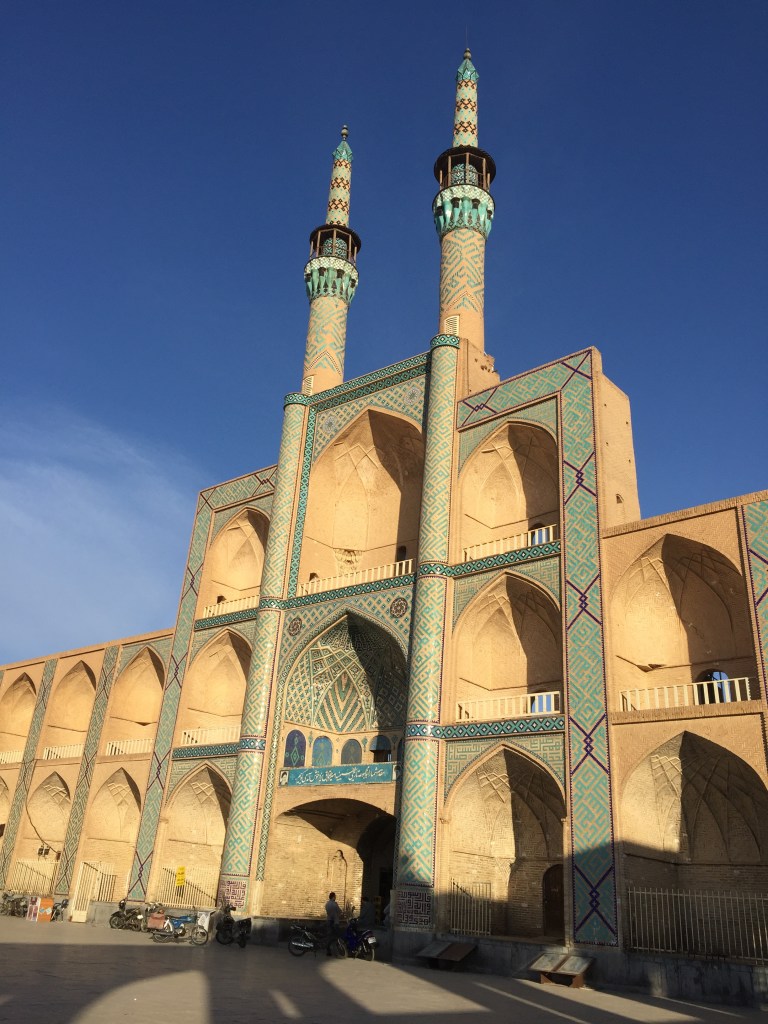
This large edifice in Yazd is largely a facade housing some shops and cafes as well as the mosque and showing the close connection between these aspects of life.
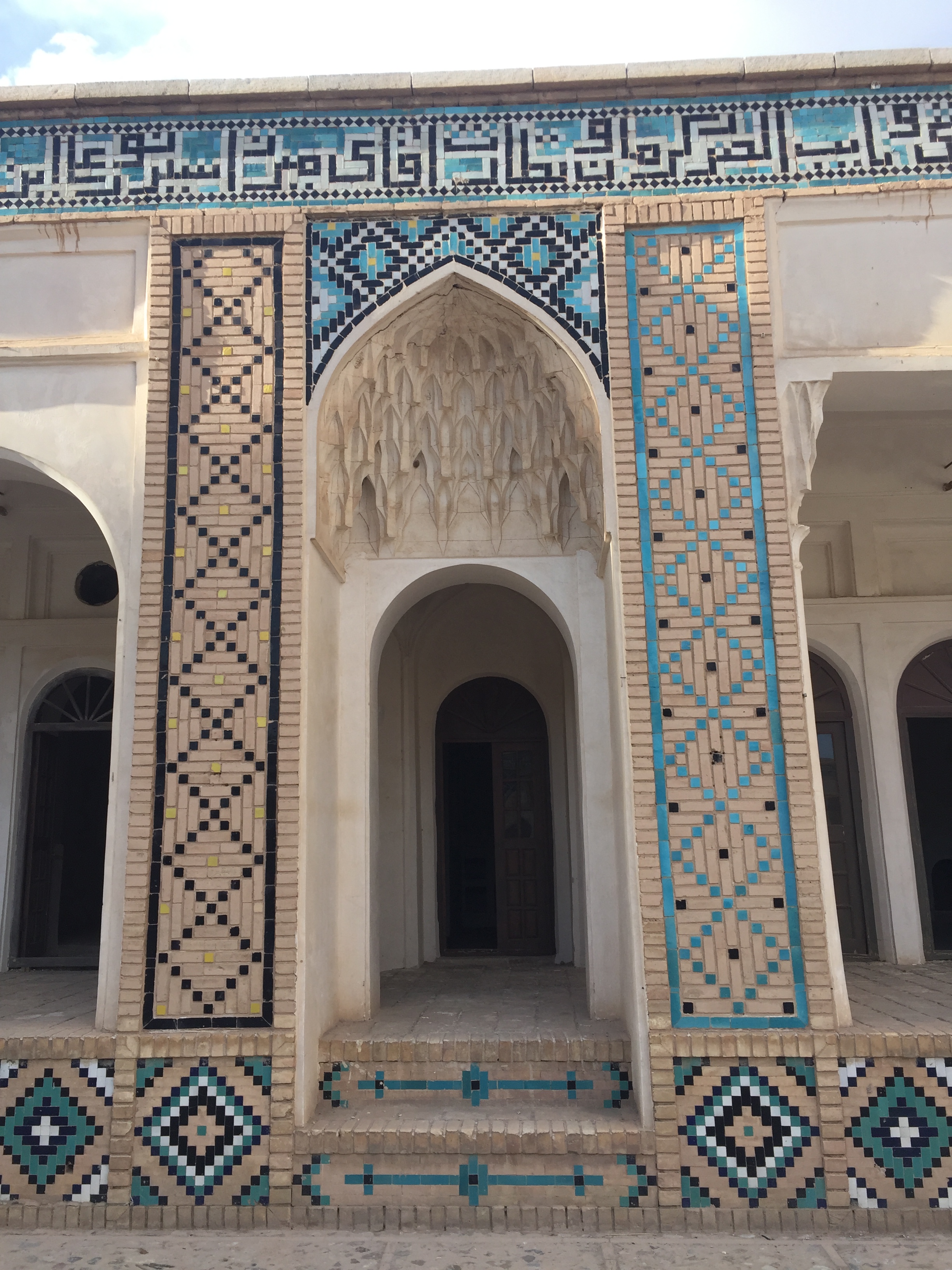
Our last overnights were in Isfahan which of course proved a high point of the trip, especially for its stunning mosques
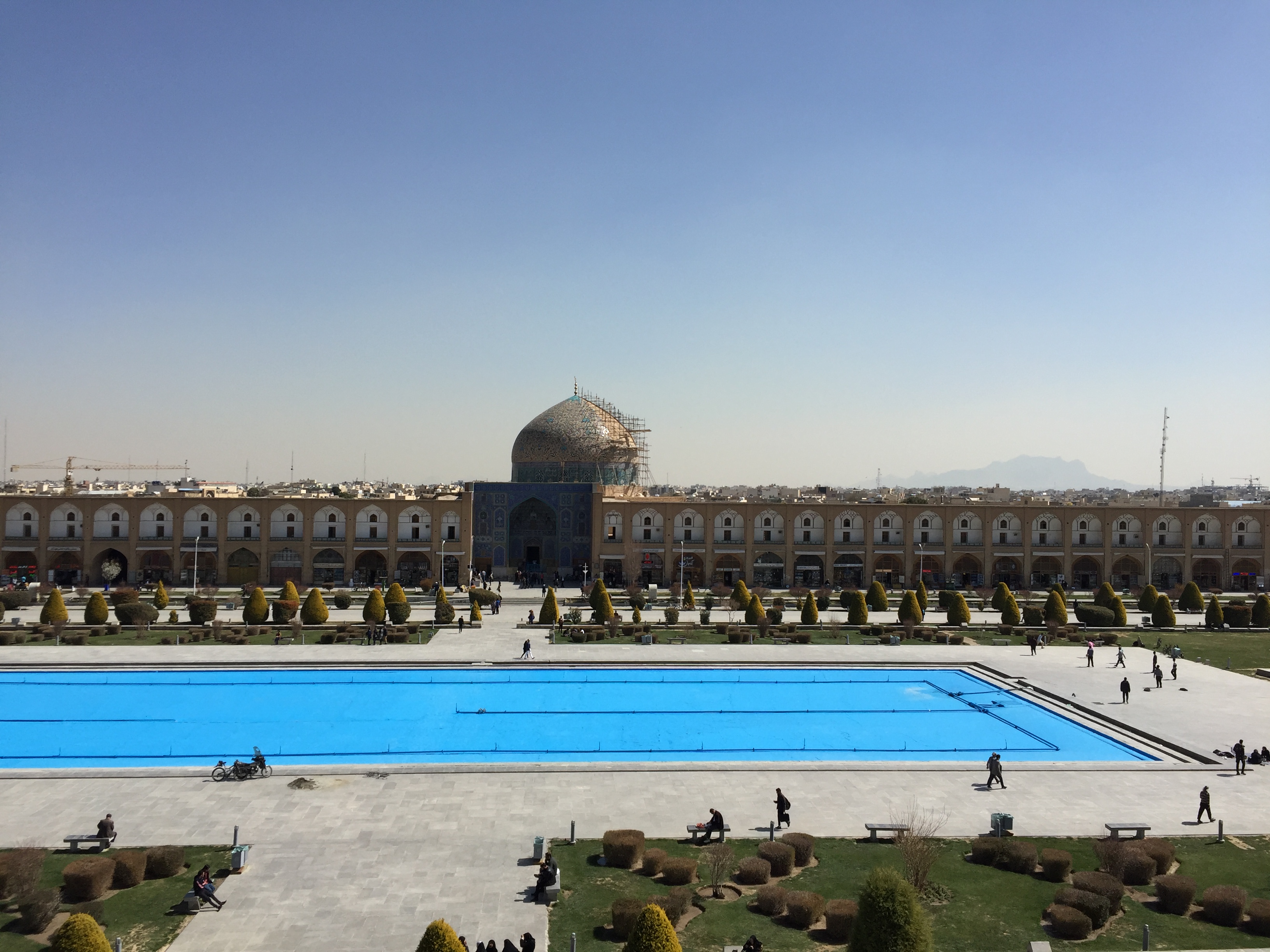
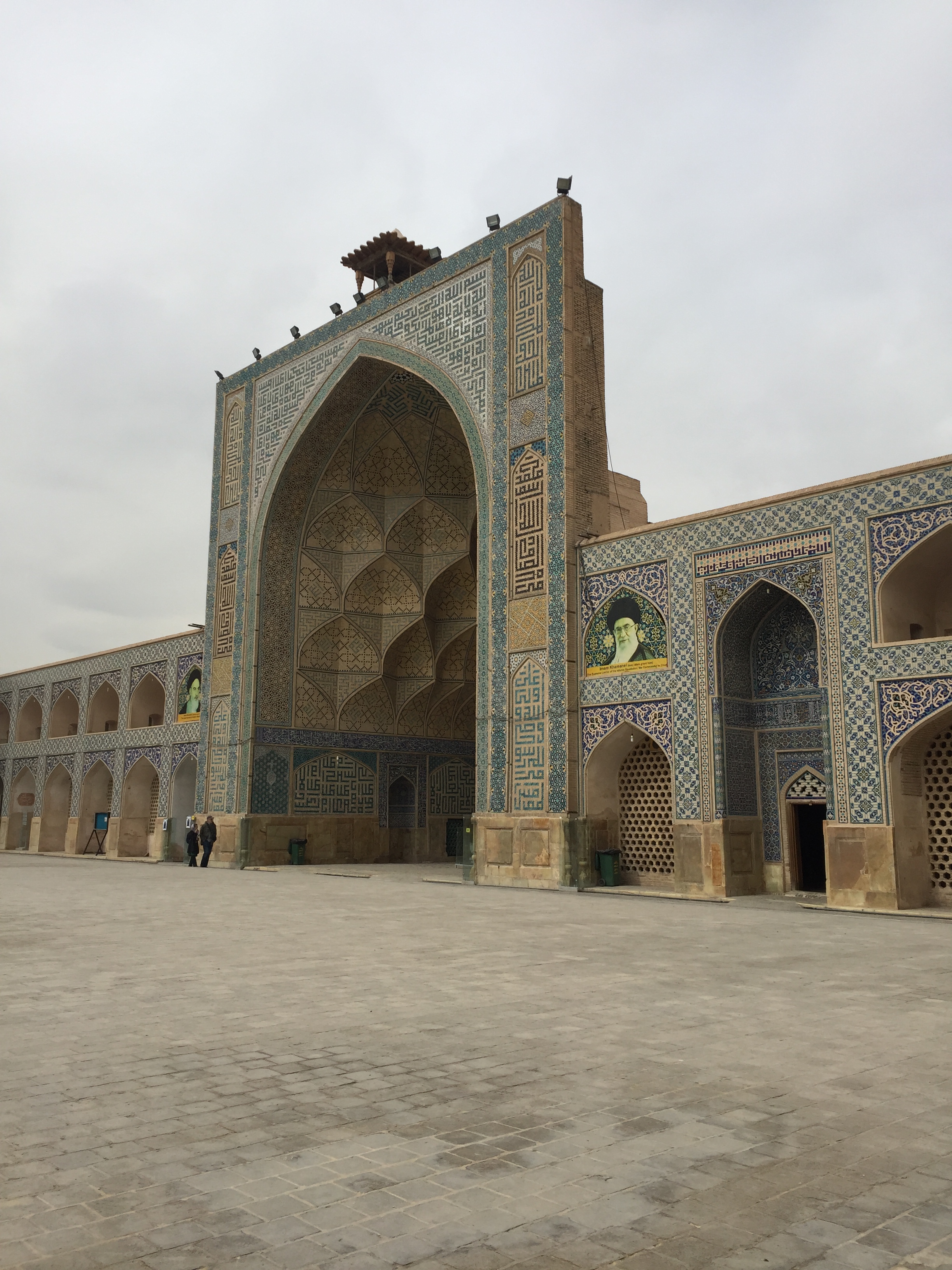
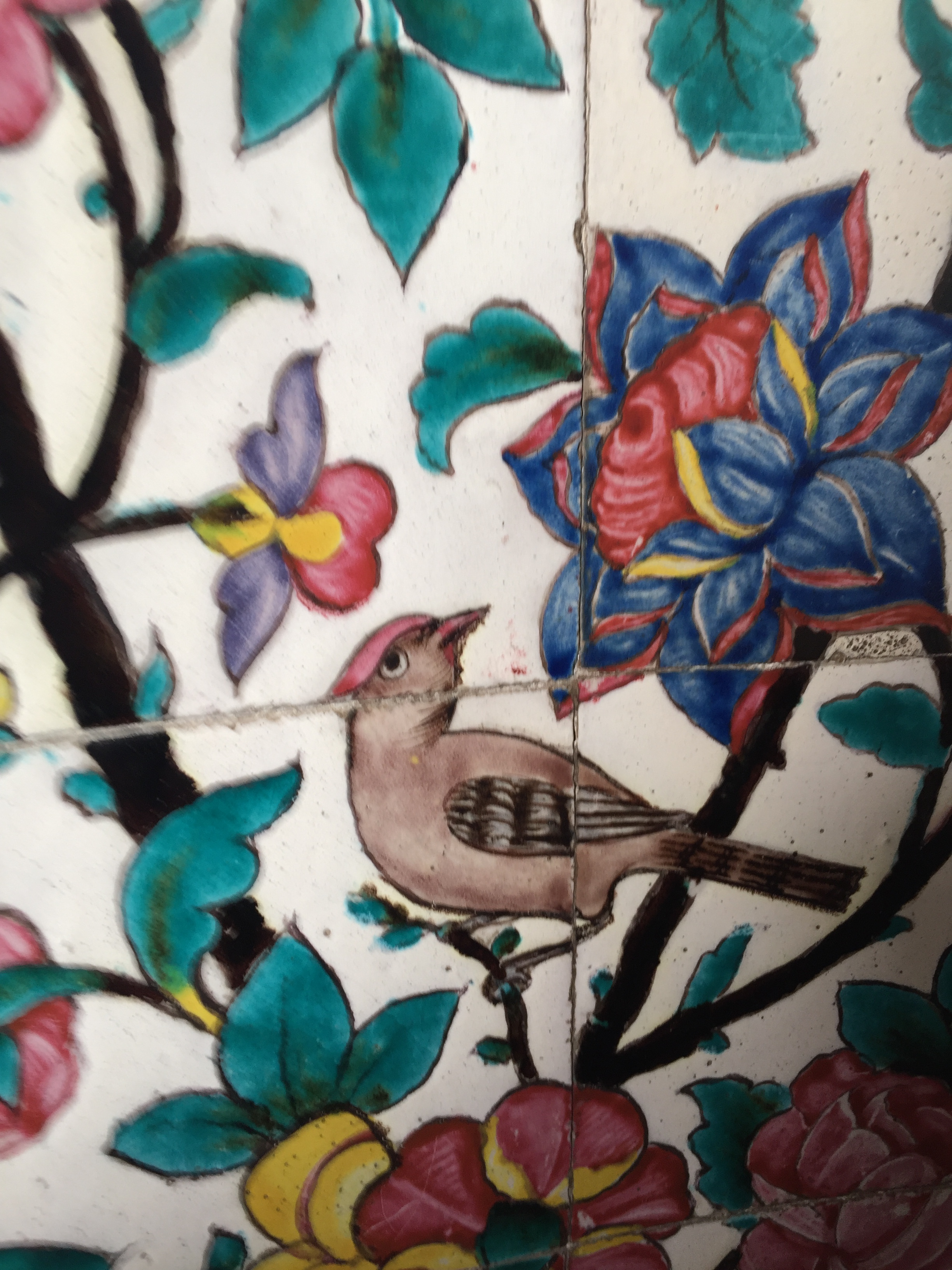
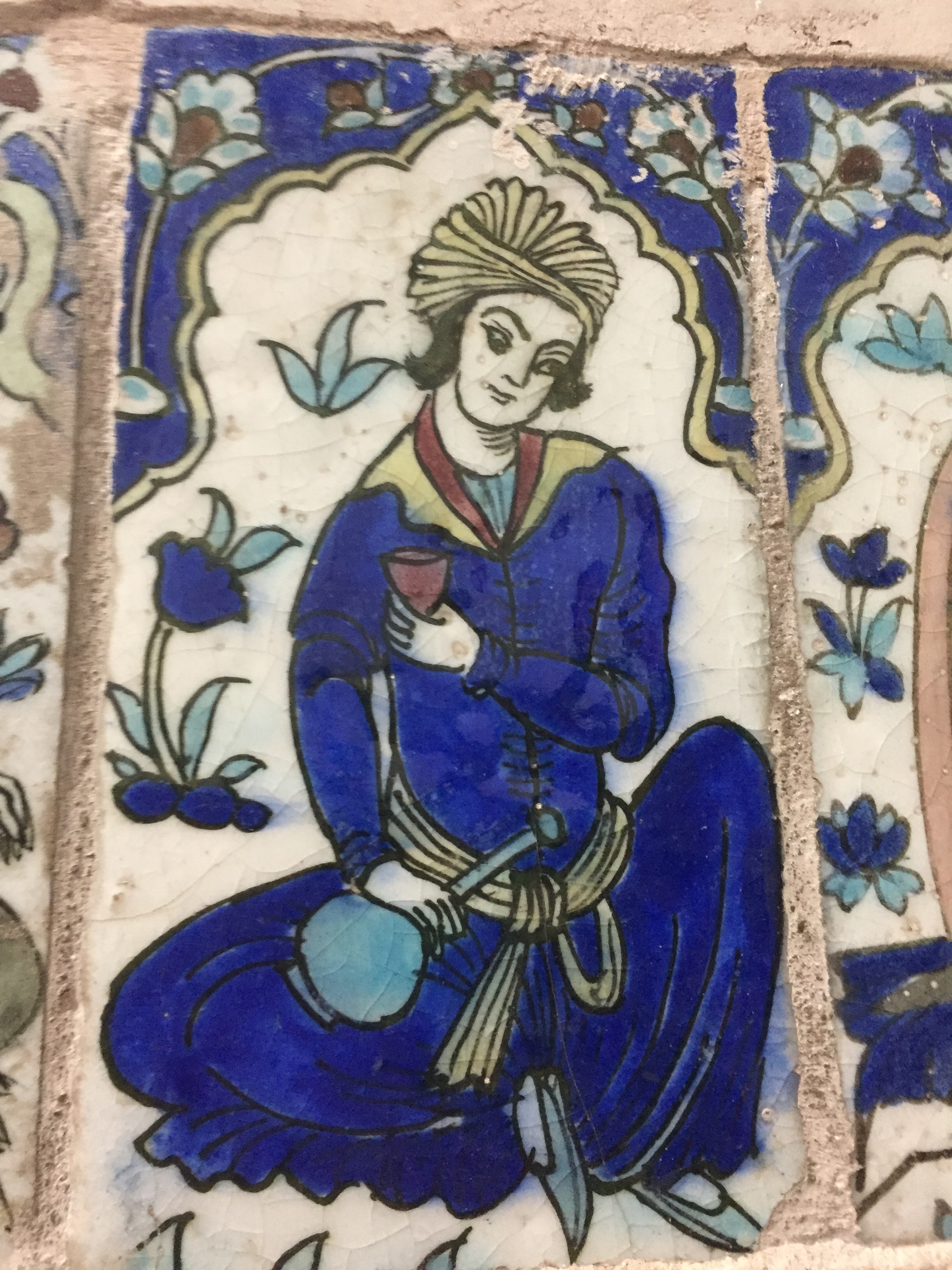
Hammams give an insight into the more secular side of life. The one we saw in Kermann had very charming figurative tilework as well as vegetal and floral imagery.
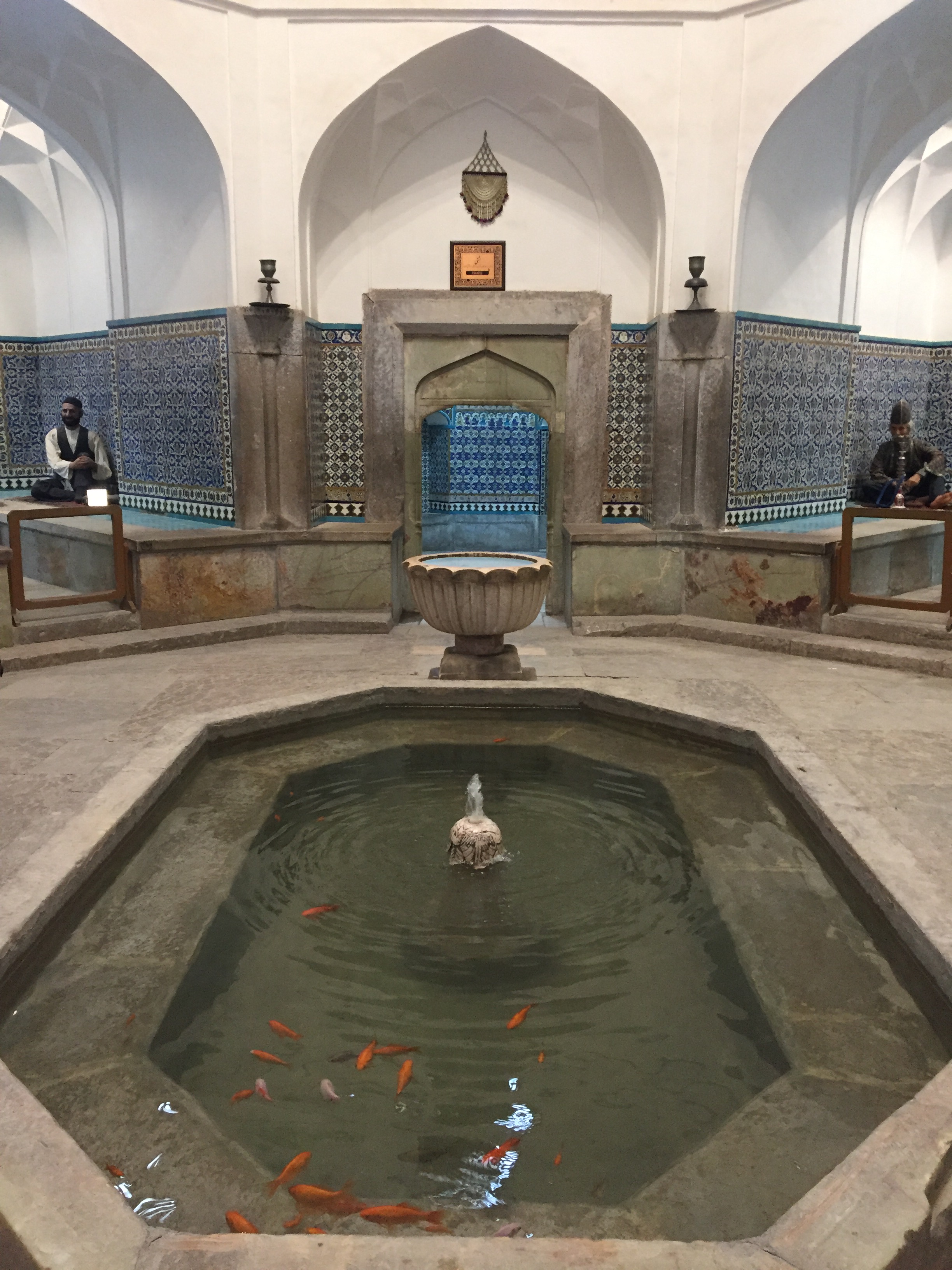
17th CenturyHammam in Kerman 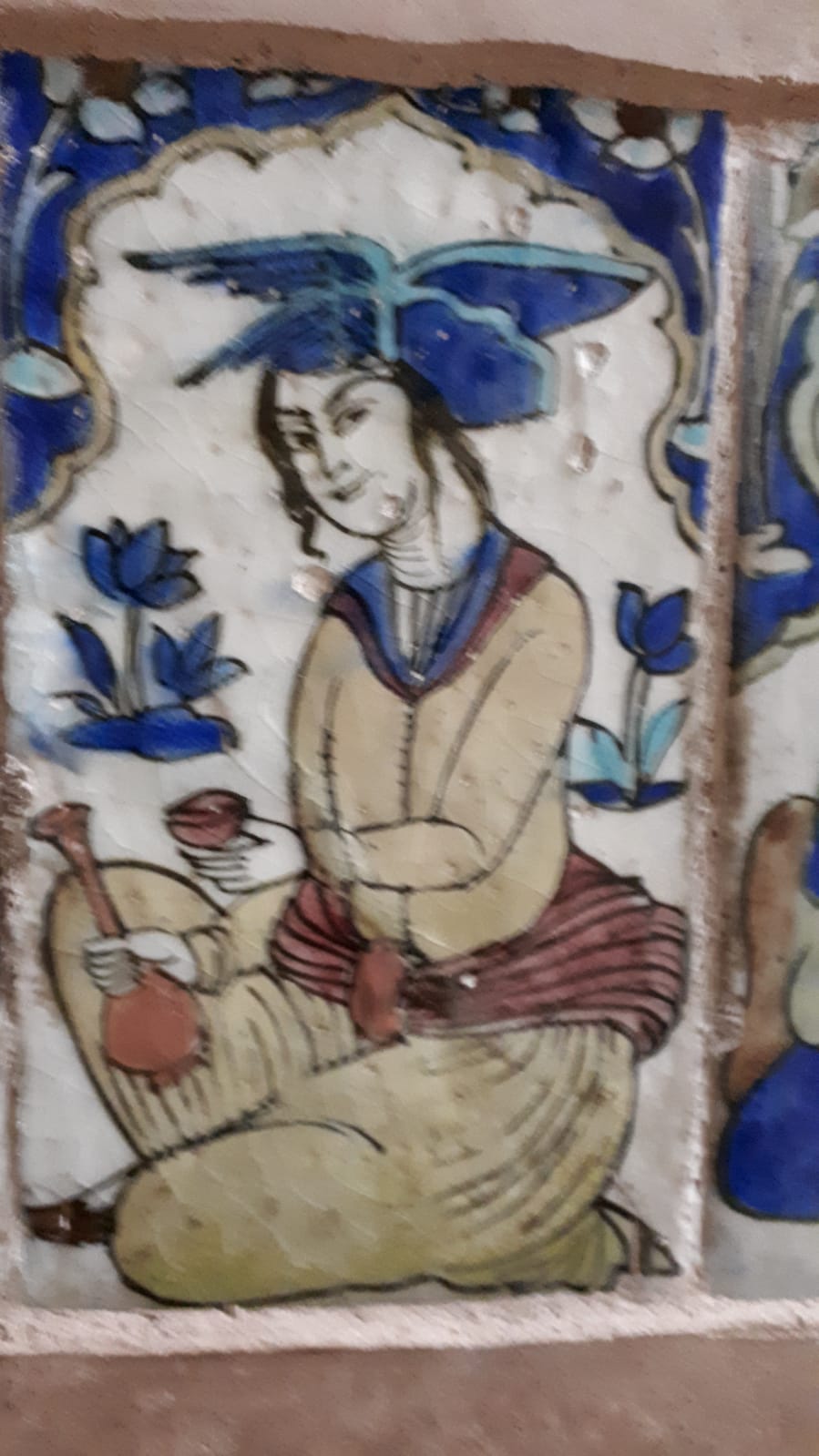
Tiles in Hammam, Kerman 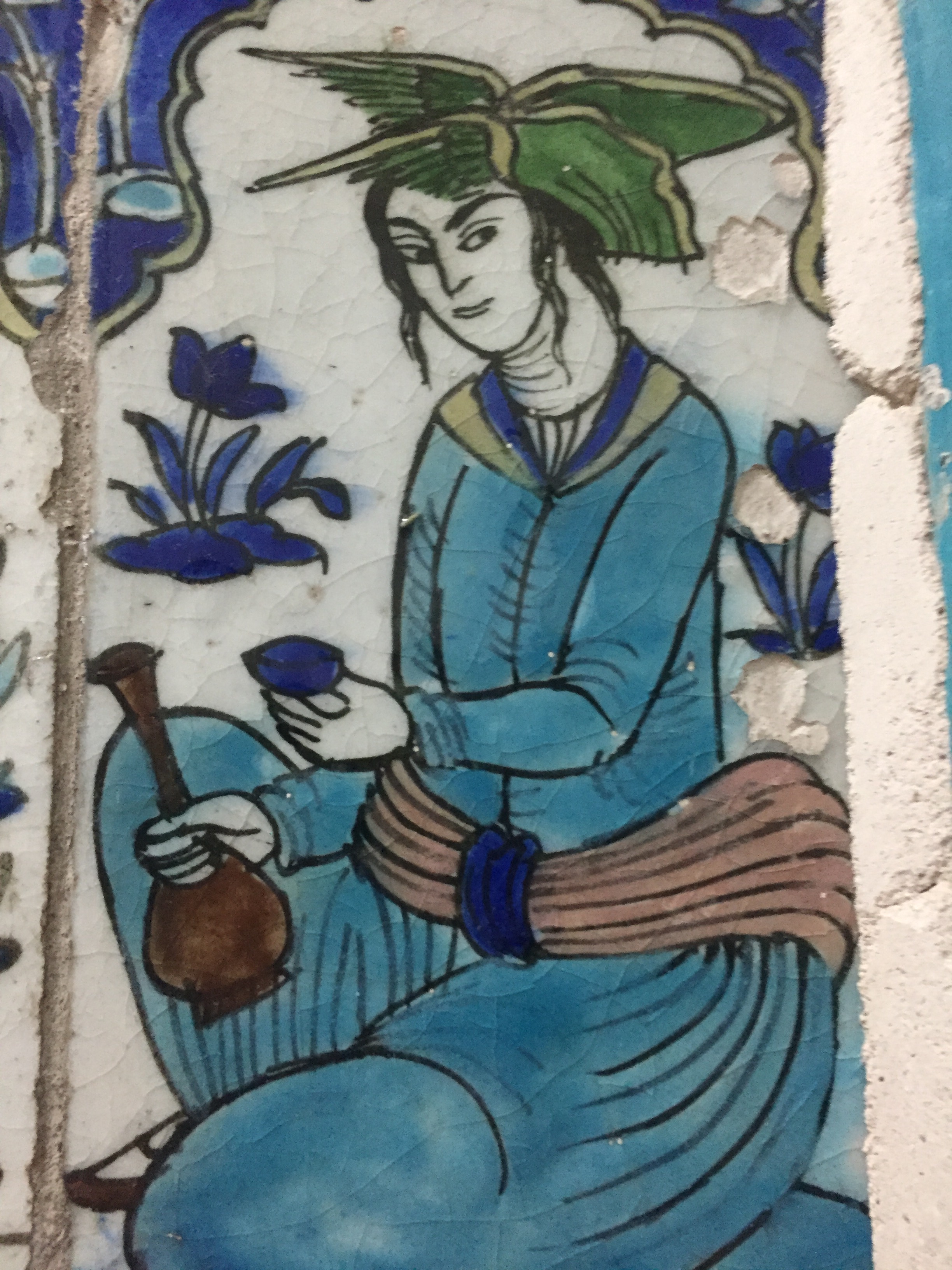
Hammam, Kerman 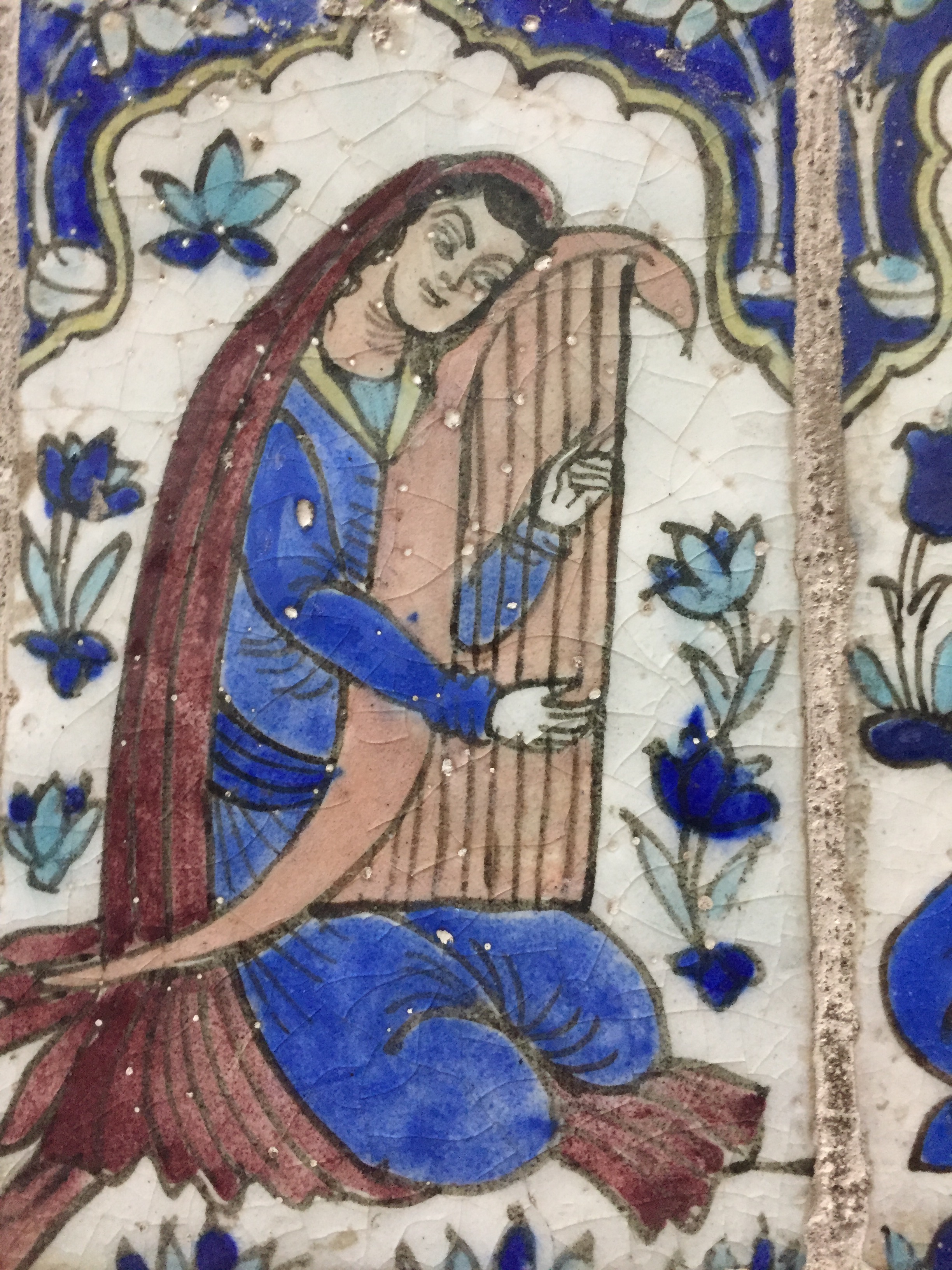
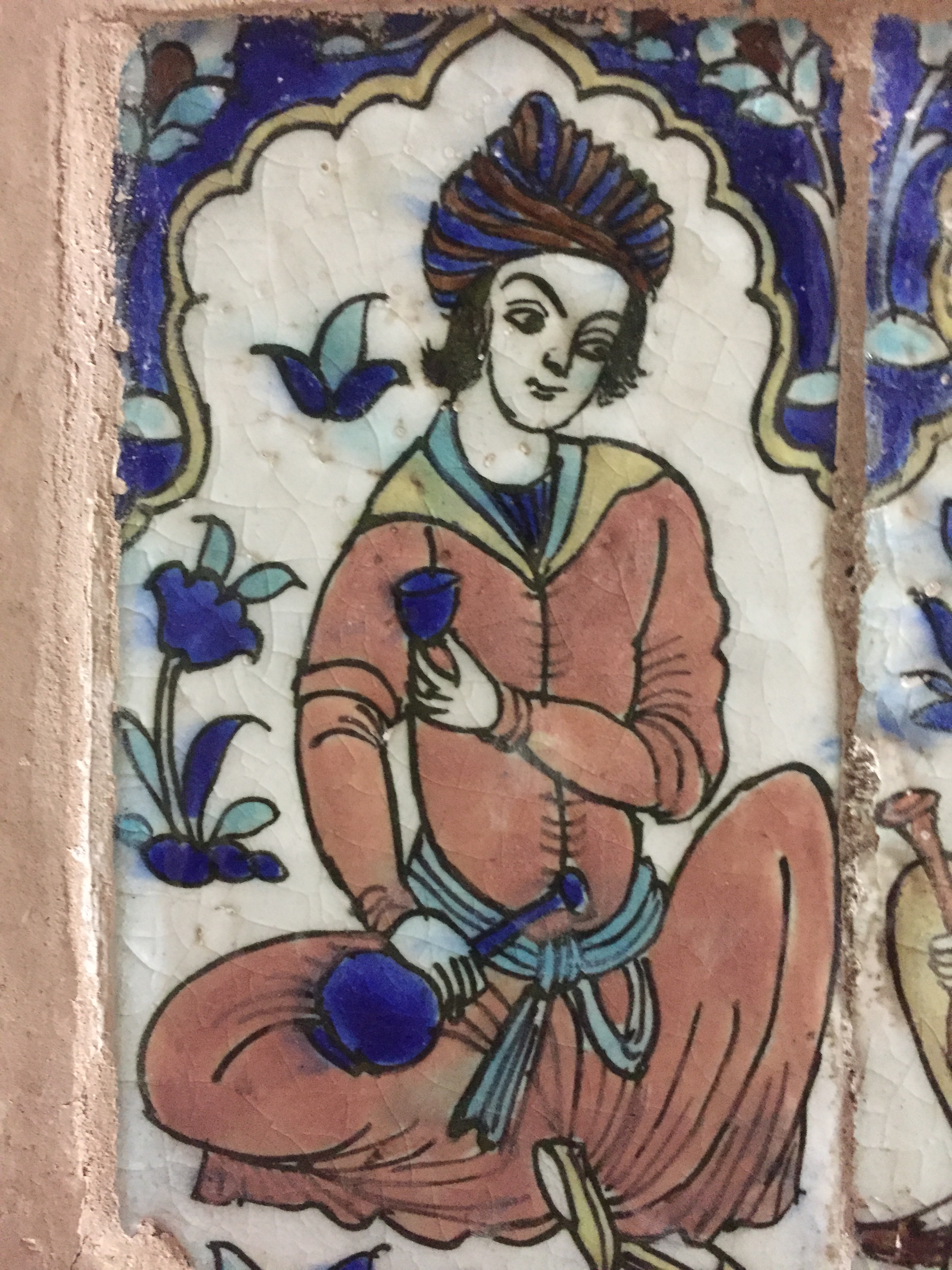
The importance of Bazaars and Bazaaris was brought home to us by a visit on our last day to the beautiful private palace – the Tabatabae House – of a former Bazaari and carpet merchant in Kashan, the Charleville of Iran – where we had a great time – spending the very last rials.
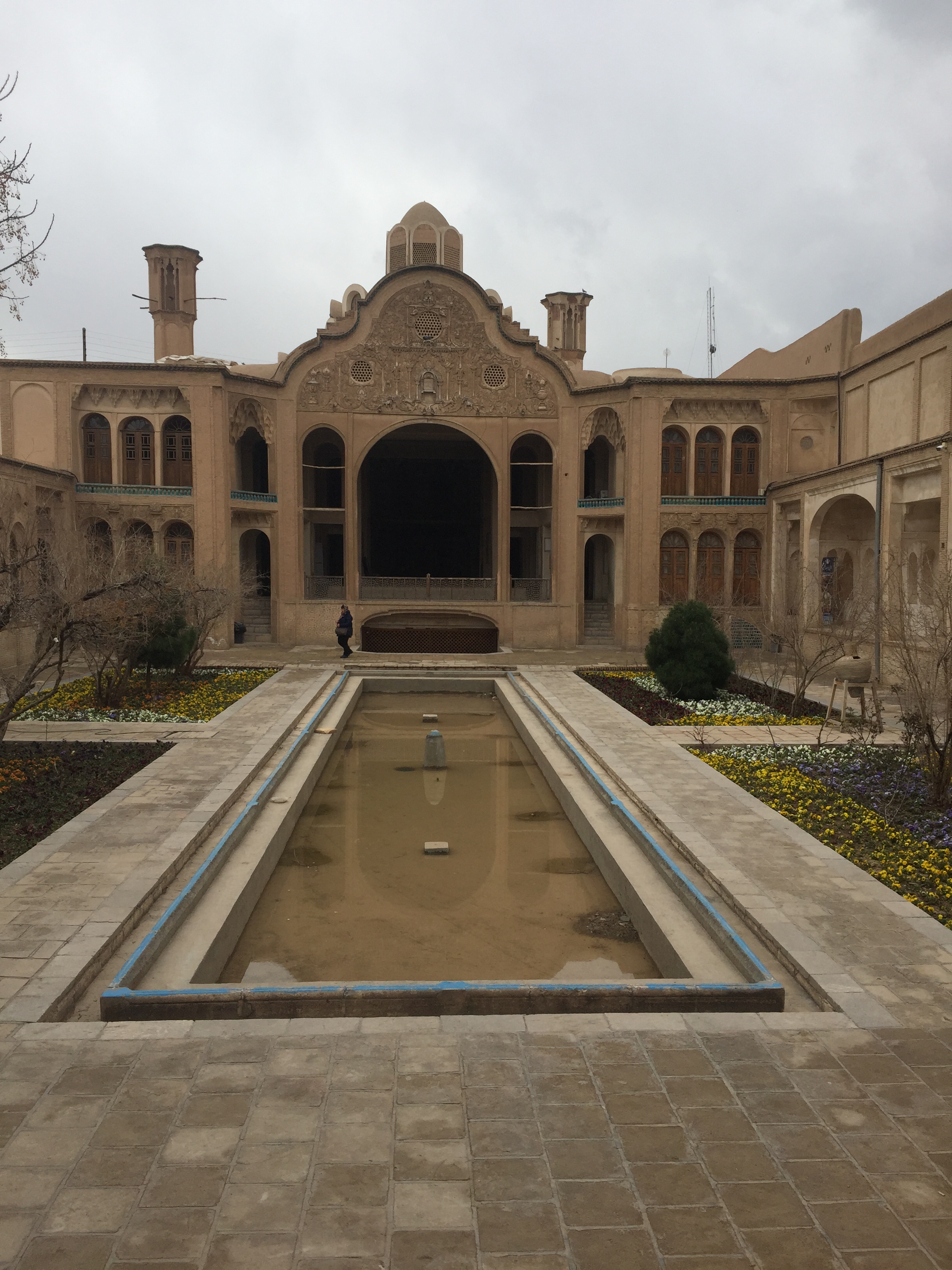
Inner courtyard of Tabatabae House 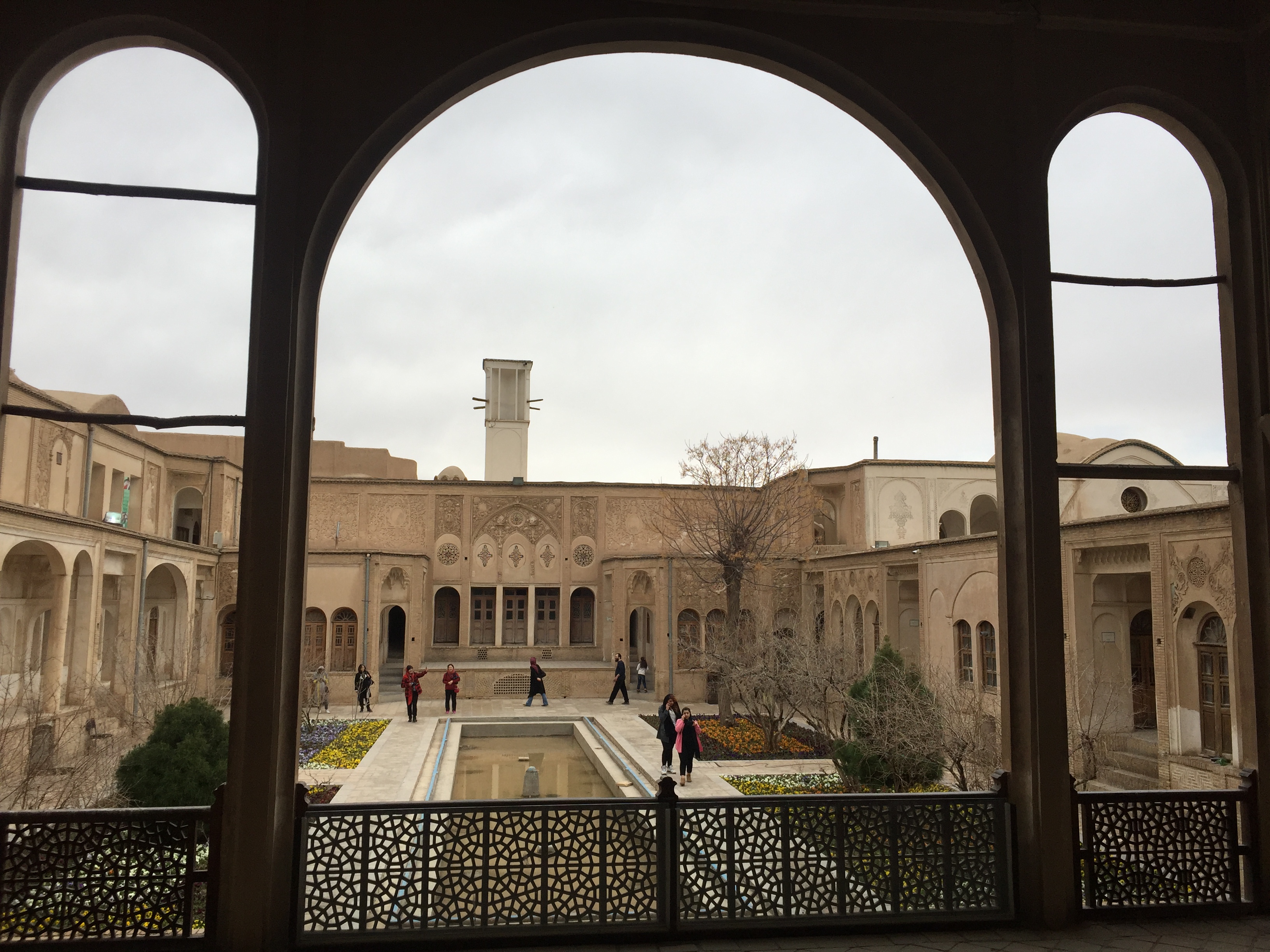
Inner courtyard of Tabatabae House
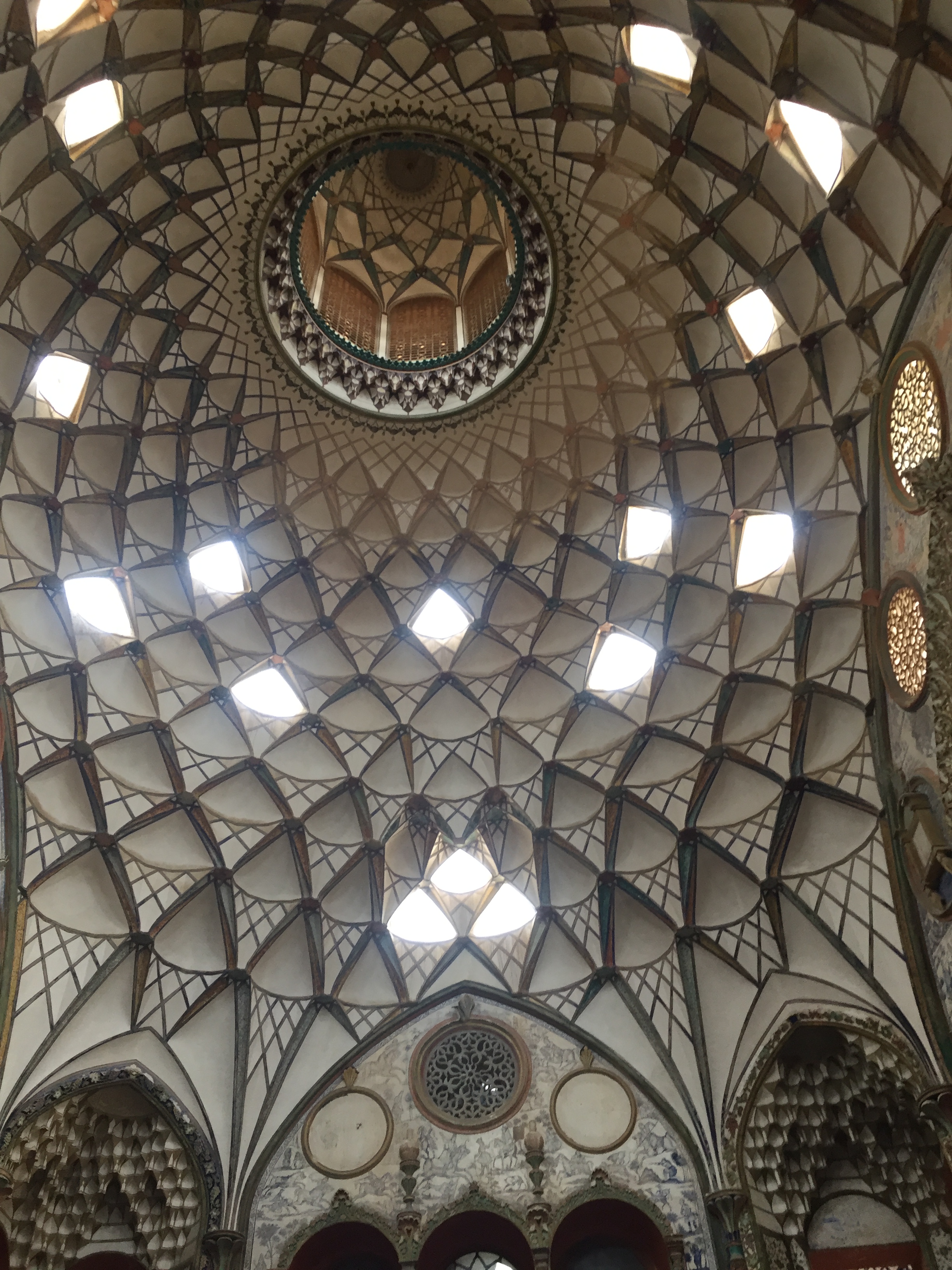
Vestibule ceiling 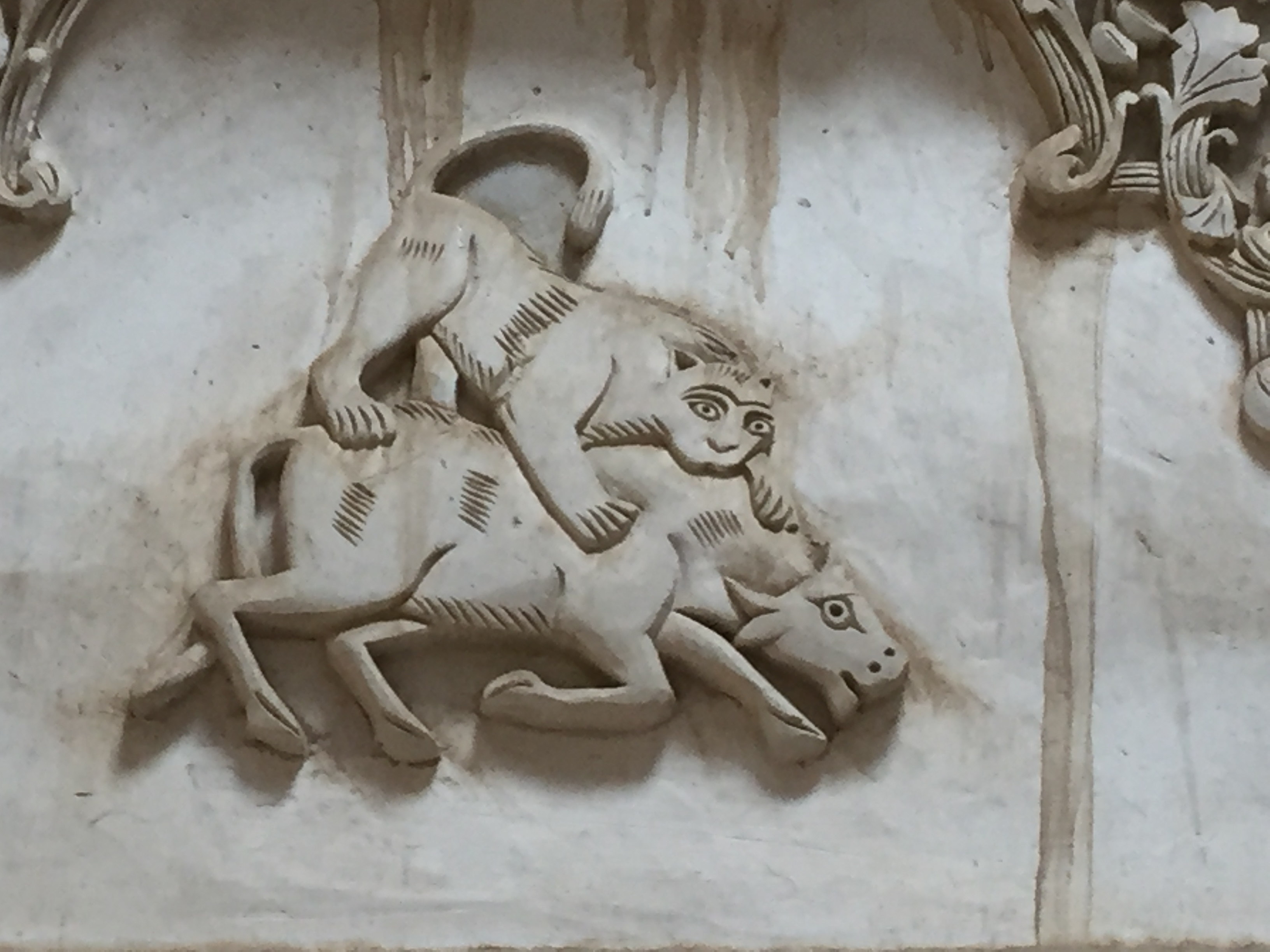
Internal bas relief / after Persepolis 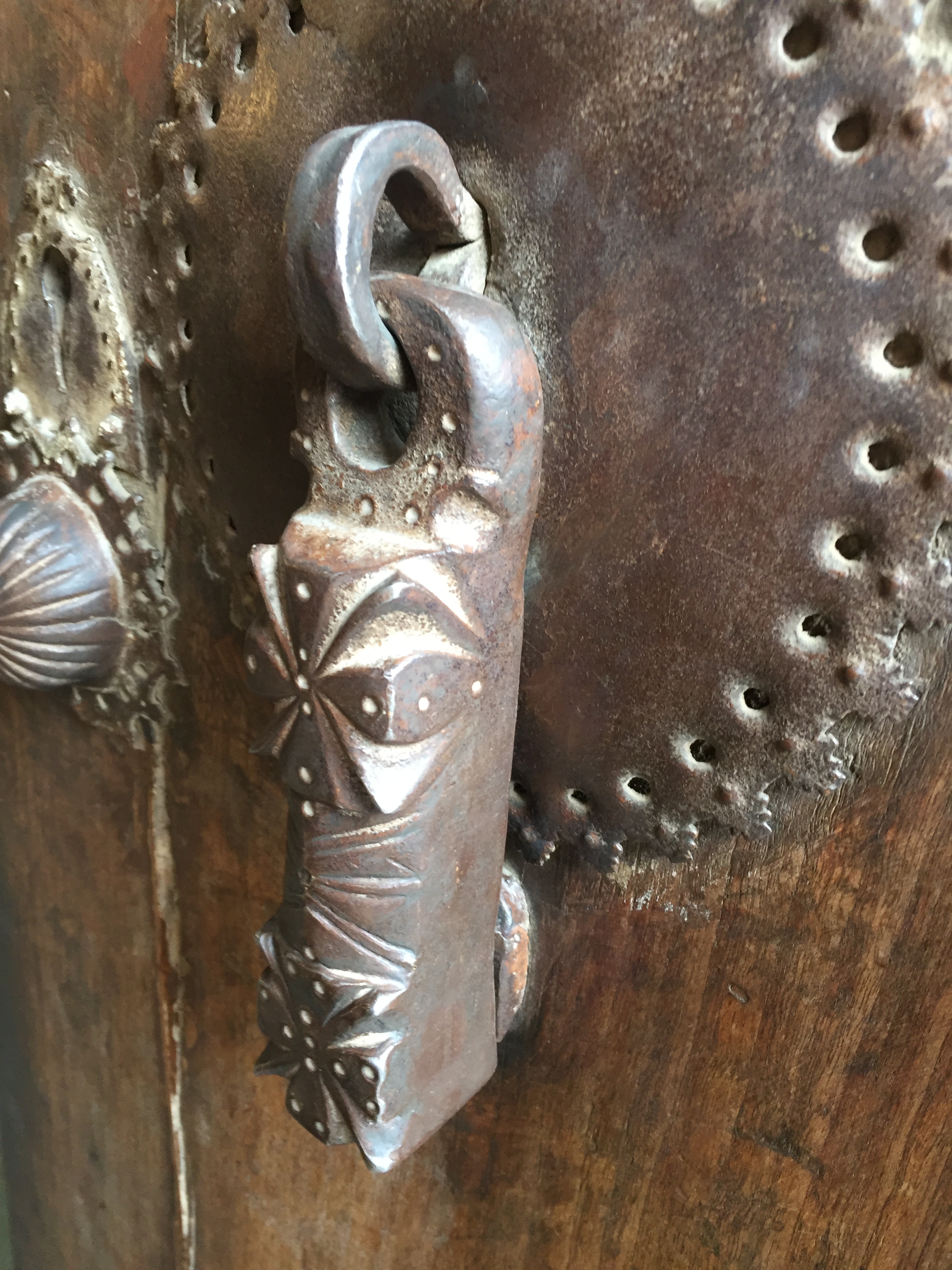
Men’s door knocker 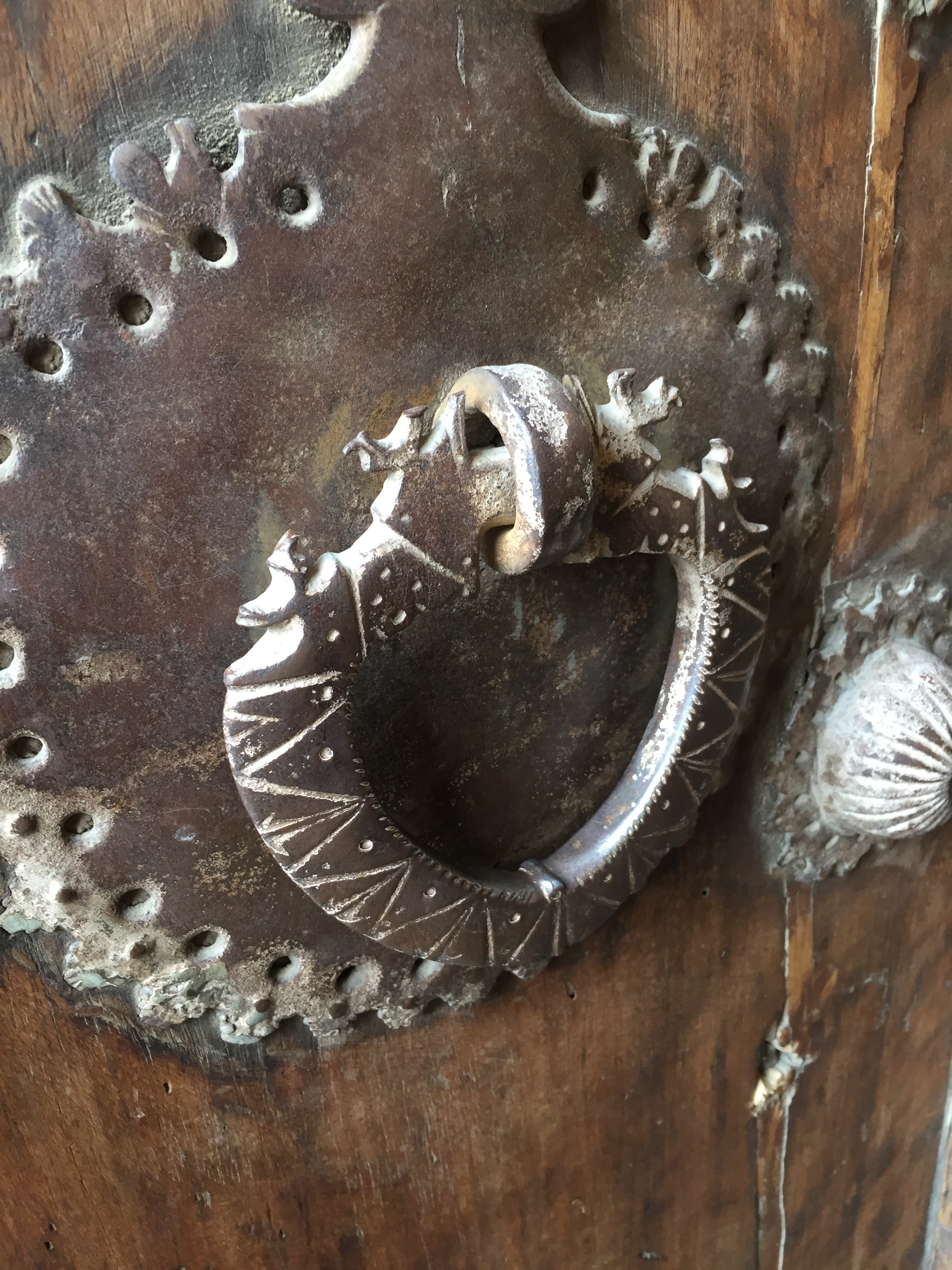
Womens’ door knocker
As well as looking different, the door knockers have a different sound – the women’s comes down on metal and the mans’ on wood . Thus the women of the house have time to cover themselves if the guest is a man.
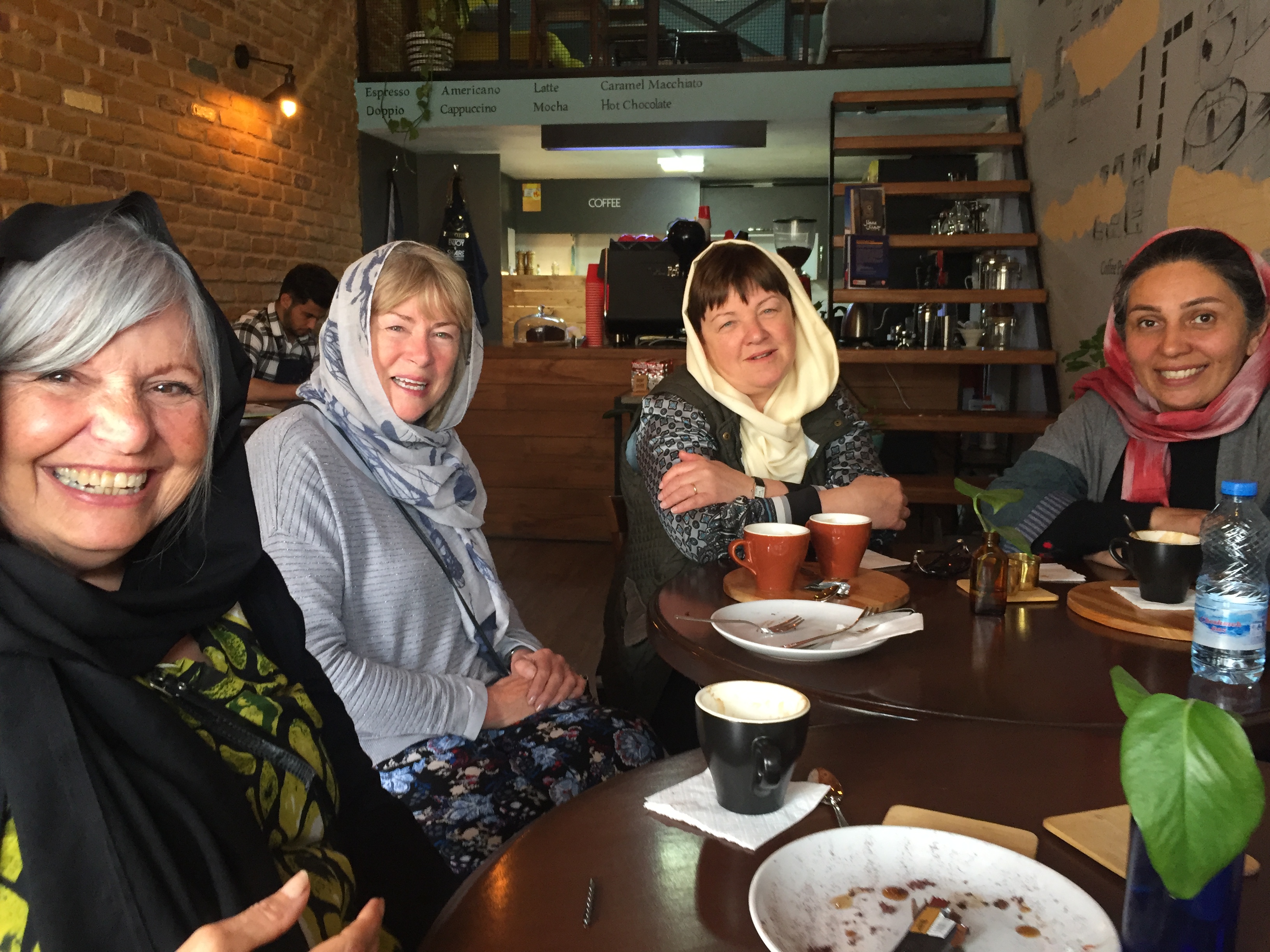
 Itinerant in Iran